


Identification of an AP2-family protein that is critical for malaria liver stage development
- PMID: 23144823
- PMCID: PMC3492389
- DOI: 10.1371/journal.pone.0047557
Identification of an AP2-family protein that is critical for malaria liver stage development
Abstract
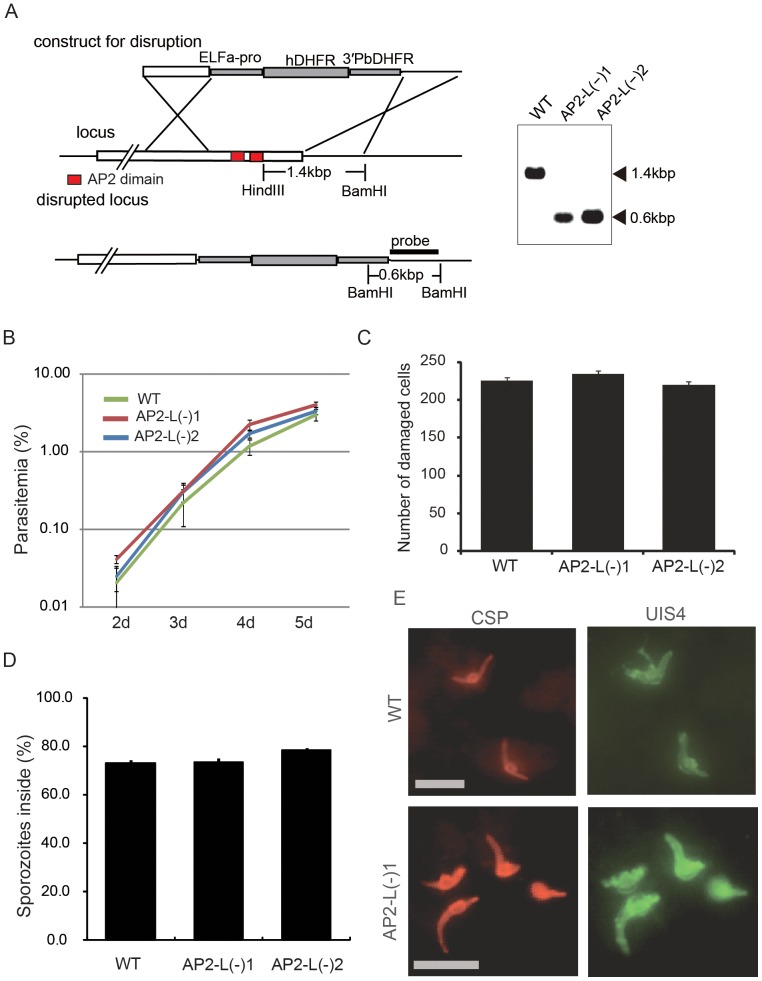
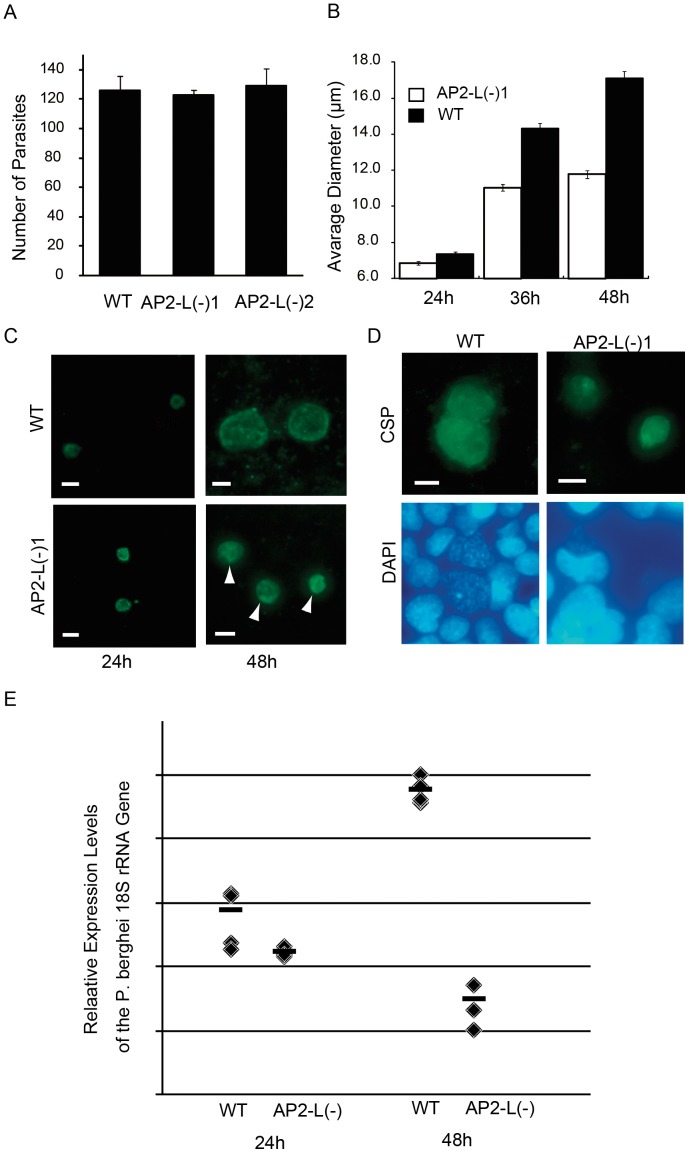
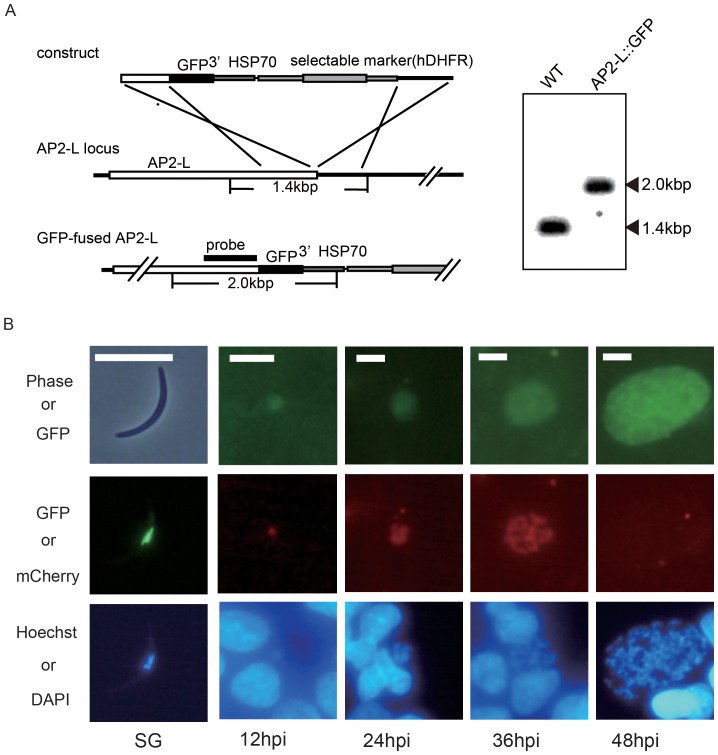
Liver-stage malaria parasites are a promising target for drugs and vaccines against malaria infection. However, little is currently known about gene regulation in this stage. In this study, we used the rodent malaria parasite Plasmodium berghei and showed that an AP2-family transcription factor, designated AP2-L, plays a critical role in the liver-stage development of the parasite. AP2-L-depleted parasites proliferated normally in blood and in mosquitoes. However, the ability of these parasites to infect the liver was approximately 10,000 times lower than that of wild-type parasites. In vitro assays showed that the sporozoites of these parasites invaded hepatocytes normally but that their development stopped in the middle of the liver schizont stage. Expression profiling using transgenic P. berghei showed that fluorescent protein-tagged AP2-L increased rapidly during the liver schizont stage but suddenly disappeared with the formation of the mature liver schizont. DNA microarray analysis showed that the expression of several genes, including those of parasitophorous vacuole membrane proteins, was significantly decreased in the early liver stage of AP2-L-depleted parasites. Investigation of the targets of this transcription factor should greatly promote the exploration of liver-stage antigens and the elucidation of the mechanisms of hepatocyte infection by malaria parasites.
Conflict of interest statement
Figures
References
-
- Hoffman SL, Goh LML, Luke TC, Schneider I, Le TP, et al. (2002) Protection of humans against malaria by immunization with radiation-attenuated Plasmodium falciparum sporozoites. Journal of Infectious Diseases 185: 1155–1164. - PubMed
-
- Mueller AK, Labaied M, Kappe SH, Matuschewski K (2005) Genetically modified Plasmodium parasites as a protective experimental malaria vaccine. Nature 433: 164–167. - PubMed
-
- Tarun AS, Dumpit RF, Camargo N, Labaied M, Liu P, et al. (2007) Protracted sterile protection with Plasmodium yoelii pre-erythrocytic genetically attenuated parasite malaria vaccines is independent of significant liver-stage persistence and is mediated by CD8+ T cells. J Infect Dis 196: 608–616. - PubMed
-
- White KL, Snyder HL, Krzych U (1996) MHC class I-dependent presentation of exoerythrocytic antigens to CD8+ T lymphocytes is required for protective immunity against Plasmodium berghei. J Immunol 156: 3374–3381. - PubMed
Publication types
MeSH terms
Substances
LinkOut - more resources
Full Text Sources
Medical
Molecular Biology Databases
Research Materials
