


HIV-prevalence in tuberculosis patients in Germany, 2002-2009: an estimation based on HIV and tuberculosis surveillance data
- PMID: 23145087
- PMCID: PMC3492302
- DOI: 10.1371/journal.pone.0049111
HIV-prevalence in tuberculosis patients in Germany, 2002-2009: an estimation based on HIV and tuberculosis surveillance data
Abstract
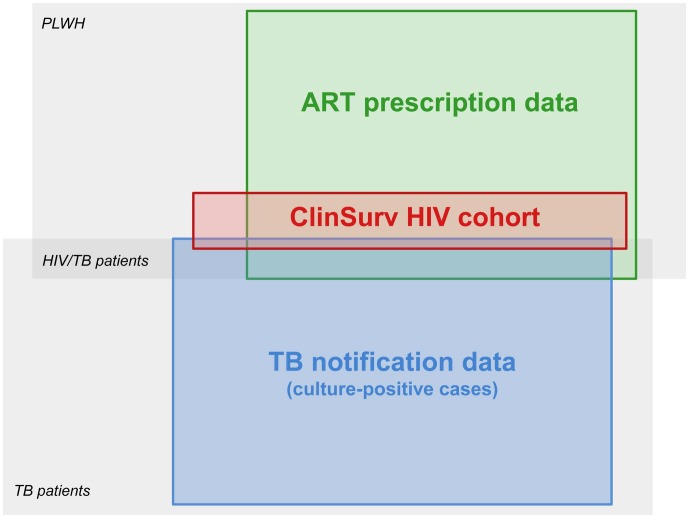
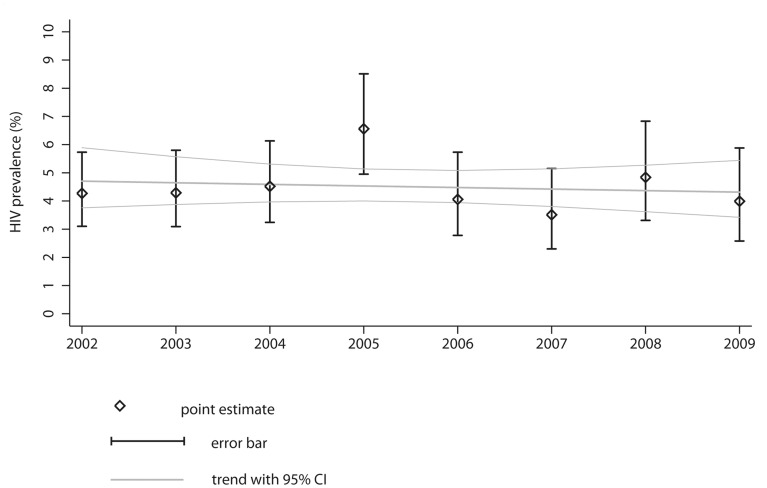
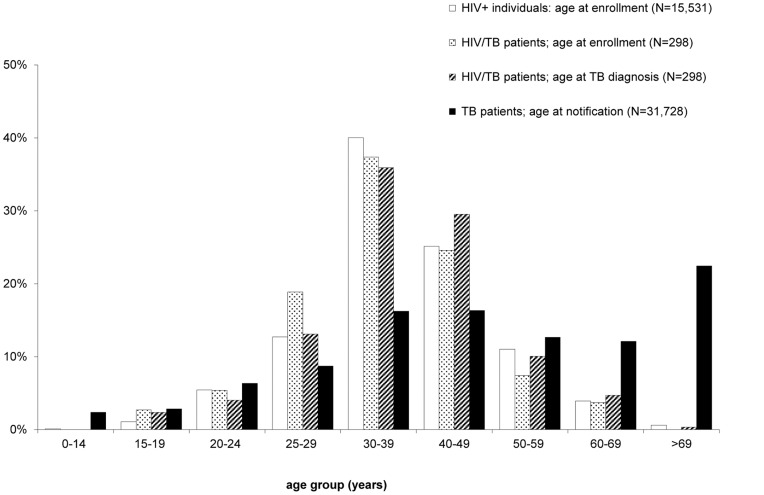
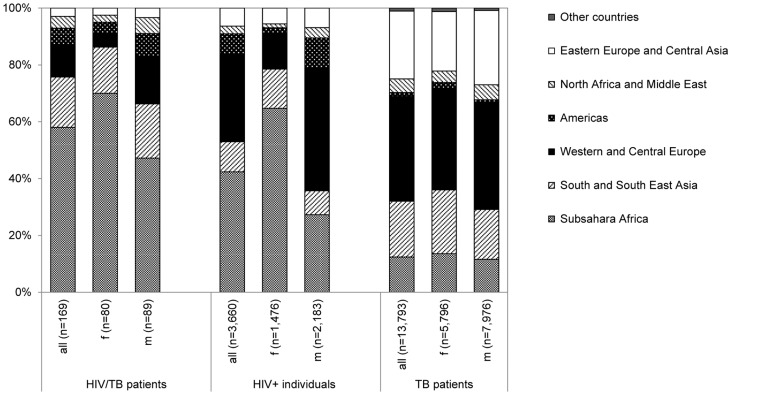
Tuberculosis (TB) and HIV comorbidity is a major challenge in TB prevention and control but difficult to assess in Germany as in other countries, where data confidentiality precludes notifying the HIV status of TB patients. We aimed to estimate the HIV-prevalence in TB patients in Germany, 2002-2009, and to characterize the HIV/TB patients demographically. Data from the long-term observational open multicentre cohort ClinSurv HIV were used to identify incident TB in HIV-positive individuals. We assessed the cohort's coverage for the nationwide HIV-positive population by contrasting ClinSurv HIV patients under antiretroviral therapy (ART) with national HIV patient numbers derived from ART prescriptions (data by Insight Health; available for 2006-2009). The HIV-prevalence in TB patients was calculated as the number of HIV/TB cases projected for Germany over all culture-positive TB notifications. From 2002 to 2009, 298 of 15,531 HIV-positive patients enrolled in the ClinSurv HIV cohort were diagnosed with TB. A 21% cohort coverage was determined. The annual estimates of the HIV-prevalence in TB patients were on average 4.5% and ranged from 3.5% (95%CI 2.3-5.1%) in 2007 to 6.6% (95%CI 5.0-8.5%) in 2005. The most recent estimate for 2009 was 4.0% (95%CI 2.6-5.9%). The 298 HIV/TB patients were characterized by a male-to-female ratio of 2.1, by a median age of 38 years at TB diagnosis, and by 59% of the patients having a foreign origin, mainly from Subsahara Africa. We provide, to our knowledge, the first estimate of the HIV-prevalence in TB patients for Germany by joint evaluation of anonymous HIV and TB surveillance data sources. The identified level of HIV in TB patients approximates available surveillance data from neighbouring countries and indicates a non-negligible HIV/TB burden in Germany. Our estimation approach is valuable for epidemiological monitoring of HIV/TB within the current legal frameworks.
Conflict of interest statement
Figures
References
-
- Corbett EL, Watt CJ, Walker N, Maher D, Williams BG, et al. (2003) The growing burden of tuberculosis: global trends and interactions with the HIV epidemic. Arch Intern Med 163: 1009–1021. - PubMed
-
- Lazarus JV, Olsen M, Ditiu L, Matic S (2008) Tuberculosis-HIV co-infection: policy and epidemiology in 25 countries in the WHO European region. HIV Med 9: 406–414. - PubMed
-
- Pontali E, Pasticci MB, Matteelli A, Baldelli F, Migliori GB (2011) Tuberculosis and HIV co-infection: do we have a surveillance system in Europe? Eur Respir J 38: 1258–1260. - PubMed
-
- Migliori GB, Centis R (2002) Problems to control TB in Eastern Europe and consequences in low incidence countries. Monaldi Arch Chest Dis 57: 285–290. - PubMed
-
- World Health Organization European Ministerial Forum (2007) The Berlin Declaration on Tuberculosis. Berlin, Germany: EUR/07/5061622/5.
Publication types
MeSH terms
Substances
LinkOut - more resources
Full Text Sources
Medical
