


DNA methylation of the IGF2/H19 imprinting control region and adiposity distribution in young adults
- PMID: 23148549
- PMCID: PMC3507742
- DOI: 10.1186/1868-7083-4-21
DNA methylation of the IGF2/H19 imprinting control region and adiposity distribution in young adults
Abstract
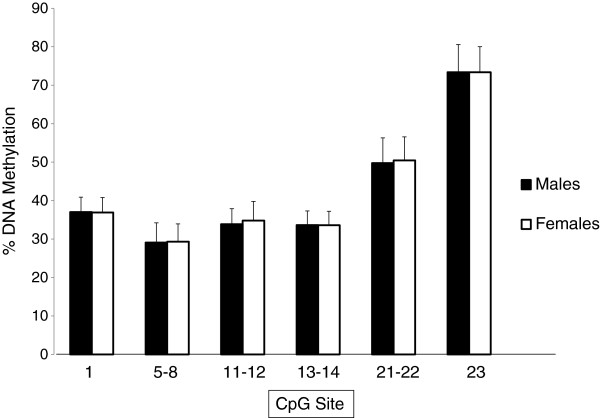
Background: The insulin-like growth factor 2 (IGF2) and H19 imprinted genes control growth and body composition. Adverse in-utero environments have been associated with obesity-related diseases and linked with altered DNA methylation at the IGF2/H19 locus. Postnatally, methylation at the IGF2/H19 imprinting control region (ICR) has been linked with cerebellum weight. We aimed to investigate whether decreased IGF2/H19 ICR methylation is associated with decreased birth and childhood anthropometry and increased contemporaneous adiposity.DNA methylation in peripheral blood (n = 315) at 17 years old was measured at 12 cytosine-phosphate-guanine sites (CpGs), analysed as Sequenom MassARRAY EpiTYPER units within the IGF2/H19 ICR. Birth size, childhood head circumference (HC) at six time-points and anthropometry at age 17 years were measured. DNA methylation was investigated for its association with anthropometry using linear regression.
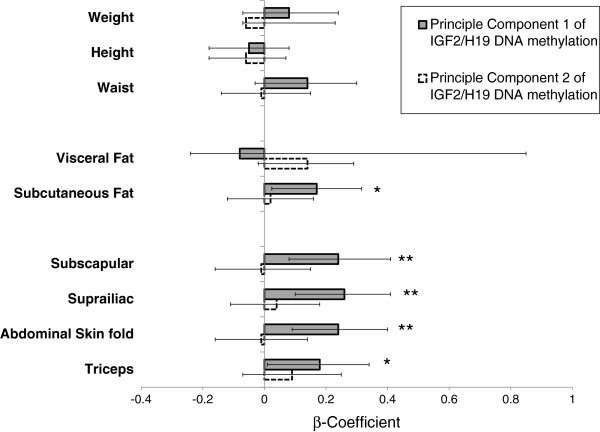
Results: The principal component of IGF2/H19 ICR DNA methylation (representing mean methylation across all CpG units) positively correlated with skin fold thickness (at four CpG units) (P-values between 0.04 to 0.001) and subcutaneous adiposity (P = 0.023) at age 17, but not with weight, height, BMI, waist circumference or visceral adiposity. IGF2/H19 methylation did not associate with birth weight, length or HC, but CpG unit 13 to 14 methylation was negatively associated with HC between 1 and 10 years. β-coefficients of four out of five remaining CpG units also estimated lower methylation with increasing childhood HC.
Conclusions: As greater IGF2/H19 methylation was associated with greater subcutaneous fat measures, but not overall, visceral or central adiposity, we hypothesize that obesogenic pressures in youth result in excess fat being preferentially stored in peripheral fat depots via the IGF2/H19 domain. Secondly, as IGF2/H19 methylation was not associated with birth size but negatively with early childhood HC, we hypothesize that the HC may be a more sensitive marker of early life programming of the IGF axis and of fetal physiology than birth size. To verify this, investigations of the dynamics of IGF2/H19 methylation and expression from birth to adolescence are required.
Figures
References
-
- Baker J, Liu JP, Robertson EJ, Efstratiadis A. Role of insulin-like growth-factors in embryonic and postnatal-growth. Cell. 1993;75:73–82. - PubMed
LinkOut - more resources
Full Text Sources
Miscellaneous
