Information management strategies within conversations about cigarette smoking: parenting correlates and longitudinal associations with teen smoking
- PMID: 23148939
- PMCID: PMC3737289
- DOI: 10.1037/a0030720
Information management strategies within conversations about cigarette smoking: parenting correlates and longitudinal associations with teen smoking
Abstract
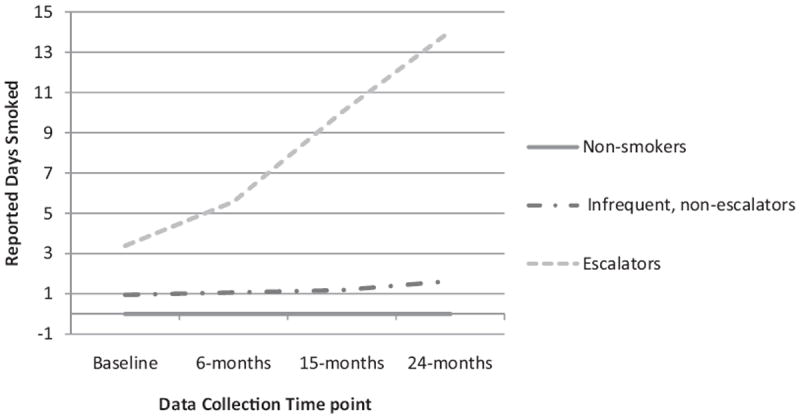
The present study examined smoking-specific and general parenting predictors of in vivo observed patterns of parent-adolescent discussion concerning adolescents' cigarette smoking experiences and associations between these observed patterns and 24-month longitudinal trajectories of teen cigarette smoking behavior (nonsmokers, current experimenters, escalators). Parental solicitation, adolescent disclosure, and adolescent information management were coded from direct observations of 528 video-recorded parent-adolescent discussions about cigarette smoking with 344 teens (M age = 15.62 years) with a history of smoking experimentation (321 interactions with mothers, 207 interactions with fathers). Adolescent initiation of discussions concerning their own smoking behavior (21% of interactions) was predicted by lower levels of maternal observed disapproval of cigarette smoking and fewer teen-reported communication problems with mothers. Maternal initiation in discussions (35% of interactions) was associated with higher levels of family rules about illicit substance use. Three categories of adolescent information management (full disclosure, active secrecy, incomplete strategies) were coded by matching adolescents' confidential self-reported smoking status with their observed spontaneous disclosures and responses to parental solicitations. Fully disclosing teens reported higher quality communication with their mothers (more open, less problematic). Teens engaged in active secrecy with their mothers when families had high levels of parental rules about illicit substance use and when mothers expressed lower levels of expectancies that their teen would smoke in the future. Adolescents were more likely to escalate their smoking over 2 years if their parents initiated the discussion of adolescent smoking behavior (solicited) and if adolescents engaged in active secrecy.
(PsycINFO Database Record (c) 2013 APA, all rights reserved).
Figures
References
-
- Barber BK, Stolz HE, Olsen JA. Parental support, psychological control, and behavioral control: Assessing relevance, across time, culture, and method. Monographs of the Society for Research in Child Development. 2005;70:1–137. - PubMed
-
- Barnes HL, Olson DH. Parent-adolescent communication and the circumplex model. Child Development. 1985;56:438–447. doi: 10.2307/1129732. - DOI
-
- Boone TL, Lefkowitz ES. Mother-adolescent health communication: Are all conversations created equally? Journal of Youth and Adolescence. 2007;36:1038–1047. doi: 10.1007/s10964-006-9138-2. - DOI
-
- Bulcroft RA, Carmody DC, Bulcroft KA. Patterns of independence giving to adolescents: Variations by race, age, and gender of child. Journal of Marriage and the Family. 1996;58:866–883. doi: 10.2307/353976. - DOI
Publication types
MeSH terms
Grants and funding
LinkOut - more resources
Full Text Sources
Other Literature Sources
Medical