


Correlation of serology with morphological changes in gastric biopsy in Helicobacter pylori infection and evaluation of immunohistochemistry for H. pylori identification
- PMID: 23150022
- PMCID: PMC3530991
- DOI: 10.4103/1319-3767.103428
Correlation of serology with morphological changes in gastric biopsy in Helicobacter pylori infection and evaluation of immunohistochemistry for H. pylori identification
Abstract
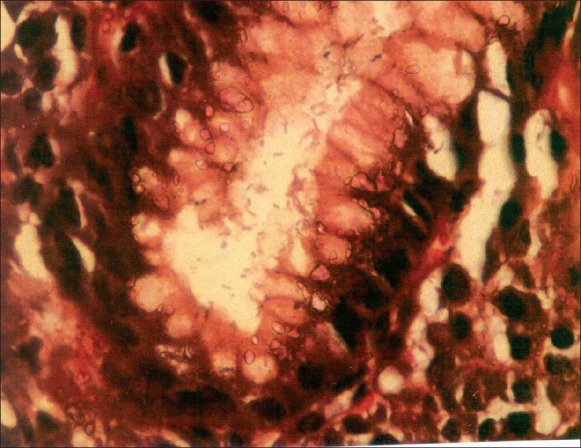
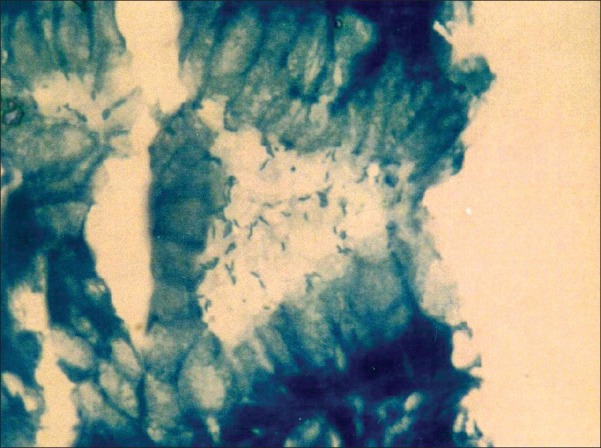
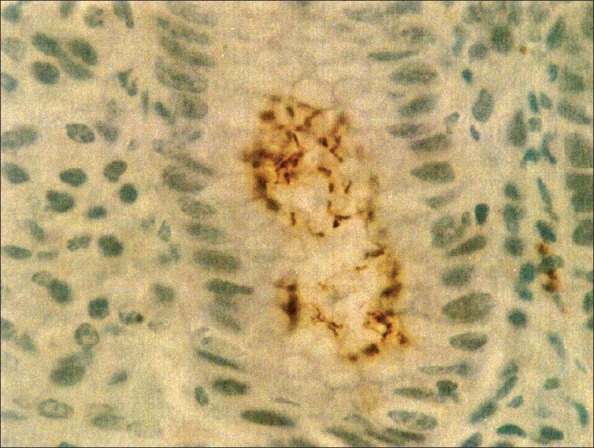
Background/aim: Helicobacter pylori is implicated in various gastroduodenal diseases and many tests are available for its detection. The present study attempted to document the morphological changes in the gastric mucosa induced by H. pylori colonization and correlate them with the severity of the infection. The study also compared various diagnostic tests and evaluated the different staining methods used for H. pylori detection, especially immunohistochemical identification.
Patients and methods: One hundred and two patients with dyspepsia were included. Enzyme-linked immunosorbent assay (ELISA) for H. pylori-specific immunoglobulin G (IgG), immunoglobulin A (IgA), and immunoglobulin M (IgM) was used. Rapid urease test was performed on endoscopic biopsy and it was stained with hematoxylin and eosin (H and E), modified Giemsa, and immunohistochemical stains.
Results: A significant correlation was found between the density of H. pylori and severity of gastritis. A significant correlation was observed between serology (especially when used in combination, IgG and IgA) and status of H. pylori. Immunohistochemical staining enhanced the diagnostic yield of H. pylori detection.
Conclusions: Immunohistochemistry (IHC) should be used judiciously, whereas simple and economical tests like modified Giemsa should be used routinely for the detection of H. pylori. Combined ELISA (IgG and IgA) should be preferred over single ELISA. Simultaneous morphological and serological detection of H. pylori is preferable as H. pylori may not be detected on morphology alone due to its patchy distribution in the stomach.
Conflict of interest statement
Figures
References
-
- Marshall BJ, Warren JR. Unidentified curved bacilli in the stomach of patients with gastritis and peptic ulceration. Lancet. 1984;1:1311–5. - PubMed
-
- Blaser MJ. Helicobacter pylori and the pathogenesis of gastroduodenal inflammation. J Infect Dis. 1990;161:626–33. - PubMed
-
- Wotherspoon A, Ortiz-Hidalgo C, Falzon MR, Isaacson PG. Helicobacter pylori associated gastritis and primary B cell Lymphoma. Lancet. 1991;338:1175–6. - PubMed
-
- Graham DY, Klein PD, Evans DG, Fiedorek SC, Evans DJ, Jr, Adam E, et al. Helicobacter pylori: Epidemiology, relationship to gastric cancer and the role of infants in transmission. Eur J gastroenterol Hepatol. 1992;4(suppl):S1–6.
-
- Kumar M, Yachha SK, Aggarwal R, Shukla S, Pandey R, Prasad KN, et al. Healing of chronic antral gastritis: Effect of sucralfate and colloidal bismuth subcitrate. Ind J Gastroenterol. 1996;15:90–3. - PubMed
Publication types
MeSH terms
Substances
LinkOut - more resources
Full Text Sources
Medical
Miscellaneous