


The Alberta moving beyond breast cancer (AMBER) cohort study: a prospective study of physical activity and health-related fitness in breast cancer survivors
- PMID: 23153358
- PMCID: PMC3534483
- DOI: 10.1186/1471-2407-12-525
The Alberta moving beyond breast cancer (AMBER) cohort study: a prospective study of physical activity and health-related fitness in breast cancer survivors
Abstract
Background: Limited research has examined the association between physical activity, health-related fitness, and disease outcomes in breast cancer survivors. Here, we present the rationale and design of the Alberta Moving Beyond Breast Cancer (AMBER) Study, a prospective cohort study designed specifically to examine the role of physical activity and health-related fitness in breast cancer survivorship from the time of diagnosis and for the balance of life. The AMBER Study will examine the role of physical activity and health-related fitness in facilitating treatment completion, alleviating treatment side effects, hastening recovery after treatments, improving long term quality of life, and reducing the risks of disease recurrence, other chronic diseases, and premature death.
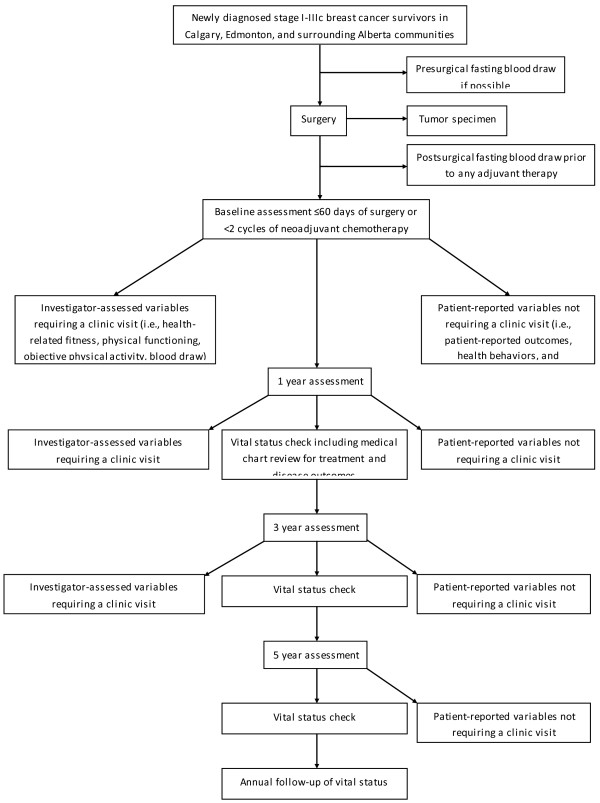
Methods/design: The AMBER Study will enroll 1500 newly diagnosed, incident, stage I-IIIc breast cancer survivors in Alberta, Canada over a 5 year period. Assessments will be made at baseline (within 90 days of surgery), 1 year, and 3 years consisting of objective and self-reported measurements of physical activity, health-related fitness, blood collection, lymphedema, patient-reported outcomes, and determinants of physical activity. A final assessment at 5 years will measure patient-reported data only. The cohort members will be followed for an additional 5 years for disease outcomes.
Discussion: The AMBER cohort will answer key questions related to physical activity and health-related fitness in breast cancer survivors including: (1) the independent and interactive associations of physical activity and health-related fitness with disease outcomes (e.g., recurrence, breast cancer-specific mortality, overall survival), treatment completion rates, symptoms and side effects (e.g., pain, lymphedema, fatigue, neuropathy), quality of life, and psychosocial functioning (e.g., anxiety, depression, self-esteem, happiness), (2) the determinants of physical activity and health-related fitness including demographic, medical, social cognitive, and environmental variables, (3) the mediators of any observed associations between physical activity, health-related fitness, and health outcomes including biological, functional, and psychosocial, and (4) the moderators of any observed associations including demographic, medical, and biological/disease factors. Taken together, these data will provide a comprehensive inquiry into the outcomes, determinants, mechanisms, and moderators of physical activity and health-related fitness in breast cancer survivors.
Figures
References
-
- Canadian Cancer Society's Steering Committee on Cancer Statistics. Canadian Cancer Statistics. Toronto, ON: Canadian Cancer Society 2011; 2011. May 2011 ISSN 0835–2976; 2011.
Publication types
MeSH terms
Grants and funding
LinkOut - more resources
Full Text Sources
Medical
