


Biomarkers of Plasmodium falciparum infection during pregnancy in women living in northeastern Tanzania
- PMID: 23155405
- PMCID: PMC3498253
- DOI: 10.1371/journal.pone.0048763
Biomarkers of Plasmodium falciparum infection during pregnancy in women living in northeastern Tanzania
Abstract
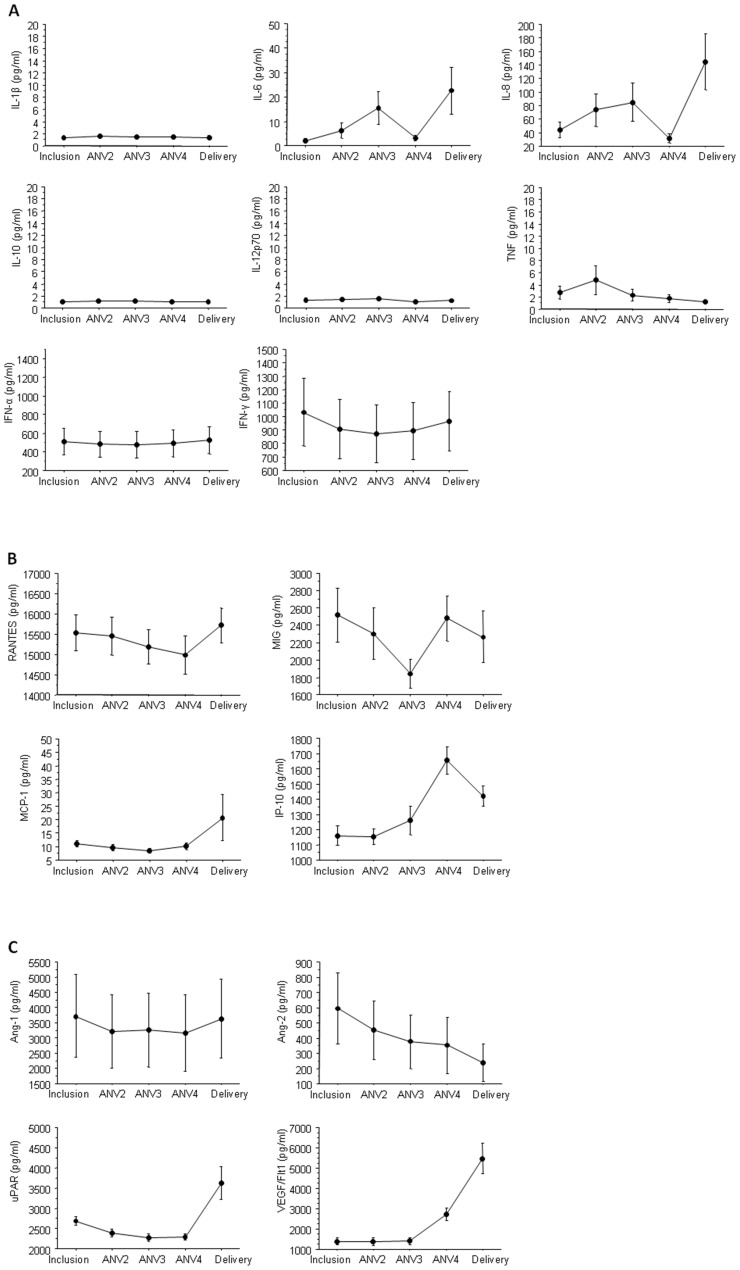
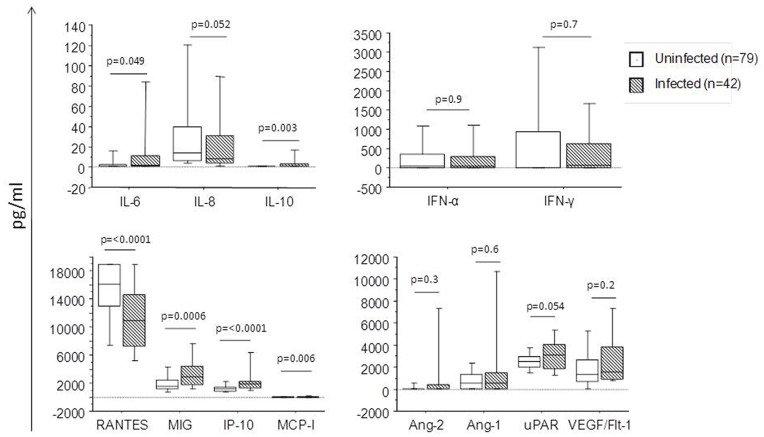
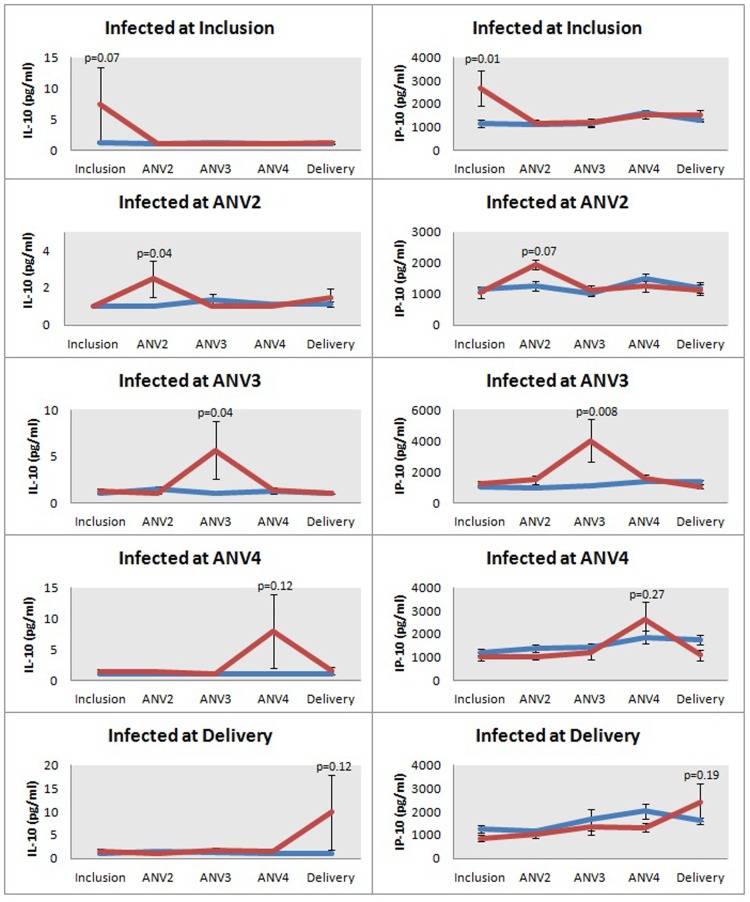
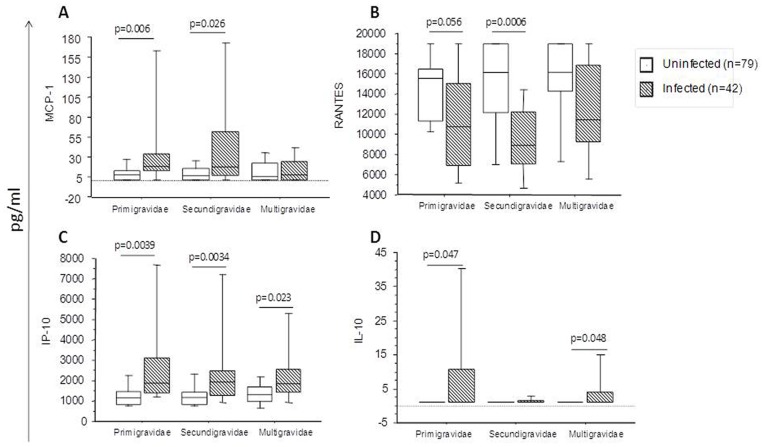
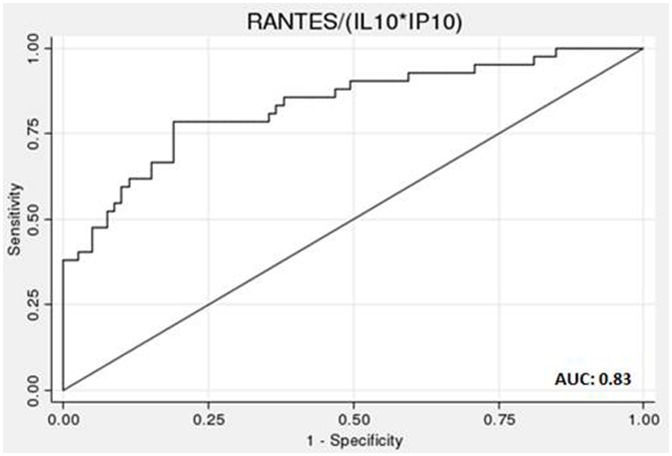
In pregnant women, Plasmodium falciparum infections are an important cause of maternal morbidity as well as fetal and neonatal mortality. Erythrocytes infected by these malaria-causing parasites accumulate through adhesive interactions in placental intervillous spaces, thus evading detection in peripheral blood smears. Sequestered infected erythrocytes induce inflammation, offering the possibility of detecting inflammatory mediators in peripheral blood that could act as biomarkers of placental infection. In a longitudinal, prospective study in Tanzania, we quantified a range of different cytokines, chemokines and angiogenic factors in peripheral plasma samples, taken on multiple sequential occasions during pregnancy up to and including delivery, from P. falciparum-infected women and matched uninfected controls. The results show that during healthy, uninfected pregnancies the levels of most of the panel of molecules we measured were largely unchanged except at delivery. In women with P. falciparum, however, both comparative and longitudinal assessments consistently showed that the levels of IL-10 and IP-10 increased significantly whilst that of RANTES decreased significantly, regardless of gestational age at the time the infection was detected. ROC curve analysis indicated that a combination of increased IL-10 and IP-10 levels and decreased RANTES levels might be predictive of P. falciparum infections. In conclusion, our data suggest that host biomarkers in peripheral blood may represent useful diagnostic markers of P. falciparum infection during pregnancy, but placental histology results would need to be included to verify these findings.
Conflict of interest statement
Figures
Similar articles
-
Circulating Cytokines Associated with Poor Pregnancy Outcomes in Beninese Exposed to Infection with Plasmodium falciparum.Infect Immun. 2020 Jul 21;88(8):e00042-20. doi: 10.1128/IAI.00042-20. Print 2020 Jul 21. Infect Immun. 2020. PMID: 32513854 Free PMC article.
-
Submicroscopic infections with Plasmodium falciparum during pregnancy and their association with circulating cytokine, chemokine, and cellular profiles.Clin Vaccine Immunol. 2014 Jun;21(6):859-66. doi: 10.1128/CVI.00009-14. Epub 2014 Apr 9. Clin Vaccine Immunol. 2014. PMID: 24717969 Free PMC article.
-
Placental cytokine and chemokine profiles reflect pregnancy outcomes in women exposed to Plasmodium falciparum infection.Infect Immun. 2014 Sep;82(9):3783-9. doi: 10.1128/IAI.01922-14. Epub 2014 Jun 23. Infect Immun. 2014. PMID: 24958713 Free PMC article.
-
VAR2CSA-Mediated Host Defense Evasion of Plasmodium falciparum Infected Erythrocytes in Placental Malaria.Front Immunol. 2021 Feb 9;11:624126. doi: 10.3389/fimmu.2020.624126. eCollection 2020. Front Immunol. 2021. PMID: 33633743 Free PMC article. Review.
-
Pregnancy-specific malarial immunity and risk of malaria in pregnancy and adverse birth outcomes: a systematic review.BMC Med. 2020 Jan 16;18(1):14. doi: 10.1186/s12916-019-1467-6. BMC Med. 2020. PMID: 31941488 Free PMC article.
Cited by
-
Circulating Cytokines Associated with Poor Pregnancy Outcomes in Beninese Exposed to Infection with Plasmodium falciparum.Infect Immun. 2020 Jul 21;88(8):e00042-20. doi: 10.1128/IAI.00042-20. Print 2020 Jul 21. Infect Immun. 2020. PMID: 32513854 Free PMC article.
-
Impact of placental Plasmodium falciparum malaria infection on the Cameroonian maternal and neonate's plasma levels of some cytokines known to regulate T cells differentiation and function.Malar J. 2016 Nov 21;15(1):561. doi: 10.1186/s12936-016-1611-0. Malar J. 2016. PMID: 27871325 Free PMC article.
-
PERIPHERAL PARASITAEMIA AND ITS ASSOCIATION WITH PLASMA CYTOKINES LEVELS IN MALARIA-INFECTED PREGNANT WOMEN IN ABA, ABIA STATE, NIGERIA.Afr J Infect Dis. 2017 Jun 8;11(2):54-61. doi: 10.21010/ajid.v11i2.7. eCollection 2017. Afr J Infect Dis. 2017. PMID: 28670640 Free PMC article.
-
Interleukin-10 and soluble tumor necrosis factor receptor II are potential biomarkers of Plasmodium falciparum infections in pregnant women: a case-control study from Nanoro, Burkina Faso.Biomark Res. 2017 Dec 13;5:34. doi: 10.1186/s40364-017-0114-7. eCollection 2017. Biomark Res. 2017. PMID: 29255607 Free PMC article.
-
Insights Into Circulating Cytokine Dynamics During Pregnancy in HIV-Infected Beninese Exposed to Plasmodium falciparum Malaria.Am J Trop Med Hyg. 2015 Aug;93(2):287-92. doi: 10.4269/ajtmh.14-0653. Epub 2015 Jun 22. Am J Trop Med Hyg. 2015. PMID: 26101276 Free PMC article. Clinical Trial.
References
-
- Steketee RW, Nahlen BL, Parise ME, Menendez C (2001) The burden of malaria in pregnancy in malaria-endemic areas. The American Journal of Tropical Medicine and Hygiene 64: 28–35. - PubMed
-
- Fried M, Duffy PE (1996) Adherence of plasmodium falciparum to chondroitin sulfate A in the human placenta. Science (New York, N.Y.) 272: 1502–1504. - PubMed
-
- Menendez C, Ordi J, Ismail MR, Ventura PJ, Aponte JJ, et al. (2000) The impact of placental malaria on gestational age and birth weight. The Journal of Infectious Diseases 181: 1740–1745. - PubMed
-
- Dorman EK, Shulman CE, Kingdom J, Bulmer JN, Mwendwa J, et al. (2002) Impaired uteroplacental blood flow in pregnancies complicated by falciparum malaria. Ultrasound in Obstetrics & Gynecology : The Official Journal of the International Society of Ultrasound in Obstetrics and Gynecology 19: 165–170. - PubMed
Publication types
MeSH terms
Substances
LinkOut - more resources
Full Text Sources
