. 2012;7(11):e49646.
doi: 10.1371/journal.pone.0049646. Epub 2012 Nov 14.

Neutrophil elastase alters the murine gut microbiota resulting in enhanced Salmonella colonization

Affiliations

Neutrophil elastase alters the murine gut microbiota resulting in enhanced Salmonella colonization

Navkiran Gill et al. PLoS One. 2012.

Abstract

The intestinal microbiota has been found to play a central role in the colonization of Salmonella enterica serovar Typhimurium in the gastrointestinal tract. In this study, we present a novel process through which Salmonella benefit from inflammatory induced changes in the microbiota in order to facilitate disease. We show that Salmonella infection in mice causes recruitment of neutrophils to the gut lumen, resulting in significant changes in the composition of the intestinal microbiota. This occurs through the production of the enzyme elastase by neutrophils. Administration of recombinant neutrophil elastase to infected animals under conditions that do not elicit neutrophil recruitment caused shifts in microbiota composition that favored Salmonella colonization, while inhibition of neutrophil elastase reduced colonization. This study reveals a new relationship between the microbiota and the host during infection.


Conflict of interest statement

Competing Interests: The authors have declared that no competing interests exist.

Figures

Figure 1
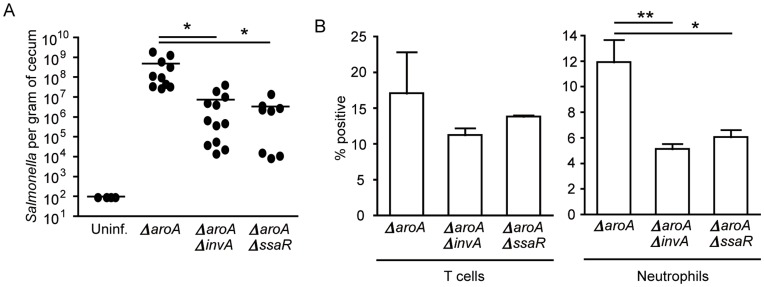
Figure 1. Infection with ΔaroA Salmonella results in extensive gut colonization and neutrophil recruitment.
Six- to eight-week-old female mice were treated with 450 mg/L of streptomycin for 2 days in their drinking water. After antibiotic withdrawal, mice were infected with 2.7×10⁸ colony-forming units (CFUs) of the indicated Salmonella strain. A) Salmonella colonization was enumerated at five days post infection by plating serial dilutions of cecum homogenates on LB plates supplemented with 100 µg/mL of streptomycin. The limit of detection for this assay was 100 CFUs. B) Ceca were harvested at five days post infection and single cell suspensions were obtained. Staining and flow cytometry analyses were used to determine percentages of T cells (CD45+CD3+NK1.1−) and neutrophils (CD45+GR1+MPO+). Four mice per group were used, and experiments were repeated at least three times. * indicates p<0.05, **p<0.01.
Figure 2
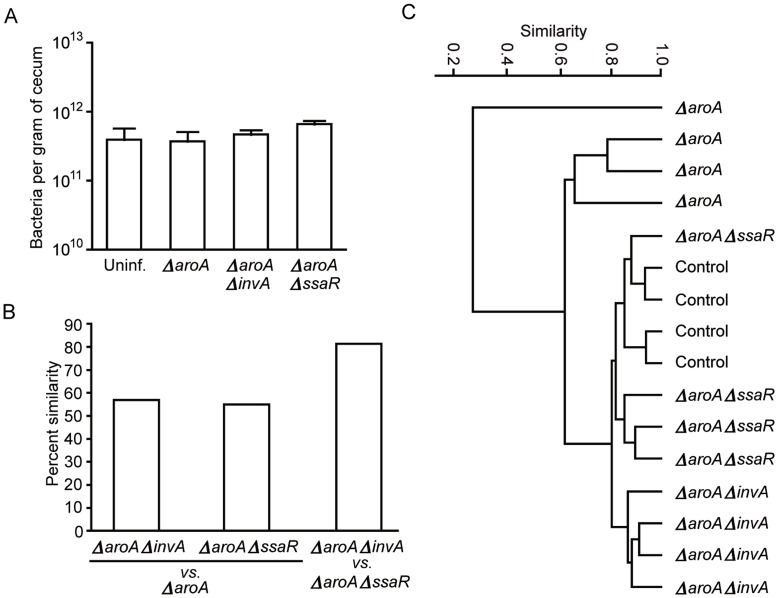
Figure 2. The gut microbiota composition of ΔaroA-infected mice is significantly altered compared to ΔaroAΔinvA- and ΔaroAΔssaR-infected mice.
Six- to eight-week-old female mice were treated with 450 mg/L of streptomycin for 2 days in their drinking water. After antibiotic withdrawal, mice were infected with 2.7×10⁸ CFUs of the indicated strain. A) SYBR staining was utilized to determine the total number of bacteria in cecum samples at day 5 post infection; No significant differences were found. B) and C) Bacterial 16s rRNA genes was amplified from fecal samples at day 5 post infection for TRFLP analysis. B) graph representing percent similarity of microbiota between groups C) dendrogram showing separation of treatment groups based on changes in microbial composition. ΔaroA-infected mice were significantly different in their microbial composition compared to ΔaroAΔinvA- and ΔaroAΔssaR-infected and control uninfected mice. Four mice per group were used, and experiments were repeated at least three times. Data from one representative experiment is shown.
Figure 3
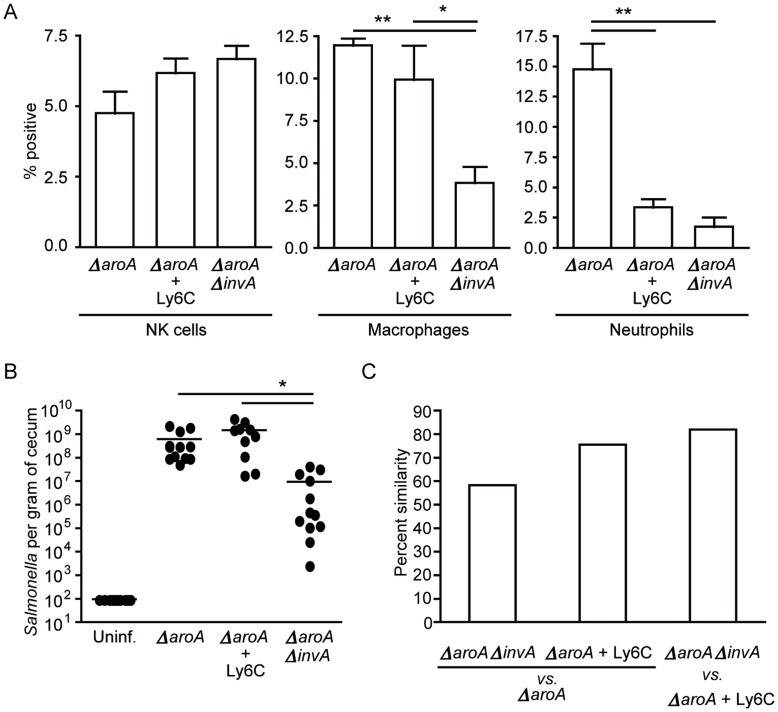
Figure 3. Neutrophil depletion in ΔaroA-infected mice eliminates the shift in microbiota composition caused by Salmonella infection.
Six- to eight-week-old female mice were treated with 450 mg/L of streptomycin for 2 days in their drinking water. After antibiotic withdrawal, mice were infected with 2.7×10⁸ cells of the indicated strain. Neutrophils were depleted by injecting Ly6c antibody intraperitoneally one day before infection and 1 and 3 days post infection. A) Ceca were harvested at five days post infection and single cell suspensions were obtained. Staining and flow cytometry analyses were used to confirm that neutrophils were significantly decreased in Ly6c-treated mice. NK cells (CD45+NK1.1+CD3-), macrophages (CD45+CD11c+CD11b+) and neutrophils (CD45+GR1+MPO+) were analyzed. B) Salmonella colonization levels were determined five days post infection by plating serial dilutions of cecum homogenates on LB plates supplemented with 100 µg/ml of streptomycin. C) Bacterial 16s rRNA genes were amplified from fecal samples at day 5 post infection for TRFLP analysis, graph shows percent similarity of microbiota between treatment groups. Gut microbiota composition of ΔaroA-infected mice was significantly different compared to ΔaroAΔinvA-infected mice or neutrophil depleted, ΔaroA-infected mice. Four mice per group were used, and experiments were repeated at least three times. * indicates p<0.05, **p<0.01.
Figure 4
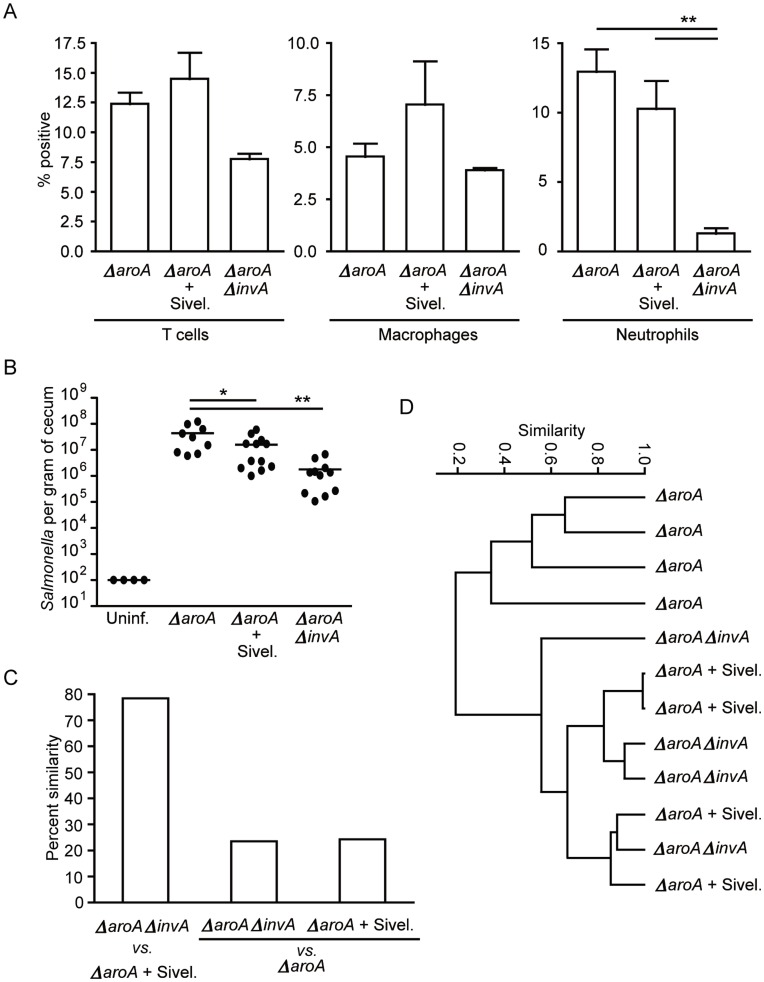
Figure 4. Neutrophil elastase inhibition during ΔaroA Salmonella infection eliminates the effect of infection on gut microbiota composition.
Six- to eight-week-old female mice were treated with 450 mg/L of streptomycin for 2 days in their drinking water. After antibiotic withdrawal, mice were infected with 2.7×10⁸ CFUs of the indicated strain. Neutrophil elastase was inhibited by injection of Sivelestat sodium hydrate (Sivel.) intraperitoneally twice a day on days -1, 0, 1, 2, 3, and 4 post infection. A) Ceca were harvested at five days post infection and single cell suspensions were obtained. Staining and flow cytometry analyses were used to confirm that neutrophils were not decreased in mice treated with the neutrophil elastase inhibitor. T cells (CD45+CD3+NK1.1-), neutrophils (CD45+GR1+MPO+) and macrophages (CD45+CD11c+CD11b+) were analyzed. B) Salmonella colonization levels were determined five days post infection by plating serial dilutions of cecum homogenates on LB plates supplemented with 100 µg/ml of streptomycin. Outliers were detected using the Grubbs’ test and removed from the dataset. C) and D) Bacterial 16s rRNA genes were amplified from fecal samples at day 5 post infection for TRFLP analysis. C) graph showing percent similarity of microbiota between treatment groups D) dendrogram showing the separation of treatment groups based on changes in microbial composition. ΔaroA-infected mice receiving neutrophil elastase inhibitor showed a significantly different gut microbial composition compared to untreated mice but similar to ΔaroAΔinvA-infected mice. Four mice per group were used, and experiments were repeated at least three times. Outliers were removed from data sets using Grubbs’ test. * indicates p<0.05, **p<0.01.
Figure 5
Figure 5. Recombinant neutrophil elastase delivery to mice infected with ΔaroAΔinvA Salmonella results in increased colonization and significant changes in histopathology.
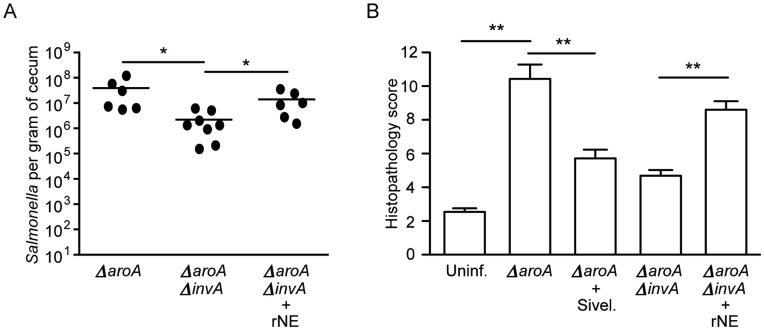
Six- to eight-week-old female mice were treated with 450 mg/L of streptomycin for 2 days in their drinking water. After antibiotic withdrawal, mice were infected with 2.7×10⁸ CFUs of the indicated strain. Recombinant neutrophil elastase was injected orally and intraperitoneally once a day on days 0, 1, 2, 3, and 4 post infection. A) Salmonella colonization was determined at five days post infection by plating serial dilutions of cecum homogenates on LB plates supplemented with 100 µg/ml of streptomycin. B) Pathology scores of cecal tissue 5 days post infection. * indicates p<0.05, ** indicates p<0.01.
Figure 6
Figure 6. 16S rRNA gene pyrosequencing revealed several OTUs whose abundance correlates with neutrophil elastase activity in the gut during infection.
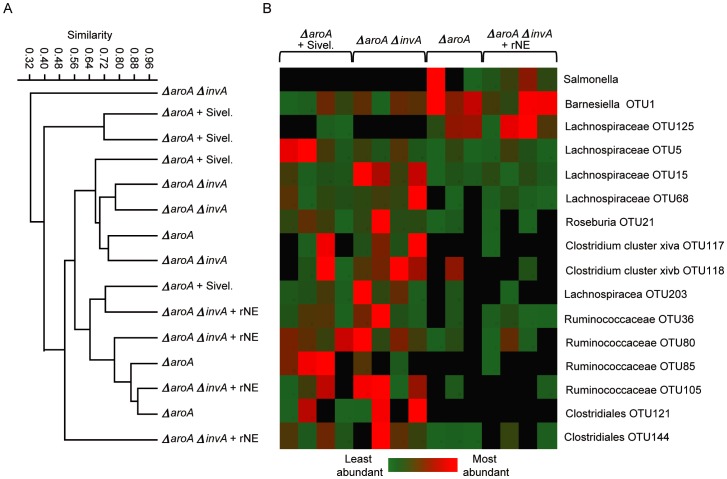
Six- to eight-week-old female mice were treated with 450 mg/L of streptomycin for 2 days in their drinking water. After antibiotic withdrawal, mice were infected with 2.7×10⁸ cells of the indicated strain. Bacterial 16S rRNA genes were amplified with bar-coded primers from DNA isolated from fecal samples at day 5 post infection. A) Microbial profiles were compared by cluster analysis at the OTU level using Bray-Curtis metrics. B) Heat map showing relative abundance of OTUs that differed between groups.
Figure 7
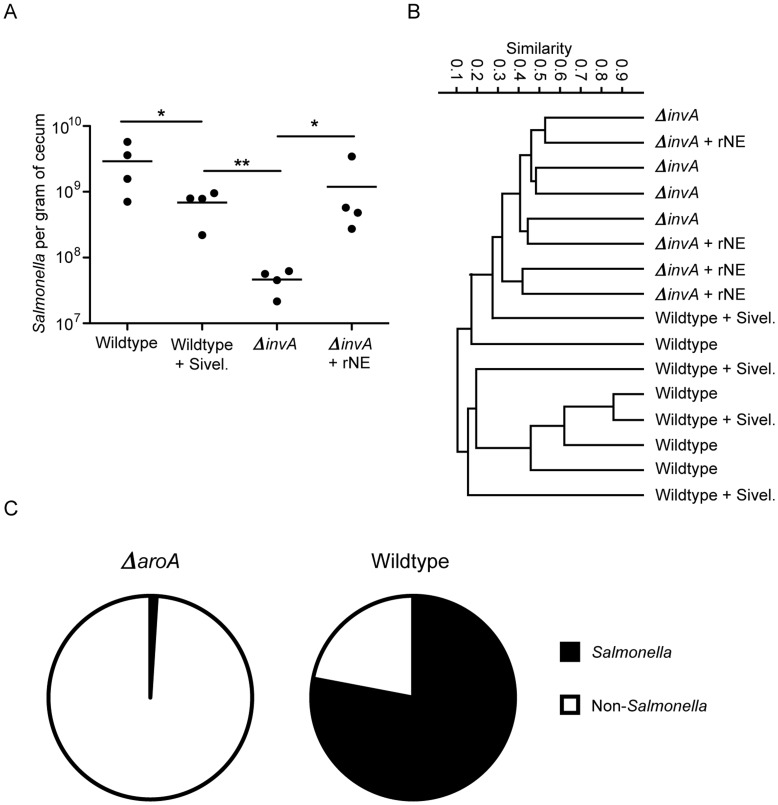
Figure 7. Modulation of neutrophil elastase activity during wild-type infection alters pathogen loads but do not significantly affect microbiota composition.
Six- to eight-week-old female mice were treated with 450 mg/L of streptomycin for 2 days in their drinking water. After antibiotic withdrawal, mice were infected with 2.7×10⁸ cells of the indicated wild type strain. A) Salmonella colonization levels were determined three days post infection by plating serial dilutions of cecum homogenates on LB plates supplemented with 100 µg/ml of streptomycin. B) Bacterial 16S rRNA gene fragments were isolated from fecal samples at day 5 post infection and amplified using 33 nucleotide-bar-coded primer pairs. 454 pyrosequencing reads were analyzed by cluster analysis using Bray-Curtis metrics of microbial profiles. C) Salmonella abundance was assessed by 454 pyrosequencing of bacterial 16S rRNA gene fragments isolated from feces of mice infected with either wild-type or ΔaroA Salmonella.
Figure 8
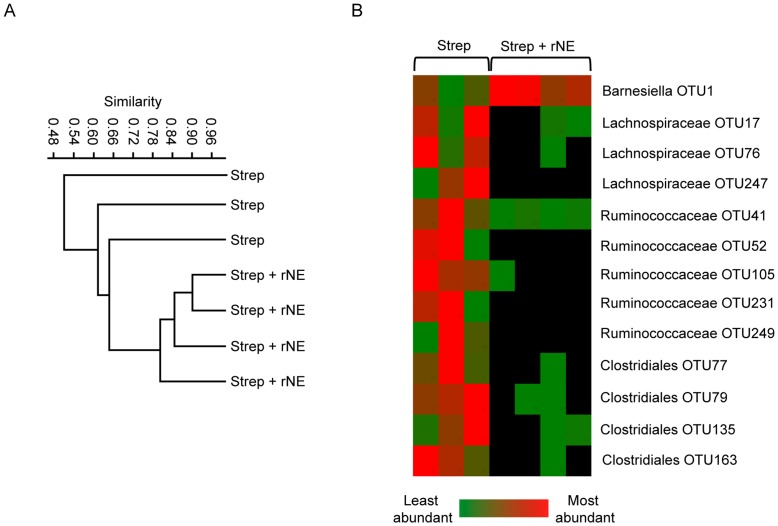
Figure 8. Recombinant neutrophil elastase treatment causes changes in the gut microbiota composition in the absence of infection.
Six- to eight-week-old female mice were treated with 450 mg/L of streptomycin for 2 days in their drinking water. After antibiotic withdrawal recombinant neutrophil elastase was given both orally and intraperitoneally every day for 4 days. Fecal samples were collected at day 4 post treatment. A) 454 pyrosequencing reads were analyzed by cluster analysis using Bray-Curtis metrics of microbial profiles. B) Heat map showing relative abundance of different OTU groups.

References

    1. Neish AS (2009) Microbes in gastrointestinal health and disease. Gastroenterology 136: 65–80. - PMC - PubMed
    1. Backhed F, Ley RE, Sonnenburg JL, Peterson DA, Gordon JI (2005) Host-bacterial mutualism in the human intestine. Science 307: 1915–1920. - PubMed
    1. Sekirov I, Russell SL, Antunes LC, Finlay BB (2010) Gut microbiota in health and disease. Physiol Rev 90: 859–904. - PubMed
    1. Miller CP, Bohnhoff M (1963) Changes in the mouse's enteric microflora associated with enhanced susceptibility to Salmonella infection following streptomycin treatment. J Infect Dis 113: 59–66. - PubMed
    1. Gill N, Wlodarska M, Finlay BB (2011) Roadblocks in the gut: barriers to enteric infection. Cell Microbiol 13: 660–669. - PubMed

Publication types

MeSH terms

Substances