Review
. 2013 Feb 25;202(1-3):2-10.
doi: 10.1016/j.cbi.2012.10.026. Epub 2012 Nov 16.

Aldehyde dehydrogenases: from eye crystallins to metabolic disease and cancer stem cells

Affiliations
Review

Aldehyde dehydrogenases: from eye crystallins to metabolic disease and cancer stem cells

Vasilis Vasiliou et al. Chem Biol Interact. .

Abstract

The aldehyde dehydrogenase (ALDH) superfamily is composed of nicotinamide adenine dinucleotide (phosphate) (NAD(P)(+))-dependent enzymes that catalyze the oxidation of aldehydes to their corresponding carboxylic acids. To date, 24 ALDH gene families have been identified in the eukaryotic genome. In addition to aldehyde metabolizing capacity, ALDHs have additional catalytic (e.g. esterase and reductase) and non-catalytic activities. The latter include functioning as structural elements in the eye (crystallins) and as binding molecules to endobiotics and xenobiotics. Mutations in human ALDH genes and subsequent inborn errors in aldehyde metabolism are the molecular basis of several diseases. Most recently ALDH polymorphisms have been associated with gout and osteoporosis. Aldehyde dehydrogenase enzymes also play important roles in embryogenesis and development, neurotransmission, oxidative stress and cancer. This article serves as a comprehensive review of the current state of knowledge regarding the ALDH superfamily and the contribution of ALDHs to various physiological and pathophysiological processes.


Figures

Fig. 1
Fig. 1
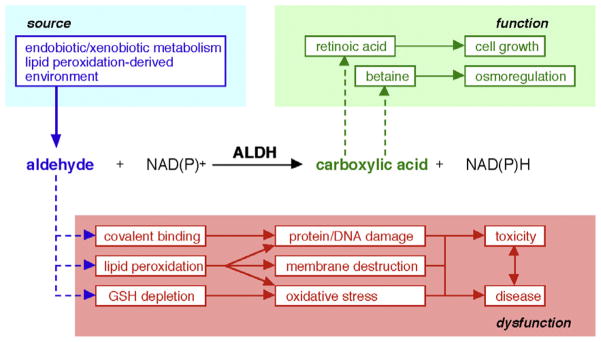
Illustration of ALDH catalytic activity.
Fig. 2
Fig. 2
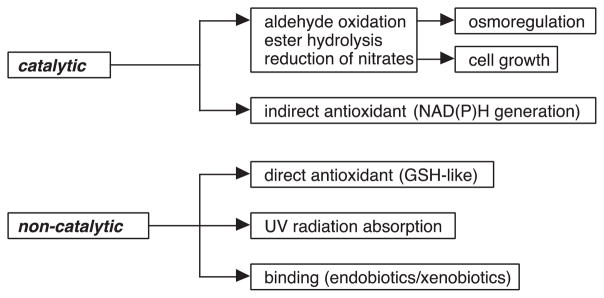
Catalytic and non-catalytic functions of ALDH proteins.
Fig. 3
Fig. 3
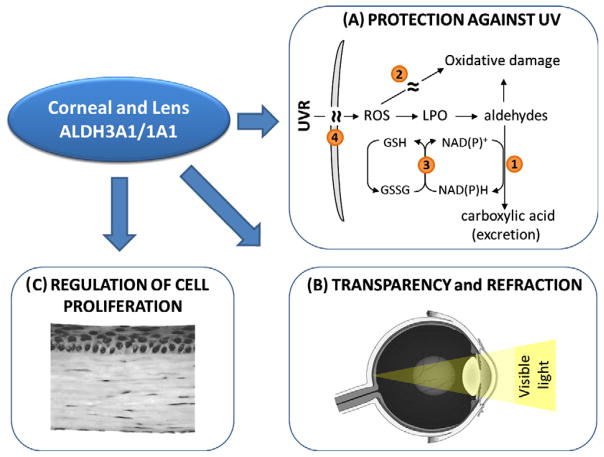
Functions of corneal and lens crystallins. (A) Owning to their catalytic and non-catalytic functions, ALDH3A1 and ALDH1A1 proteins protect inner ocular tissues from ultraviolet radiation (UVR) through: ➊ metabolizing toxic aldehydes, ➋ acting as a direct scavengers of reactive oxygen species, ➌ reproducing regenerating antioxidant NADPH and GSH, and ➍ directly absorbing UVR. (B) These corneal crystallins contribute to cellular transparency in corneal stromal keratocytes, supporting a structural role of these ALDH proteins. (C) A putative regulatory function of ALDH3A1 on corneal cell proliferation has also been proposed.
Fig. 4
Fig. 4
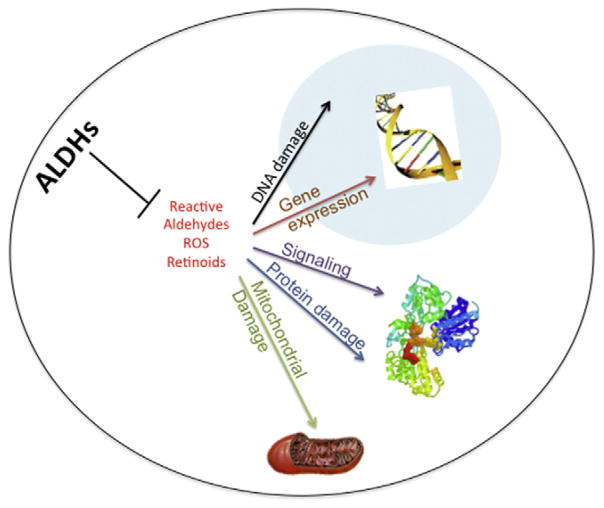
Potential mechanisms by which the ALDHs may play a role in normal HSC biology and leukemagenesis. The ALDH proteins as well as their metabolic products including retinoids, ROS, reactive aldehydes and others may directly and indirectly influence a variety of cellular processes including signal transduction, energy metabolism, gene expression and DNA integrity.
Fig. 5
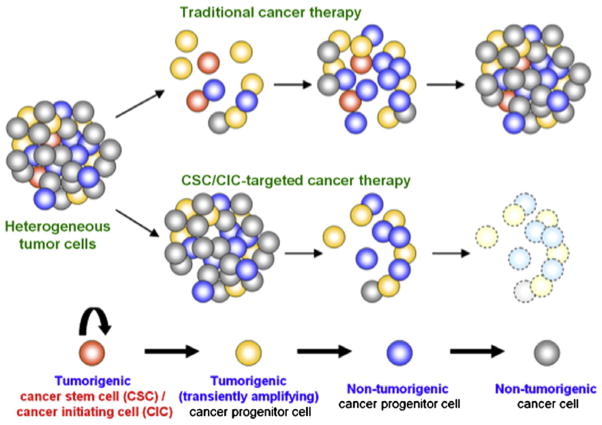
Fig. 5
Cancer stem cell (CSC) hypothesis. Tumor initiation and growth result from the formation of cancer stem cells (CSCs) or cancer initiating cells (CICs). Tumor recurrence after traditional cancer therapy (such as chemotherapy or radiation) occurs from chemoresistant or radioresistant CSC/CICs. In contrast, CSC/CIC-directed therapeutics targets CSC/CICs and eradicate tumor cells.

References

    1. Marchitti SA, Brocker C, Stagos D, Vasiliou V. Non-P450 aldehyde oxidizing enzymes: the aldehyde dehydrogenase superfamily. Expert Opin Drug Metab Toxicol. 2008;4:697–720. - PMC - PubMed
    1. Stagos D, Chen Y, Cantore M, Jester JV, Vasiliou V. Corneal aldehyde dehydrogenases: multiple functions and novel nuclear localization. Brain Res Bull. 2010;81:211–218. - PMC - PubMed
    1. Brocker C, Lassen N, Estey T, Pappa A, Cantore M, Orlova VV, Chavakis T, Kavanagh KL, Oppermann U, Vasiliou V. Aldehyde dehydrogenase 7A1 (ALDH7A1) is a novel enzyme involved in cellular defense against hyperosmotic stress. J Biol Chem. 2010;285:18452–18463. - PMC - PubMed
    1. Vasiliou V, Bairoch A, Tipton KF, Nebert DW. Eukaryotic aldehyde dehydrogenase (ALDH) genes: human polymorphisms, and recommended nomenclature based on divergent evolution and chromosomal mapping. Pharmacogenetics. 1999;9:421–434. - PubMed
    1. Jackson B, Brocker C, Thompson DC, Black W, Vasiliou K, Nebert DW, Vasiliou V. Update on the aldehyde dehydrogenase gene (ALDH) superfamily. Hum Genomics. 2011;5:283–303. - PMC - PubMed

Publication types

MeSH terms