


Should perioperative supplemental oxygen be routinely recommended for surgery patients? A Bayesian meta-analysis
- PMID: 23160100
- PMCID: PMC3504355
- DOI: 10.1097/SLA.0b013e31826cc8da
Should perioperative supplemental oxygen be routinely recommended for surgery patients? A Bayesian meta-analysis
Abstract
Objective: The purpose of this study is to use updated data and Bayesian methods to evaluate the effectiveness of hyperoxia to reduce surgical site infections (SSIs) and/or mortality in both colorectal and all surgery patients. Because few trials assessed potential harms of hyperoxia, hazards were not included.
Background: Use of hyperoxia to reduce SSIs is controversial. Three recent meta-analyses have had conflicting conclusions.
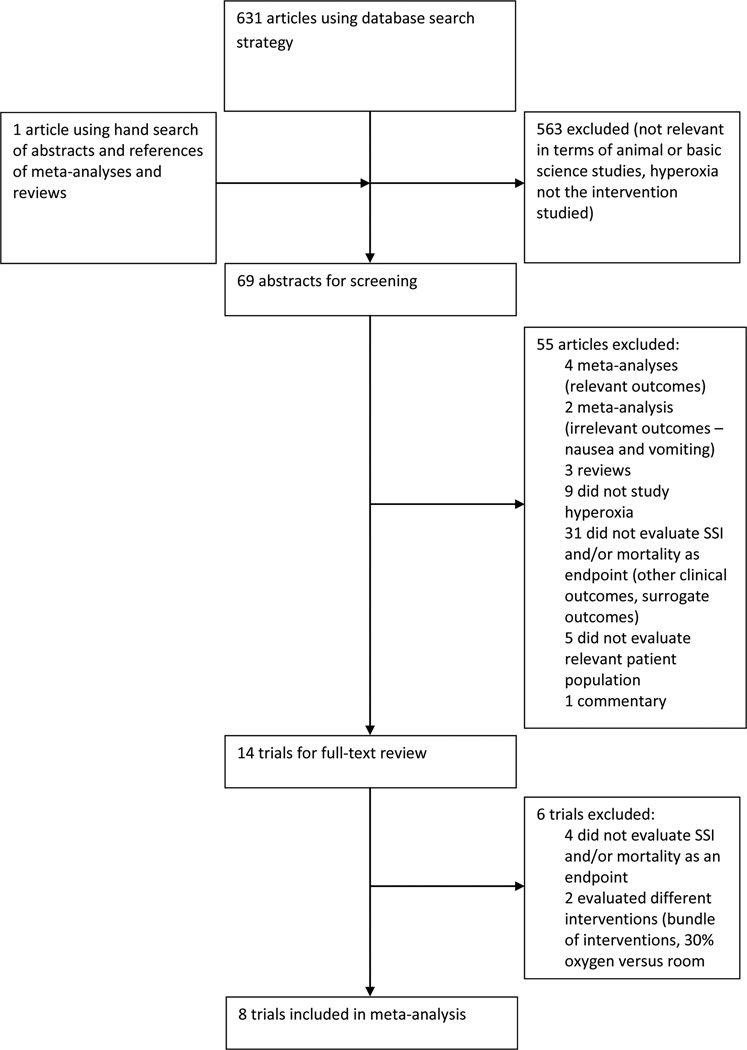
Methods: A systematic literature search and review were performed. Traditional fixed-effect and random-effect meta-analyses and Bayesian meta-analysis were performed to evaluate SSIs and mortality.
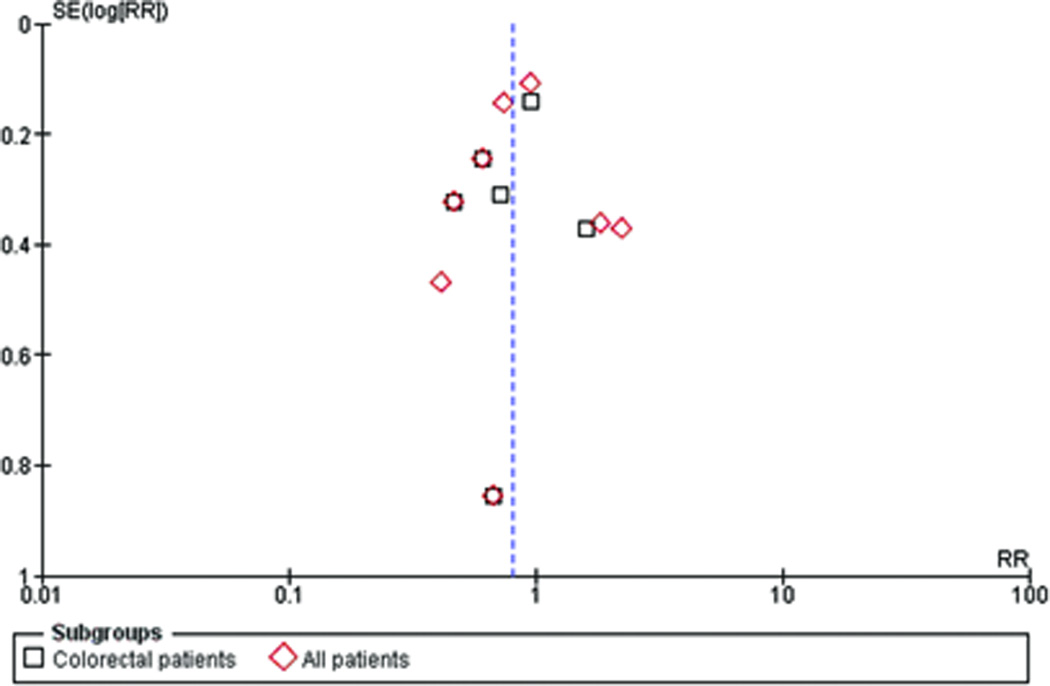
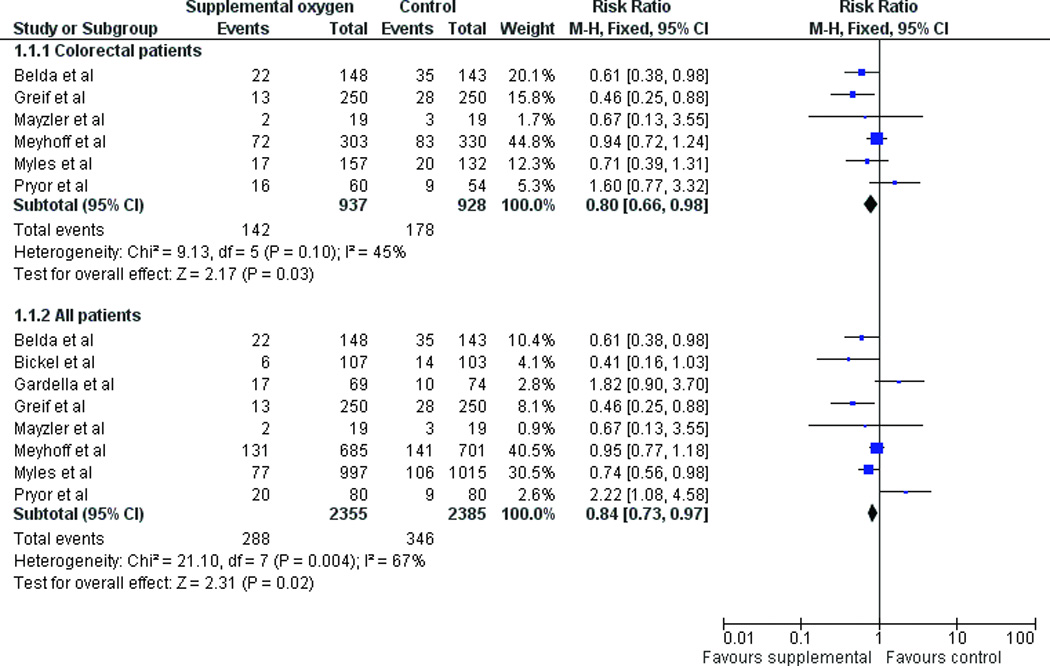
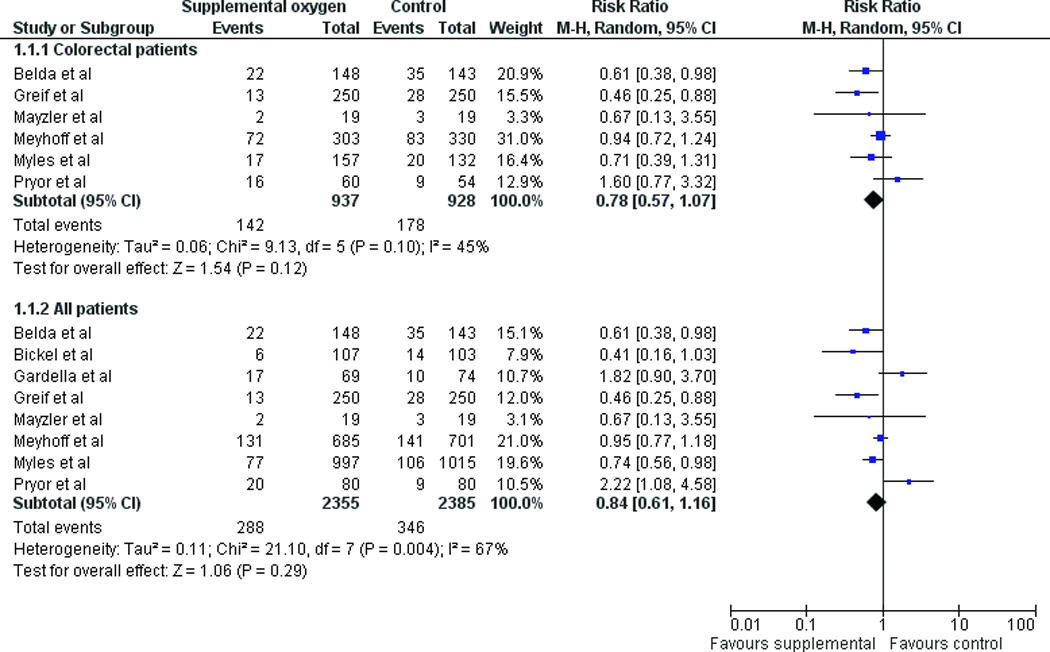
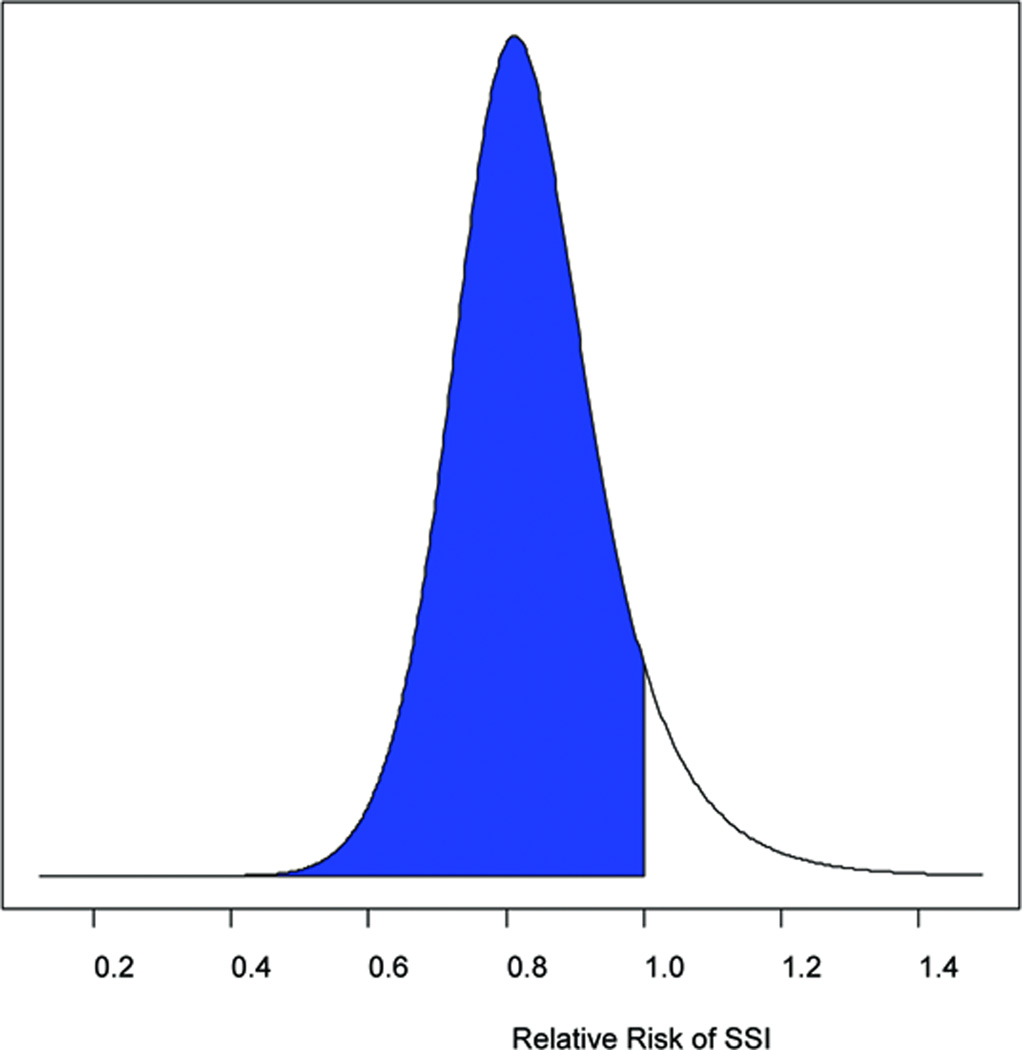
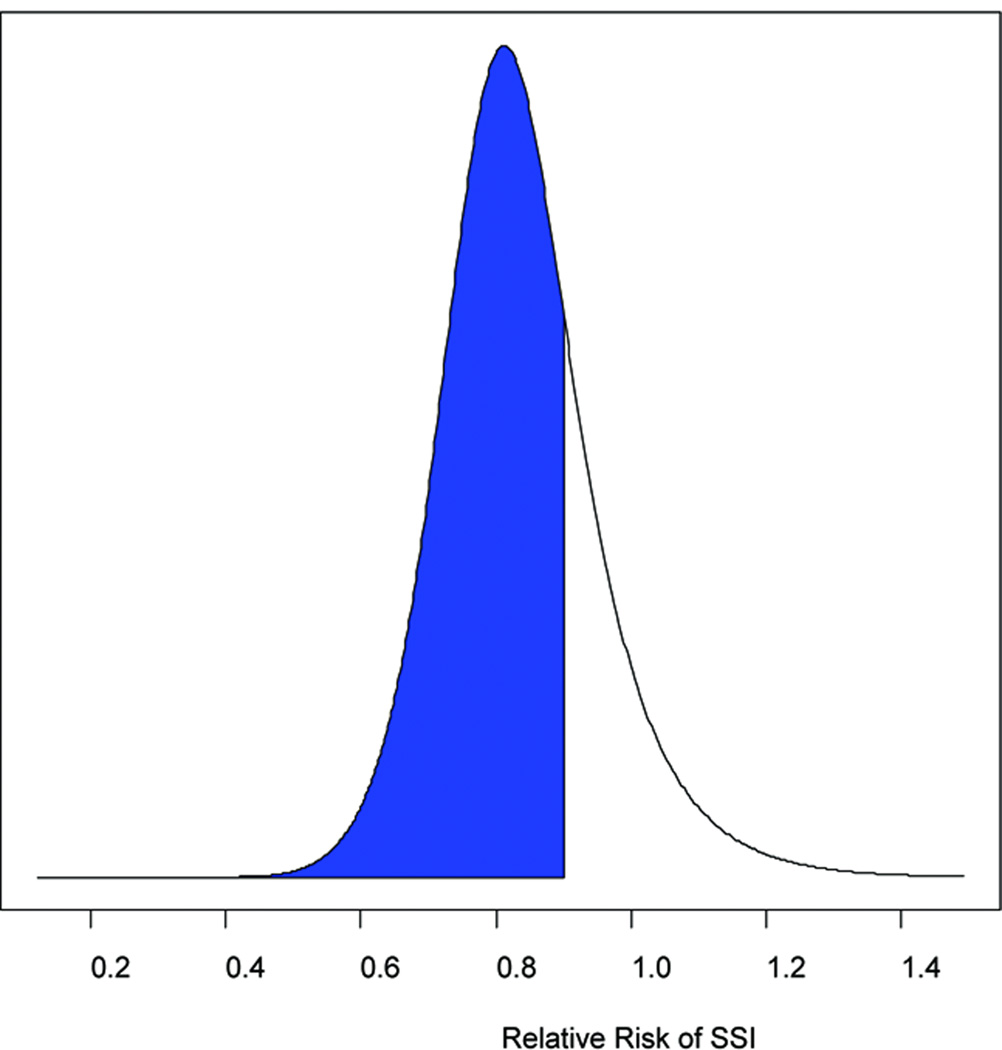
Results: Traditional meta-analysis yielded a relative risk of an SSI with hyperoxia among all surgery patients of 0.84 [95% confidence interval (CI): 0.73-0.97] and 0.84 (95% CI: 0.61-1.16) for the fixed-effect and random-effect models, respectively. The probabilities of any risk reduction in SSIs among all surgery patients were 77%, 81%, and 83% for skeptical, neutral, and enthusiastic priors. The subset analysis of colorectal surgery patients increased the probabilities to 86%, 89%, and 92%. The probabilities of at least a 10% reduction were 57%, 62%, and 68% for all surgery patients and 71%, 75%, and 80% among the colorectal surgery subset.
Conclusions: There is a moderately high probability of a benefit to hyperoxia in reducing SSIs in colorectal surgery patients; however, the magnitude of benefit is relatively small and might not exceed treatment hazards. Further studies should focus on generalizability to other patient populations or on treatment hazards and other outcomes.
Figures
References
-
- Hopf HW, Hunt TK, West JM, et al. Wound tissue oxygen tension predicts the risk of wound infection in surgical patients. Arch Surg. 1997;132:997–1004. discussion 5. - PubMed
-
- Allen DB, Maguire JJ, Mahdavian M, et al. Wound hypoxia and acidosis limit neutrophil bacterial killing mechanisms. Arch Surg. 1997;132:991–996. - PubMed
-
- Qadan M, Battista C, Gardner SA, Anderson G, Akca O, Polk HC., Jr Oxygen and surgical site infection: a study of underlying immunologic mechanisms. Anesthesiology. 2010;113:369–377. - PubMed
-
- Greif R, Akca O, Horn EP, Kurz A, Sessler DI. Supplemental perioperative oxygen to reduce the incidence of surgical-wound infection. N Engl J Med. 2000;342:161–167. - PubMed
-
- Belda FJ, Aguilera L, Garcia de la Asuncion J, et al. Supplemental perioperative oxygen and the risk of surgical wound infection: a randomized controlled trial. Jama. 2005;294:2035–2042. - PubMed
Publication types
MeSH terms
Substances
Grants and funding
LinkOut - more resources
Full Text Sources
Other Literature Sources
