


Use of flow cytometry for rapid, quantitative detection of poliovirus-infected cells via TAT peptide-delivered molecular beacons
- PMID: 23160127
- PMCID: PMC3553745
- DOI: 10.1128/AEM.02429-12
Use of flow cytometry for rapid, quantitative detection of poliovirus-infected cells via TAT peptide-delivered molecular beacons
Abstract
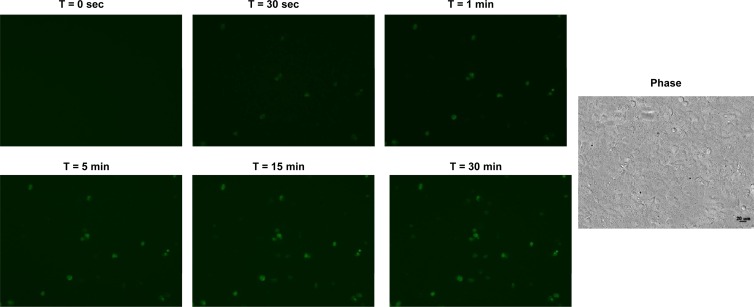
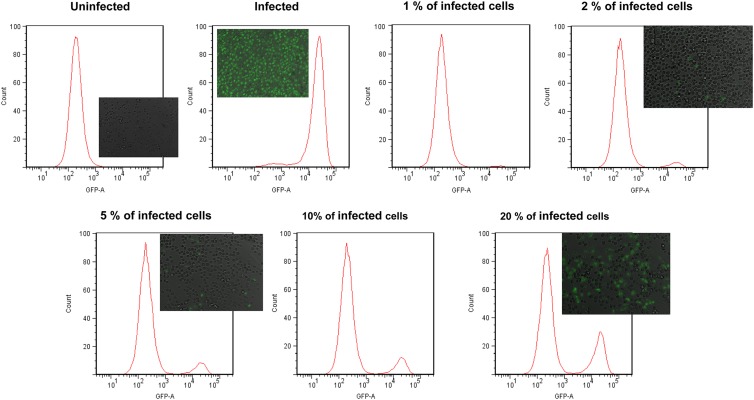
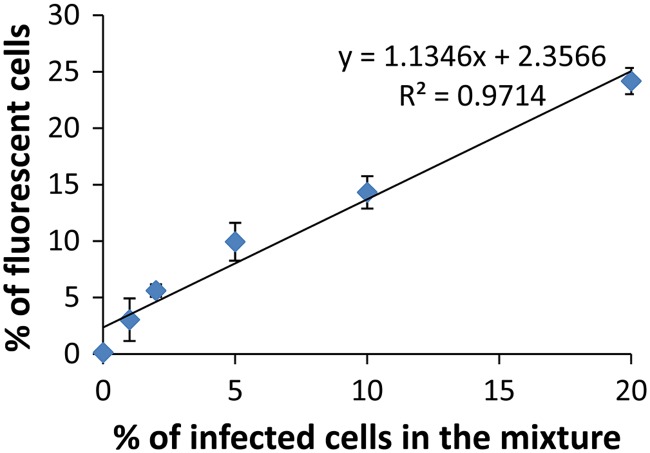
Rapid and efficient detection of viral infection is crucial for the prevention of disease spread during an outbreak and for timely clinical management. In this paper, the utility of Tat peptide-modified molecular beacons (MBs) as a rapid diagnostic tool for the detection of virus-infected cells was demonstrated. The rapid intracellular delivery mediated by the Tat peptide enabled the detection of infected cells within 30 s, reaching saturation in signal in 30 min. This rapid detection scheme was coupled with flow cytometry (FC), resulting in an automated, high-throughput method for the identification of virus-infected cells. Because of the 2-order-of-magnitude difference in fluorescence intensity between infected and uninfected cells, as few as 1% infected cells could be detected. Because of its speed and sensitivity, this approach may be adapted for the practical diagnosis of multiple viral infections.
Figures

References
-
- Charles PGP, Grayson ML. 2007. Point-of-care tests for lower respiratory tract infections. Med. J. Aust. 187:36–39 - PubMed
-
- Rabenau HF, Kessler HH, Kortenbusch M, Steinhorst A, Raggamb RB, Berger A. 2007. Verification and validation of diagnostic laboratory tests in clinical virology. J. Clin. Virol. 40:93–98 - PubMed
-
- Marras SAE, Kramer FR, Tyagi S. 1999. Multiplex detection of single-nucleotide variations using molecular beacons. Genet. Anal. 14:151–156 - PubMed
Publication types
MeSH terms
Substances
LinkOut - more resources
Full Text Sources
Other Literature Sources
