


Multifunctional in vivo vascular imaging using near-infrared II fluorescence
- PMID: 23160236
- PMCID: PMC3595196
- DOI: 10.1038/nm.2995
Multifunctional in vivo vascular imaging using near-infrared II fluorescence
Abstract
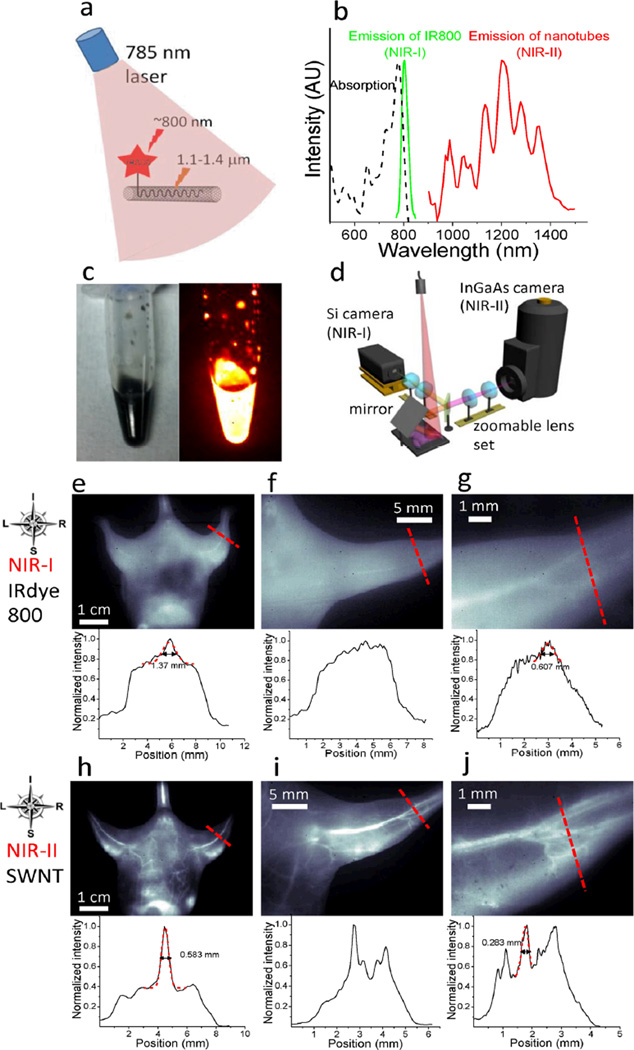
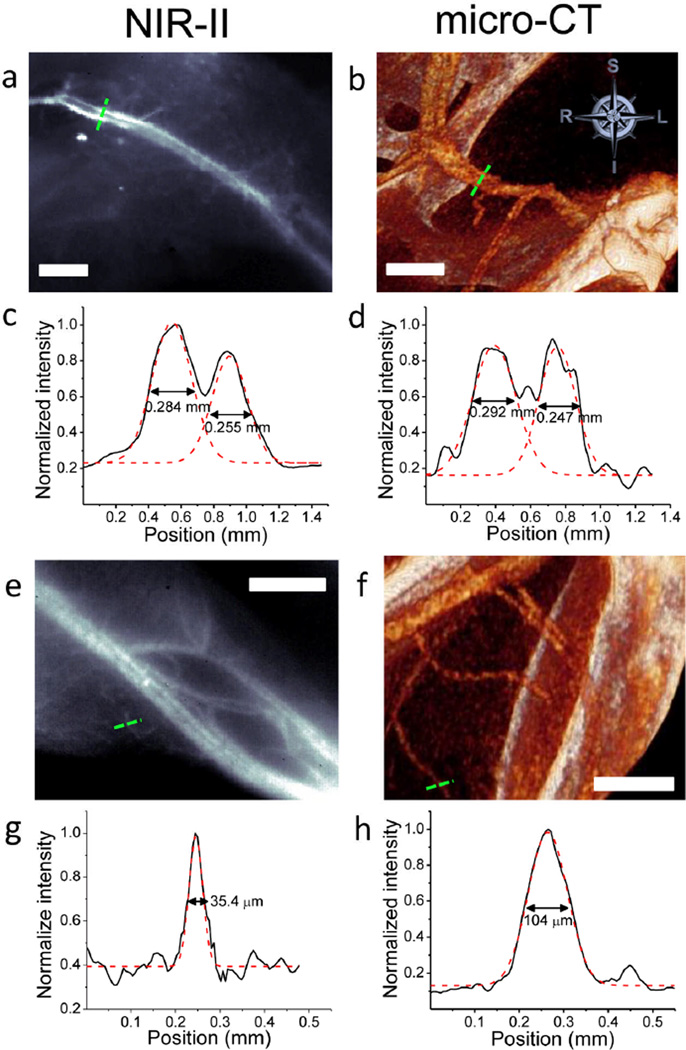
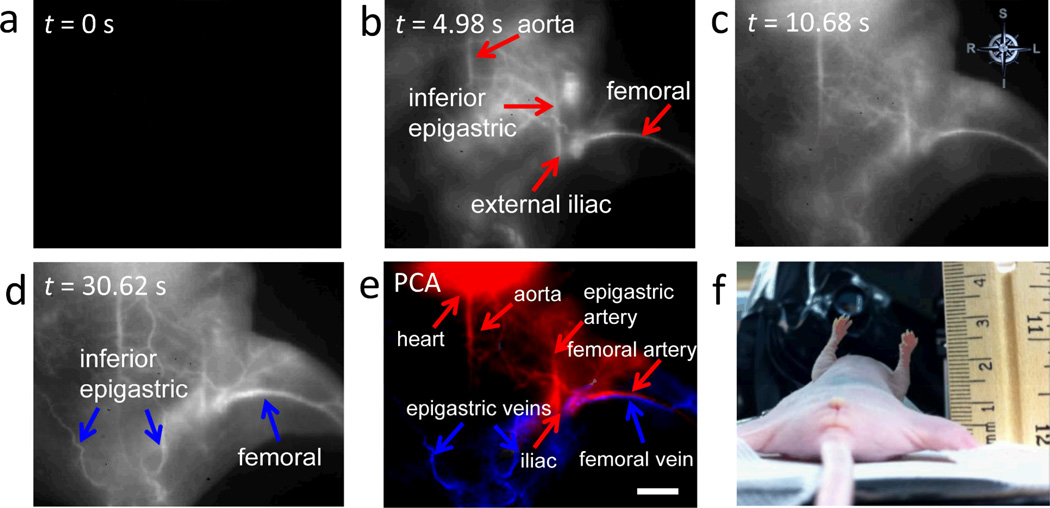
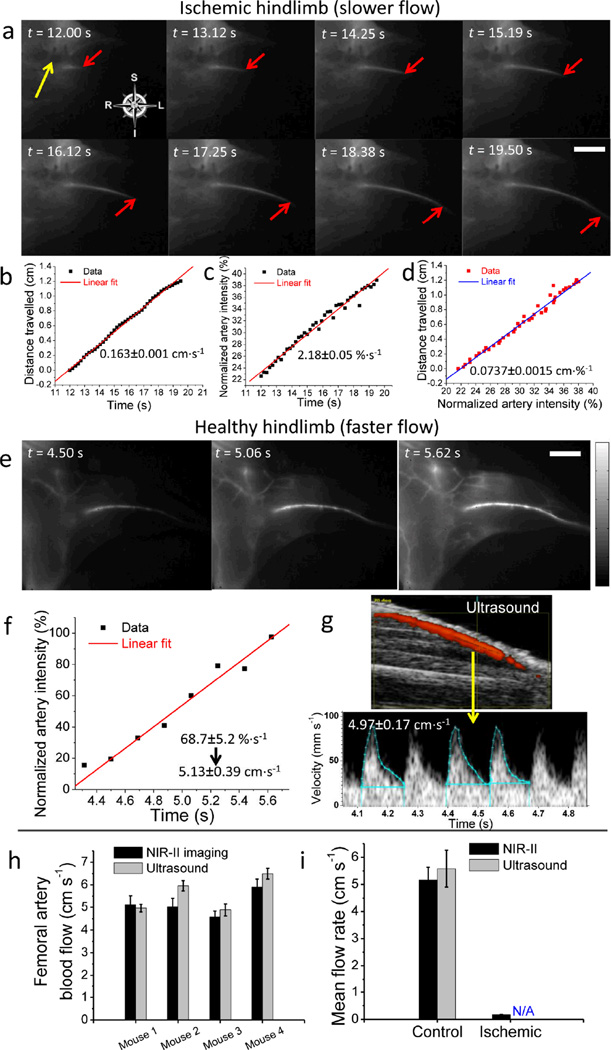
In vivo real-time epifluorescence imaging of mouse hind limb vasculatures in the second near-infrared region (NIR-II) is performed using single-walled carbon nanotubes as fluorophores. Both high spatial (∼30 μm) and temporal (<200 ms per frame) resolution for small-vessel imaging are achieved at 1-3 mm deep in the hind limb owing to the beneficial NIR-II optical window that affords deep anatomical penetration and low scattering. This spatial resolution is unattainable by traditional NIR imaging (NIR-I) or microscopic computed tomography, and the temporal resolution far exceeds scanning microscopic imaging techniques. Arterial and venous vessels are unambiguously differentiated using a dynamic contrast-enhanced NIR-II imaging technique on the basis of their distinct hemodynamics. Further, the deep tissue penetration and high spatial and temporal resolution of NIR-II imaging allow for precise quantifications of blood velocity in both normal and ischemic femoral arteries, which are beyond the capabilities of ultrasonography at lower blood velocities.
Figures

References
-
- O'Leary DH, et al. Carotid-artery intima and media thickness as a risk factor for myocardial infarction and stroke in older adults. New Engl. J. Med. 1999;340:14–22. - PubMed
-
- Saba L, Sanfilippo R, Montisci R, Mallarini G. Carotid artery wall thickness: comparison between sonography and multi-detector row CT angiography. Neuroradiology. 2010;52:75–82. - PubMed
-
- Toussaint JF, LaMuraglia GM, Southern JF, Fuster V, Kantor HL. Magnetic resonance images lipid, fibrous, calcified, hemorrhagic, and thrombotic components of human atherosclerosis in vivo. Circulation. 1996;94:932–938. - PubMed
-
- Gordon R, Herman GT. 3-Dimensional Reconstruction from Projections - Review of Algorithms. Int. Rev. Cytol. 1974;38:111–151. - PubMed
References for Methods
-
- Matthes R, et al. Revision of guidelines on limits of exposure to laser radiation of wavelengths between 400 nm and 1.4 µm. Health Phys. 2000;79:431–440. - PubMed
Publication types
MeSH terms
Substances
Grants and funding
LinkOut - more resources
Full Text Sources
Other Literature Sources
Miscellaneous
