. 2013 Feb;83(2):322-38.
doi: 10.1124/mol.112.080879. Epub 2012 Nov 15.

CB(1) receptor allosteric modulators display both agonist and signaling pathway specificity

Affiliations

CB(1) receptor allosteric modulators display both agonist and signaling pathway specificity

Gemma L Baillie et al. Mol Pharmacol. 2013 Feb.

Abstract

We have previously identified allosteric modulators of the cannabinoid CB(1) receptor (Org 27569, PSNCBAM-1) that display a contradictory pharmacological profile: increasing the specific binding of the CB(1) receptor agonist [(3)H]CP55940 but producing a decrease in CB(1) receptor agonist efficacy. Here we investigated the effect one or both compounds in a broad range of signaling endpoints linked to CB(1) receptor activation. We assessed the effect of these compounds on CB(1) receptor agonist-induced [(35)S]GTPγS binding, inhibition, and stimulation of forskolin-stimulated cAMP production, phosphorylation of extracellular signal-regulated kinases (ERK), and β-arrestin recruitment. We also investigated the effect of these allosteric modulators on CB(1) agonist binding kinetics. Both compounds display ligand dependence, being significantly more potent as modulators of CP55940 signaling as compared with WIN55212 and having little effect on [(3)H]WIN55212 binding. Org 27569 displays biased antagonism whereby it inhibits: agonist-induced guanosine 5'-O-(3-[(35)S]thio)triphosphate ([(35)S]GTPγS) binding, simulation (Gα(s)-mediated), and inhibition (Gα(i)-mediated) of cAMP production and β-arrestin recruitment. In contrast, it acts as an enhancer of agonist-induced ERK phosphorylation. Alone, the compound can act also as an allosteric agonist, increasing cAMP production and ERK phosphorylation. We find that in both saturation and kinetic-binding experiments, the Org 27569 and PSNCBAM-1 appeared to influence only orthosteric ligand maximum occupancy rather than affinity. The data indicate that the allosteric modulators share a common mechanism whereby they increase available high-affinity CB(1) agonist binding sites. The receptor conformation stabilized by the allosterics appears to induce signaling and also selectively traffics orthosteric agonist signaling via the ERK phosphorylation pathway.


Figures
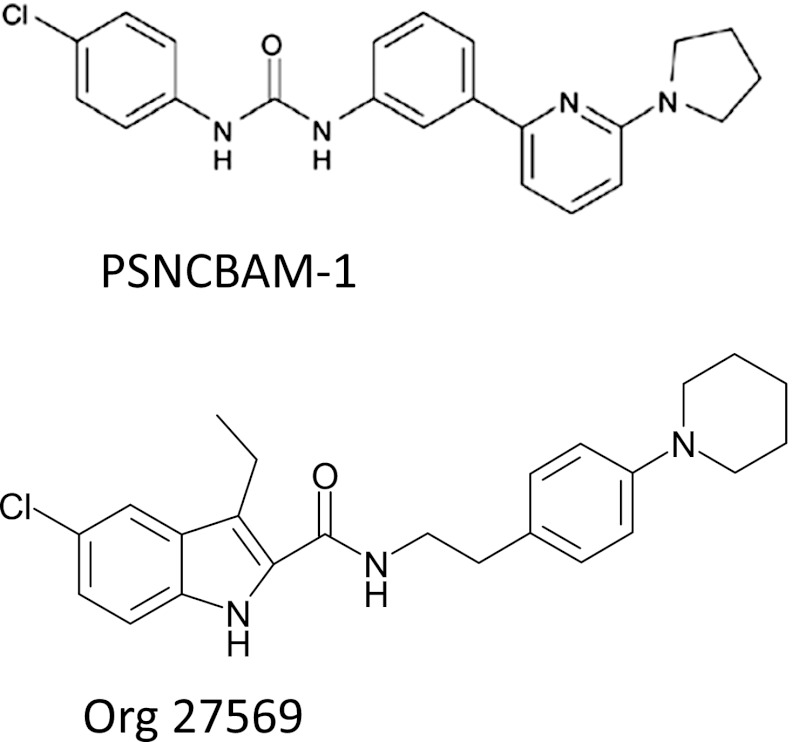
Fig. 1.
Fig. 1.
Structures of Org 27569 (Org) and PSNCBAM-1 (PSN).
Fig. 2.
Fig. 2.
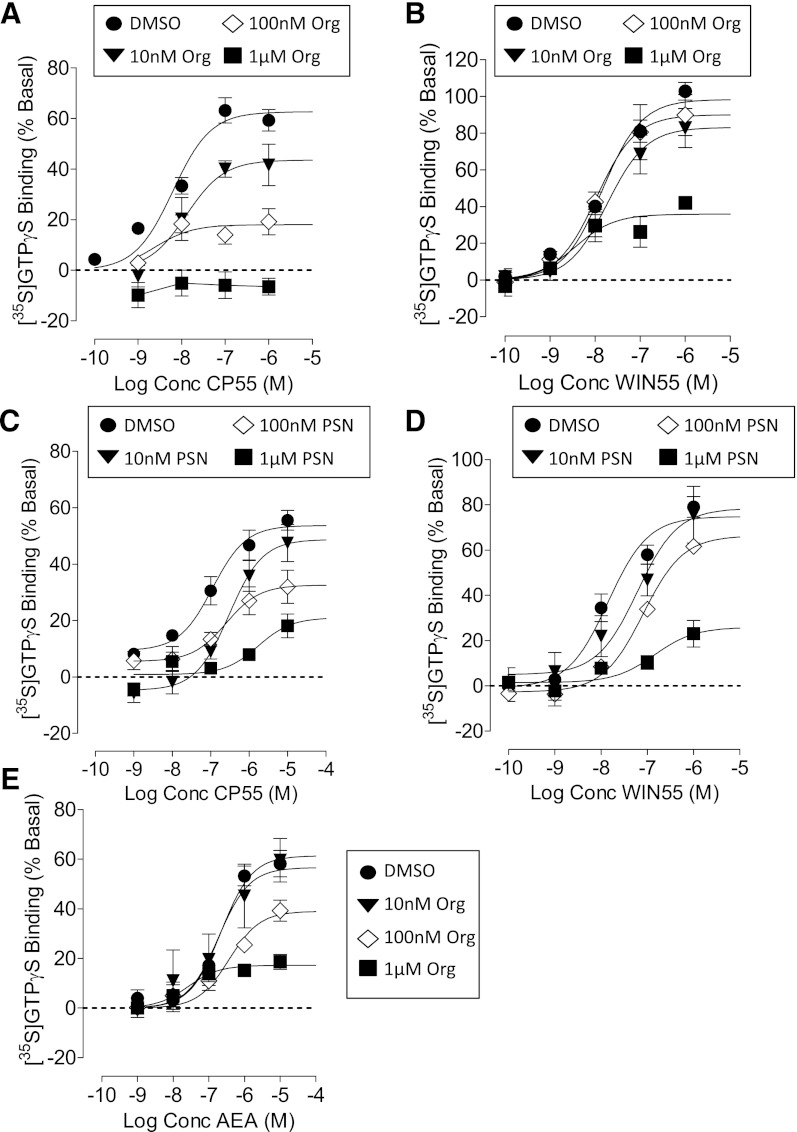
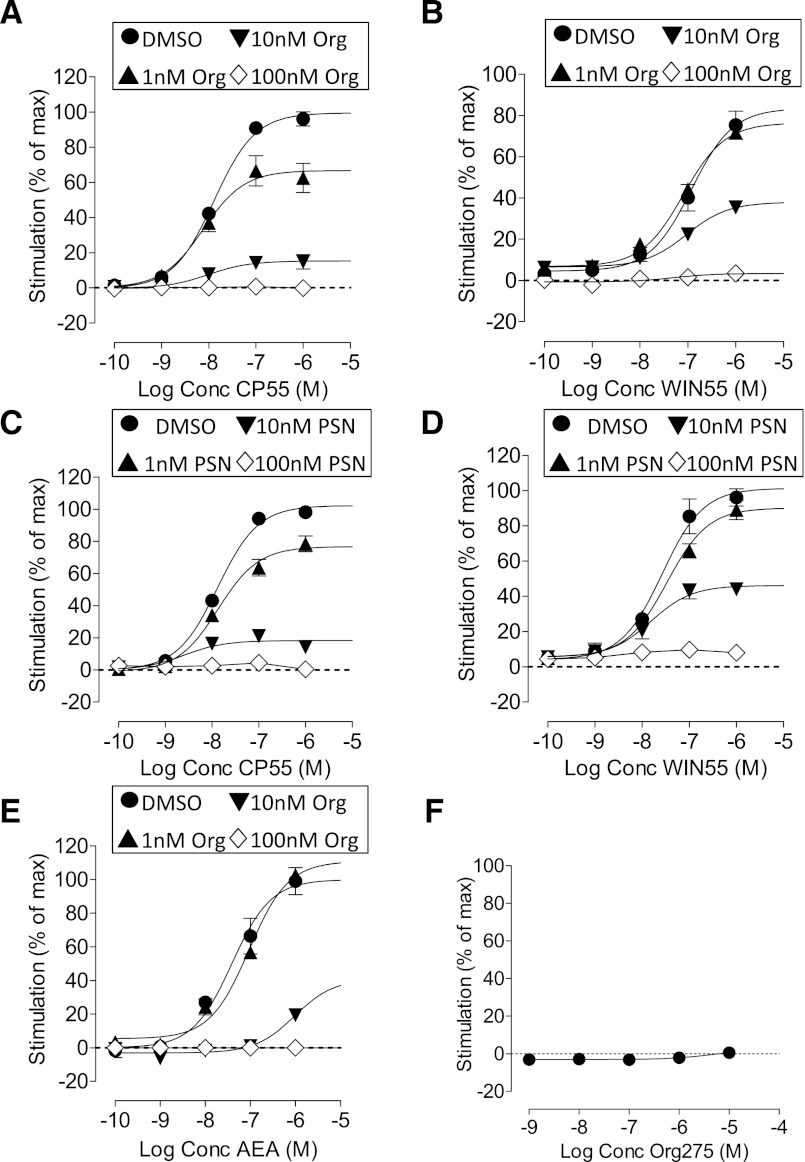
[35S]GTPγS binding to mouse brain membranes. (A) The effect of Org 27569 on CP55940; (B) the effect of Org 27569 on WIN55212; (C) the effect of PSNCBAM-1 on CP55940; (D) the effect of PSNCBAM-1 on WIN55212; (E) the effect of Org 27569 on anandamide. Symbols represent mean values ±S.E.M. from three to four experiments carried out in duplicate.
Fig. 3.
Fig. 3.
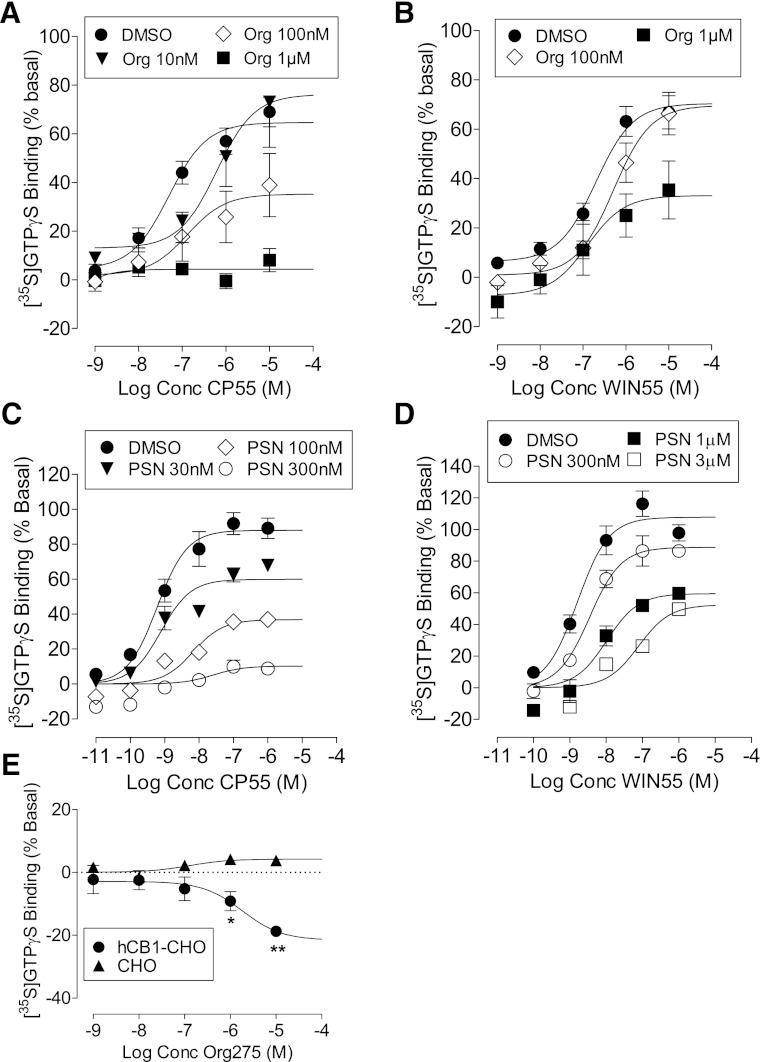
[35S]GTPγS binding to hCB1-expressing cells. (A) The effect of Org 27569 on CP55940; (B) the effect of Org 27569 on WIN55212; (C) the effect of PSNCBAM-1 on CP55940; (D) the effect of PSNCBAM-1 on WIN55212; (E) the effect of Org 27569 alone in hCB1 cells and nontransfected cells. Symbols represent mean values ±S.E.M. from three to four experiments carried out in duplicate.
Fig. 4.
Fig. 4.
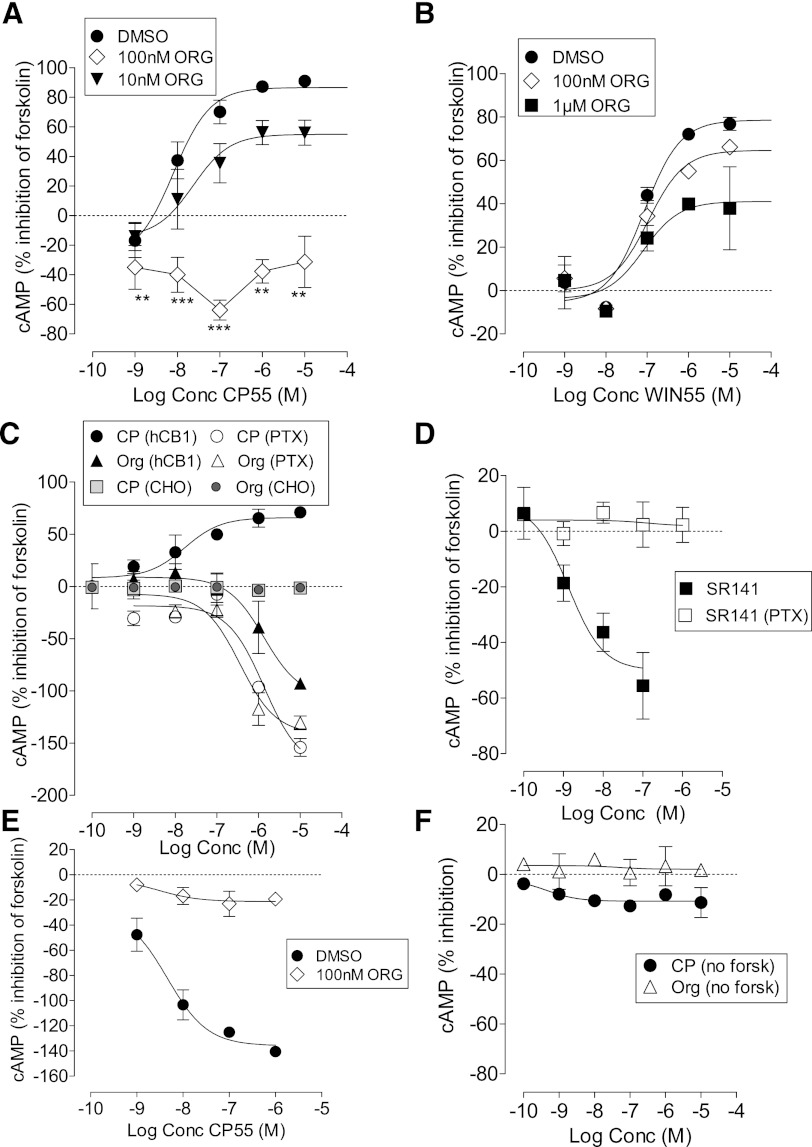
Cyclic AMP production in hCB1-expressing cells. (A) Effect of Org 27569 on CP55940-induced inhibition of forskolin-stimulated cAMP production (***P < 0.001, **P < 0.01, significance of difference from basal, one-sample t test); (B) effect of Org 27569 on WIN55212-induced inhibition of forskolin-stimulated cAMP production; (C) effect of CP55940 and Org 27569 alone on forskolin-stimulated cAMP production in cells treated with vehicle or PTX (5 ng/ml, 24 hours); (D) effect of SR141716A alone on forskolin-stimulated cAMP production in cells treated with vehicle or PTX (5 ng/ml, 24 hours); (E) effect of Org 27569 (100nM) on the stimulation of cAMP production (in the presence of forskolin) produced by CP55940 in cells treated with PTX (5 ng/ml, 24 hours); (F) effect of Org 27569 and CP55940 on cAMP production in the absence of forskolin. Symbols represent mean values ±S.E.M. from three to six experiments carried out in duplicate.
Fig. 5.
Fig. 5.
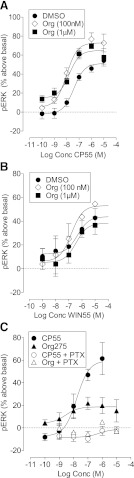
ERK phosphorylation in hCB1-expressing cells. (A) Effect of Org 27569 on CP55940-induced ERK phosphorylation; (B) effect of Org 27569 on WIN55212-induced ERK phosphorylation; (C) effect of CP55940 and Org 27569 alone on ERK phosphorylation in cells treated with vehicle or PTX (5 ng/ml, 24 hours).
Fig. 6.
Fig. 6.
PathHunter β-arrestin assay performed with hCB1 cells. (A) The effect of Org 27569 on CP55940; (B) the effect of Org 27569 on WIN55212; (C) the effect of PSNCBAM-1 on CP55940; (D) the effect of PSNCBAM-1 on WIN55212; (E) the effect of Org 27569 on anandamide; (F) the effect of Org 27569 alone. Symbols represent mean values ±S.E.M. from two to four experiments carried out in duplicate.
Fig. 7.
Fig. 7.
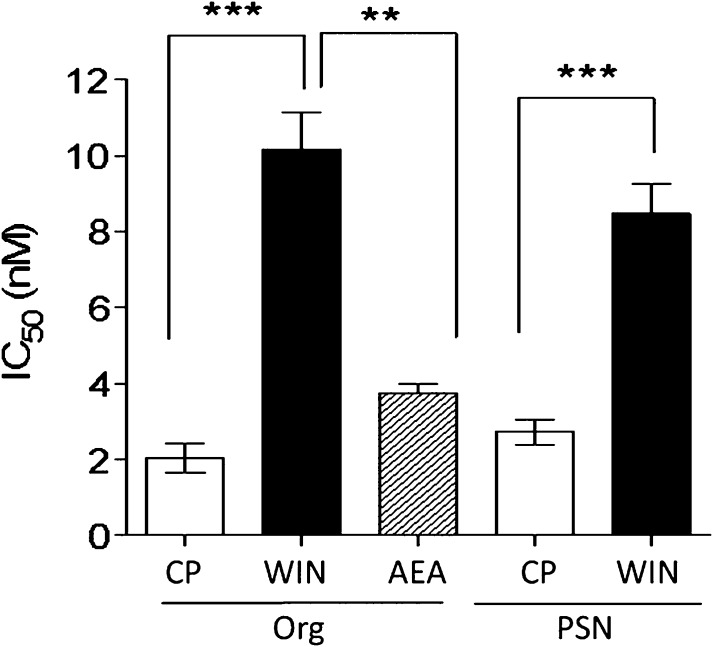
Comparison of IC50 values for Org 27569 and PSNCBAM-1 as inhibitors of CP55940, WIN55212, and anandamide in the β-arrestin assay performed with hCB1 cells. Columns represent mean values ±S.E.M. from three to four experiments carried out in duplicate. The IC50 values (nM) were obtained using Prism 5 to construct concentration-response curves of the inhibitor concentration versus the percentage reduction in each agonist Emax value.
Fig. 8.
Fig. 8.
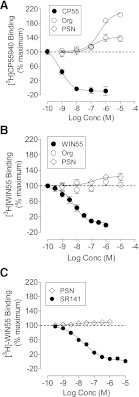
Effect of allosteric modulators on the equilibrium binding. (A) Effect of Org 27569 and PSNCBAM-1 on [3H]CP55940 binding to mouse brain membranes; (B) effect of Org 27569 and PSNCBAM-1 on [3H]WIN55212 binding to mouse brain membranes; and (C) effect of PSNCBAM-1 on [3H]WIN55212 binding to hCB1R cell membranes. Symbols represent mean values ±S.E.M. from three independent experiments. Data were best fitted by a one-site competition binding model.
Fig. 9.
Fig. 9.
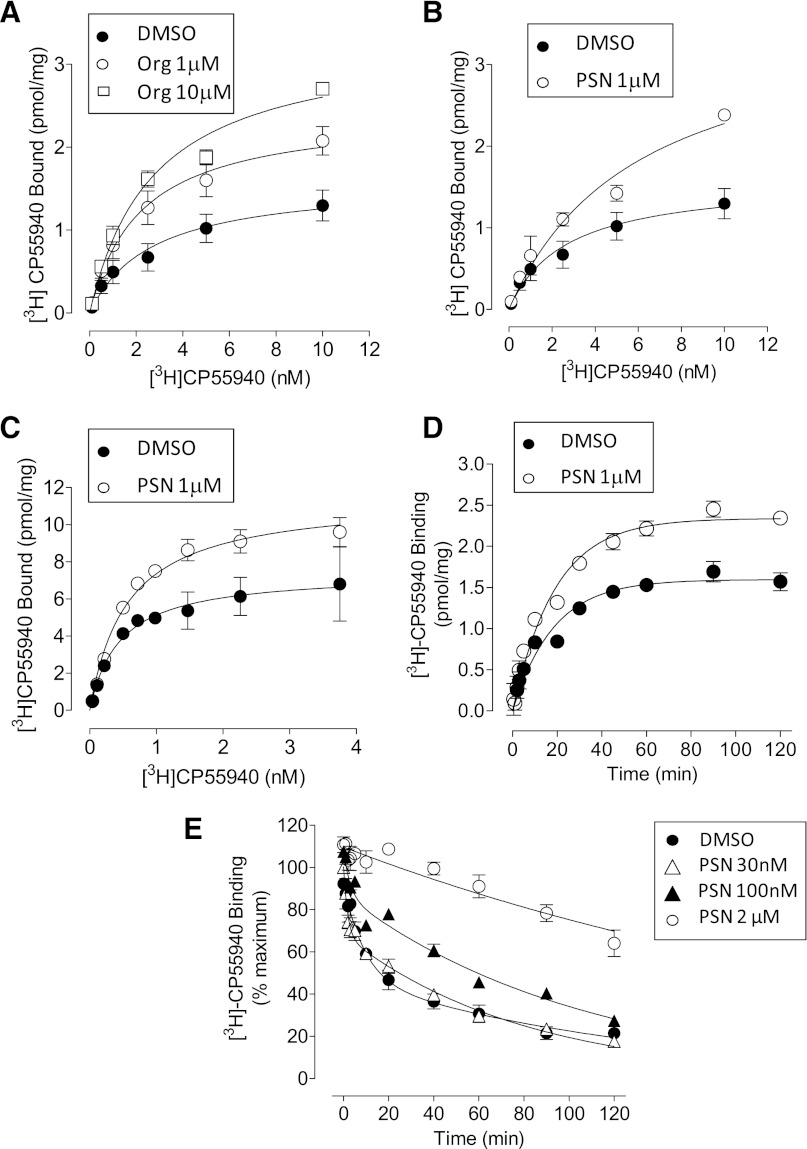
Effect of: (A) Org 27569 on saturation binding of [3H]CP55940 in mouse brain membranes; (B) PSNCBAM-1 on saturation binding of [3H]CP55940 in mouse brain membranes. Data shown are mean ±S.E.M. for five independent experiments. Data were best fitted by a one-binding site saturation model. (C) Effect of PSNCBAM-1 on saturation binding of [3H]CP55940 in hCB1 cell membranes. Data shown are mean ±S.E.M. of triplicate wells from a representative experiment that was performed three times. Data were best fitted by a one-binding site saturation model. The Bmax and Kd from three independent experiments are shown in Table 4. (D) Effect of PSNCBAM-1 on [3H]CP55940 (0.5 nM) association kinetics in hCB1 cell membranes. Data were best fitted by a one-phase association model. Data shown are mean values ± S.E.M. of triplicate wells from a single representative experiment that was performed 3 three times. The kob and Ymax parameters from three independent experiments are presented in Table 5. (E) Effect of PSNCBAM-1 on [3H]CP55940 (0.5 nM) dissociation kinetics in hCB1 cell membranes. Data shown are mean values ± S.E.M. from three3 independent experiments. Data were best fitted by a two-phase dissociation model. Data for 2 μM PSNCBAM-1 were best fitted by a one-phase dissociation model. Phase proportions and koff values for three independent experiments are displayed in Table 6.
Fig. 10.
Fig. 10.
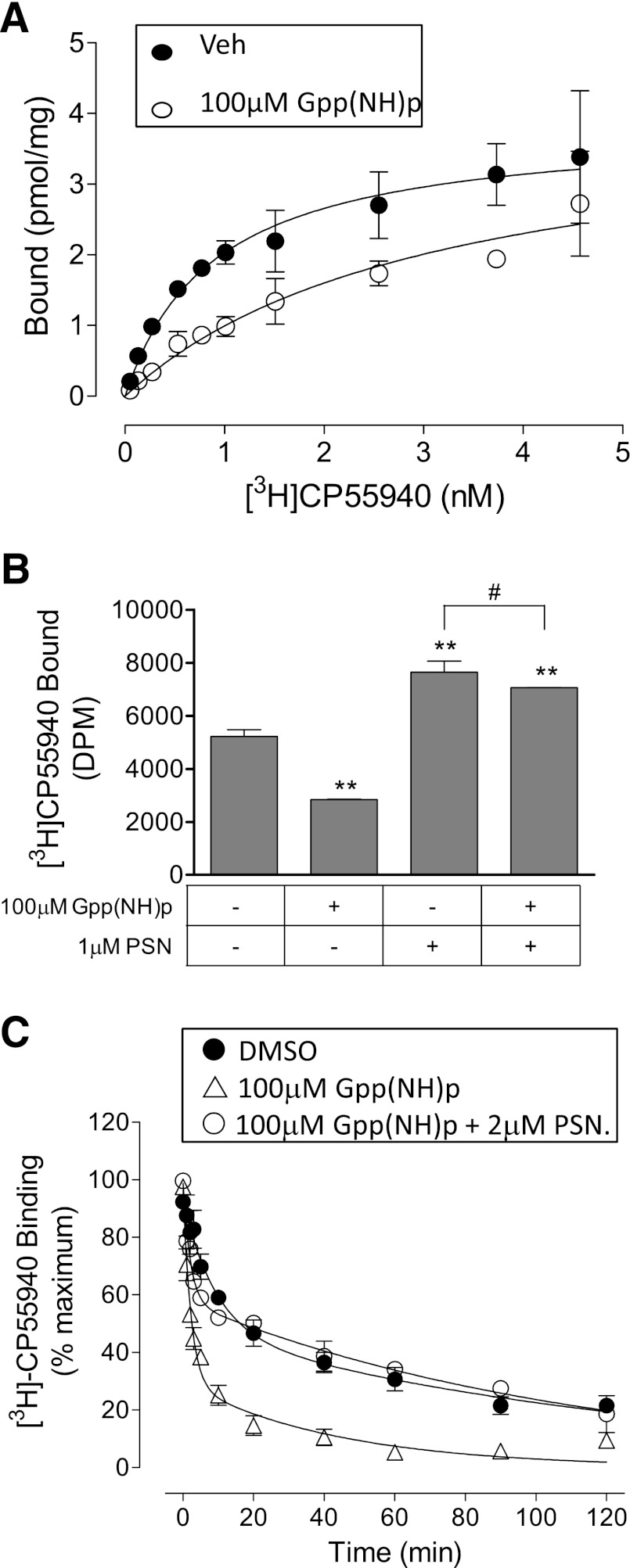
Effect of Gpp(NH)p and/or PSNCBAM-1 (1 μM) in hCB1R cell membranes on: (A) saturation binding of [3H]CP55940; (B) [3H]CP55940 equilibrium binding; (C) [3H]CP55940 dissociation. Data shown in (A) are mean values ±S.E.M. of triplicate wells from a single experiment that was performed twice. Data were best fitted using a one-site saturation binding model. Data shown in (B) are mean values ±S.E.M. from three independent experiments. **P < 0.01, #P > 0.05; one-way ANOVA followed by Bonferroni’s multiple comparison. Data shown in (C) are mean values ±S.E.M. of triplicate wells; the experiment was performed twice. Data for all groups were best fitted using a two-phase dissociation model.
Fig. 11.
Fig. 11.
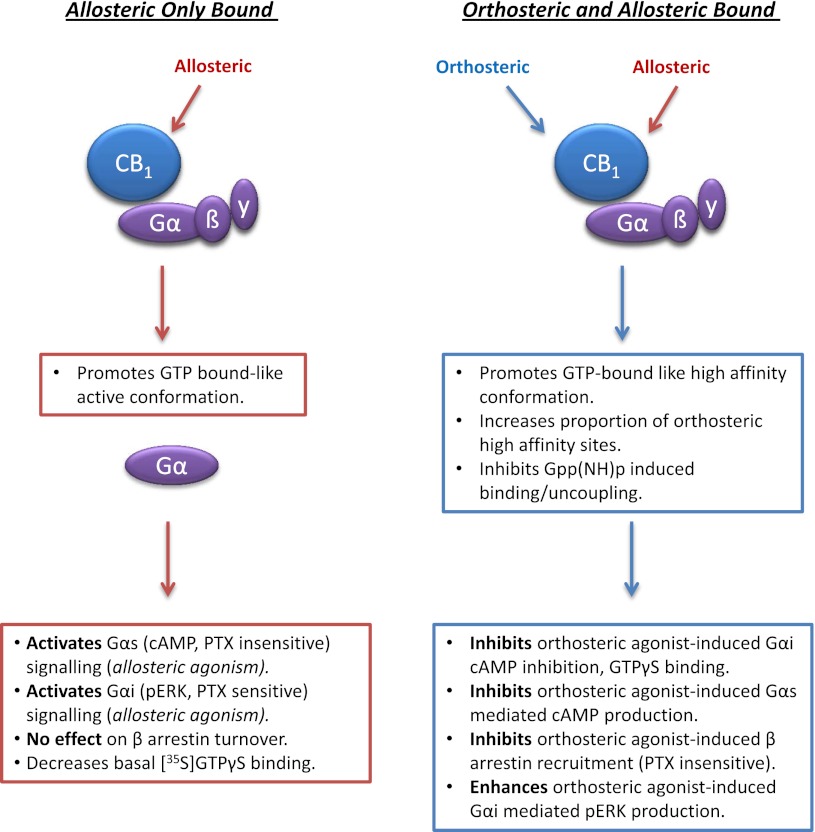
Summary of the complex pharmacology of the CB1 receptor allosteric modulators. Left, the effect of Org 27569 alone, and right, the effect of Org 27569 on binding and signaling of the CB1 receptor orthosteric ligand CP55940.

References

    1. Abood ME. (2005) Molecular biology of cannabinoid receptors. Handb Exp Pharmacol 168:81–115 - PubMed
    1. Ahn KH, Mahmoud MM, Kendall DA. (2012) Allosteric modulator ORG27569 induces CB1 cannabinoid receptor high affinity agonist binding state, receptor internalization, and Gi protein-independent ERK1/2 kinase activation. J Biol Chem 287:12070–12082 - PMC - PubMed
    1. Anavi-Goffer S, Fleischer D, Hurst DP, Lynch DL, Barnett-Norris J, Shi S, Lewis DL, Mukhopadhyay S, Howlett AC, Reggio PH, Abood ME (2007) Helix 8 Leu in the CB1 cannabinoid receptor contributes to selective signal transduction mechanisms. J Biol Chem 282:25100–25113 - PubMed
    1. Baker JG, Hill SJ. (2007) Multiple GPCR conformations and signalling pathways: implications for antagonist affinity estimates. Trends Pharmacol Sci 28:374–381 - PMC - PubMed
    1. Barovsky K, Brooker G. (1985) Forskolin potentiation of cholera toxin-stimulated cyclic AMP accumulation in intact C6-2B cells. Evidence for enhanced Gs-C coupling. Mol Pharmacol 28:502–507 - PubMed

Publication types

MeSH terms

Substances

LinkOut - more resources