


Functional status, life-space mobility, and quality of life: a longitudinal mediation analysis
- PMID: 23161329
- PMCID: PMC3618999
- DOI: 10.1007/s11136-012-0315-3
Functional status, life-space mobility, and quality of life: a longitudinal mediation analysis
Abstract
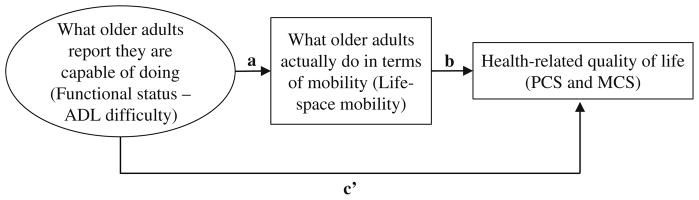
Purpose: Using the Wilson-Cleary model of patient outcomes as a conceptual framework, the impact of functional status on health-related quality of life (HRQoL) among older adults was examined, including tests of the mediation provided by life-space mobility.
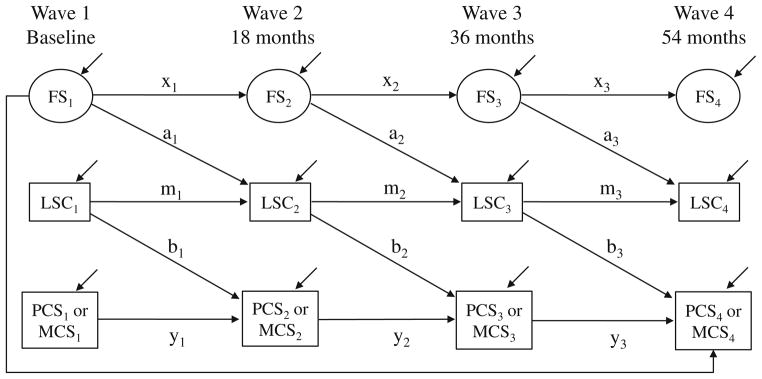
Methods: Participants were enrollees in a population-based, longitudinal study of mobility among community-dwelling older adults. Data from four waves of the study equally spaced approximately 18 months apart (baseline, 18, 36, and 54 months) were used for participants who survived at least 1 year beyond the 54-month assessment (n = 677). Autoregressive mediation models using longitudinal data and cross-sectional mediation models using baseline data were evaluated and compared using structural equation modeling.
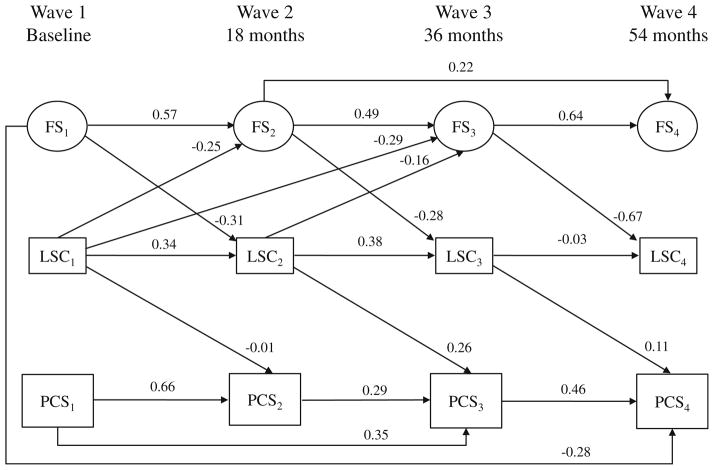
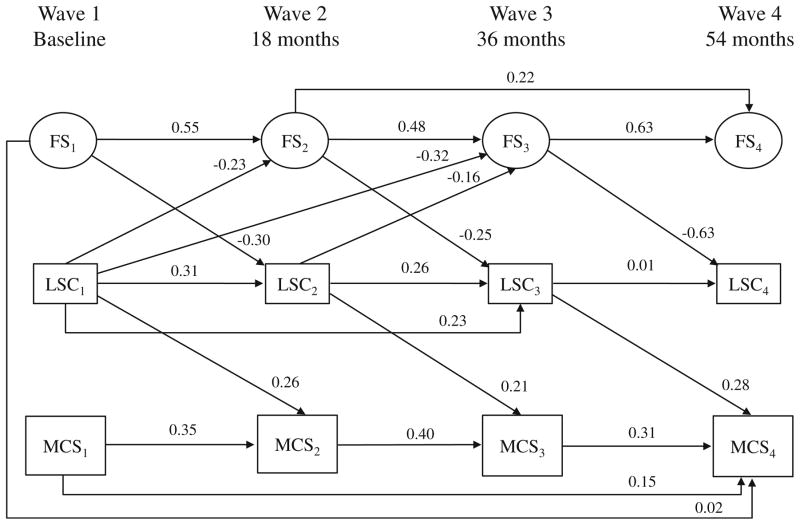
Results: The longitudinal autoregressive models supported the mediating role of life-space mobility and suggested that this effect is larger for the mental component summary score than the physical component summary score of the SF-12. Evidence for a reciprocal relationship over time between functional status, measured by ADL difficulty, and life-space mobility was suggested by modification indices; these model elaborations did not alter the substantive meaning of the mediation effects. Mediated effect estimates from longitudinal autoregressive models were generally larger than those from cross-sectional models, suggesting that mediating relationships would have been missed or were potentially underestimated in cross-sectional models.
Conclusions: These results support a mediating role for life-space mobility in the relationship between functional status and HRQoL. Functional status limitations might cause diminished HRQoL in part by limiting mobility. Mobility limitations may precede functional status limitations in addition to being a consequence thereof.
Figures
References
-
- Baker PS, Bodner EV, Allman RM. Measuring life-space mobility in community-dwelling older adults. Journal of the American Geriatrics Society. 2003;51(11):1610–1614. - PubMed
-
- Peel C, Baker PS, Roth DL, Brown CJ, Bodner EV, Allman RM. Assessing mobility in older adults: The UAB Study of Aging Life-Space Assessment. Physical Therapy. 2005;85(10):1008–1019. - PubMed
-
- Ware JE, Kosinski M, Keller SD. SF-12: How to score the SF-12 physical and mental health summary scales. 4. Lincoln, RI: QualityMetric Incorporated; 2002.
-
- Wilson IB, Cleary PD. Linking clinical variables with health-related quality of life: A conceptual model of patient outcomes. JAMA. 1995;273(1):59–65. - PubMed
Publication types
MeSH terms
Grants and funding
LinkOut - more resources
Full Text Sources
Medical
