


In vitro 3D full-thickness skin-equivalent tissue model using silk and collagen biomaterials
- PMID: 23161763
- PMCID: PMC3724336
- DOI: 10.1002/mabi.201200262
In vitro 3D full-thickness skin-equivalent tissue model using silk and collagen biomaterials
Abstract
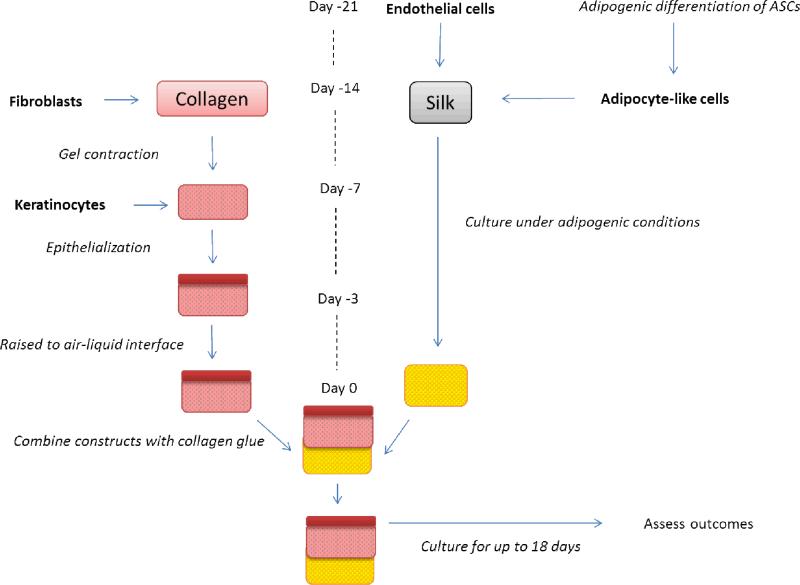
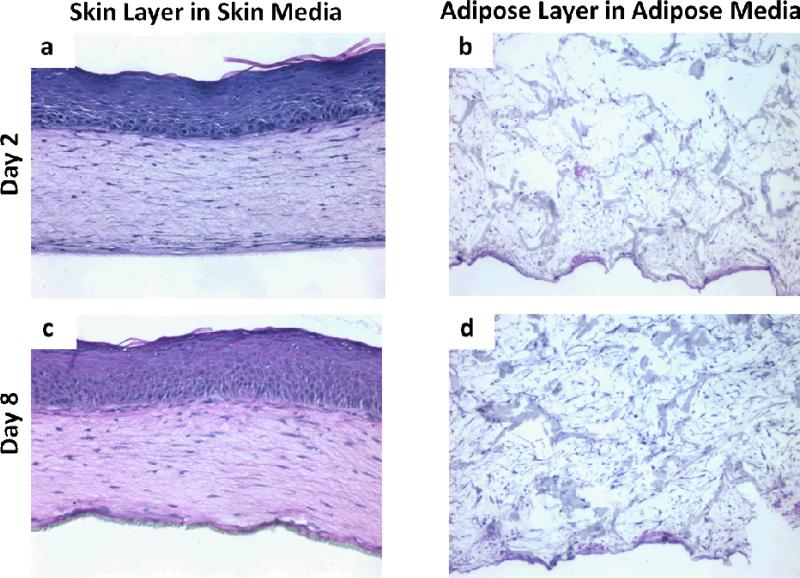
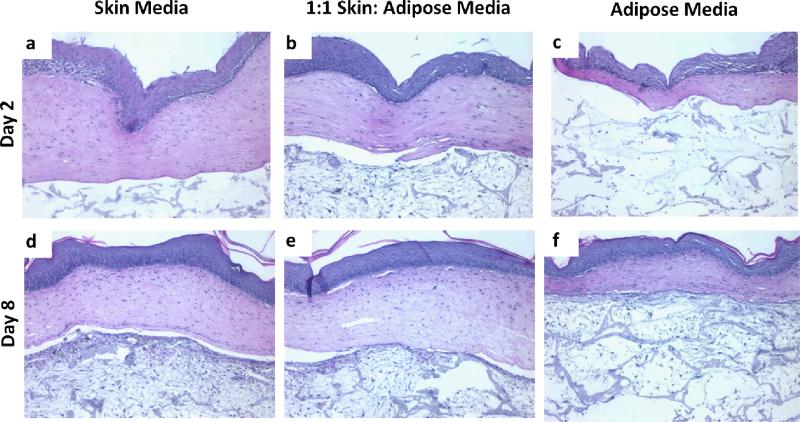
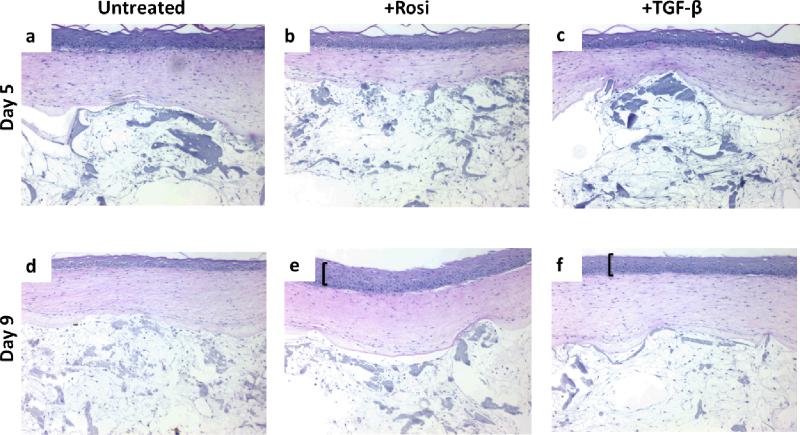
Current approaches to skin equivalents often only include the epidermis and dermis. Here, a full-thickness skin equivalent is described including epidermis, dermis, and hypodermis, that could serve as an in vitro model for studying skin biology or as a platform for consumer product testing. The construct is easy to handle and is maintained for >14 d while expressing physiological morphologies of the epidermis and dermis, seen by keratin 10, collagens I and IV expression. The skin equivalent produces glycerol and leptin, markers of adipose metabolism. This work serves as a foundation for understanding a few necessary factors needed to develop a stable, functional model of full-thickness skin.
Copyright © 2012 WILEY-VCH Verlag GmbH & Co. KGaA, Weinheim.
Figures
References
-
- Welss T, Basketter D. a, Schröder KR. In vitro skin irritation: facts and future. State of the art review of mechanisms and models. Toxicology in vitro: an international journal published in association with BIBRA. 2004;18:231–43. - PubMed
-
- Trottier V, Marceau-Fortier G, Germain L, Vincent C, Fradette J. IFATS collection: Using human adipose-derived stem/stromal cells for the production of new skin substitutes. Stem cells. 2008;26:2713–23. - PubMed
Publication types
MeSH terms
Substances
Grants and funding
LinkOut - more resources
Full Text Sources
Other Literature Sources
Research Materials
