


Stem cell recruitment after injury: lessons for regenerative medicine
- PMID: 23164083
- PMCID: PMC3568672
- DOI: 10.2217/rme.12.82
Stem cell recruitment after injury: lessons for regenerative medicine
Abstract
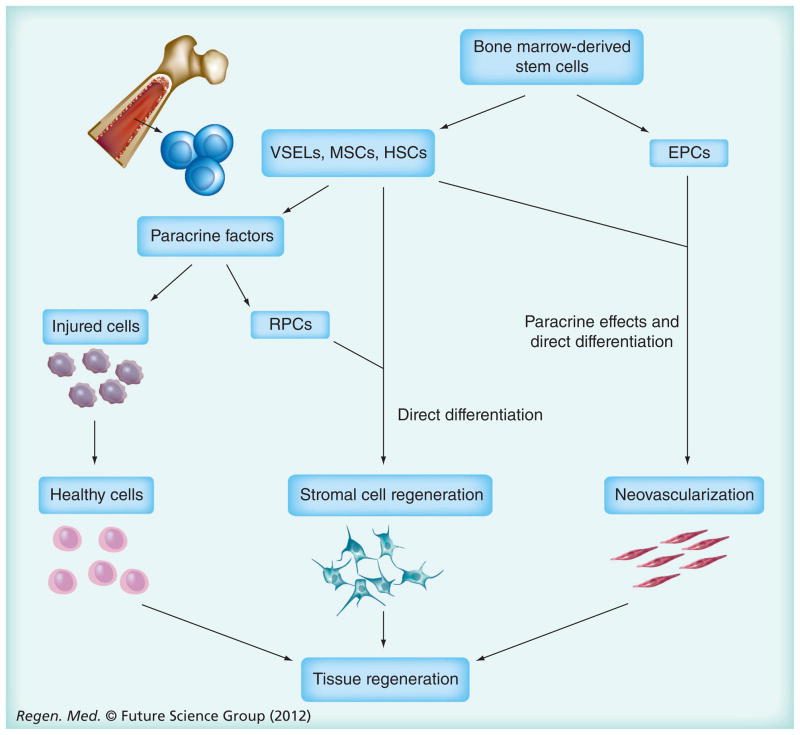
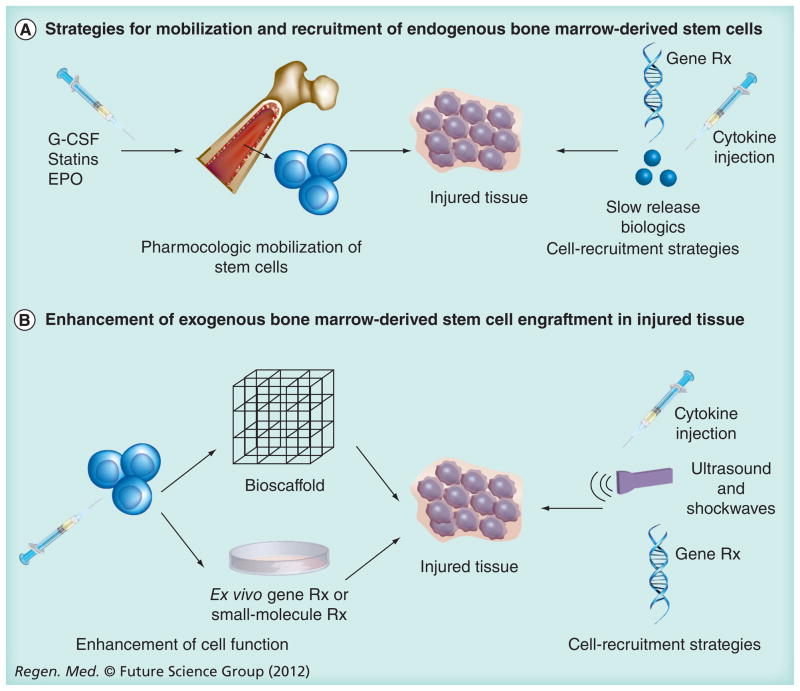
Tissue repair and regeneration are thought to involve resident cell proliferation as well as the selective recruitment of circulating stem and progenitor cell populations through complex signaling cascades. Many of these recruited cells originate from the bone marrow, and specific subpopulations of bone marrow cells have been isolated and used to augment adult tissue regeneration in preclinical models. Clinical studies of cell-based therapies have reported mixed results, however, and a variety of approaches to enhance the regenerative capacity of stem cell therapies are being developed based on emerging insights into the mechanisms of progenitor cell biology and recruitment following injury. This article discusses the function and mechanisms of recruitment of important bone marrow-derived stem and progenitor cell populations following injury, as well as the emerging therapeutic applications targeting these cells.
Figures
References
-
- Kucia MJ, Wysoczynski M, Wu W, Zuba-Surma EK, Ratajczak J, Ratajczak MZ. Evidence that very small embryonic-like stem cells are mobilized into peripheral blood. Stem Cells. 2008;26(8):2083–2092. - PubMed
-
- Tepper OM, Capla JM, Galiano RD, et al. Adult vasculogenesis occurs through in situ recruitment, proliferation, and tubulization of circulating bone marrow-derived cells. Blood. 2005;105(3):1068–1077. - PubMed
-
- Xynos A, Corbella P, Belmonte N, Zini R, Manfredini R, Ferrari G. Bone marrow-derived hematopoietic cells undergo myogenic differentiation following a Pax-7 independent pathway. Stem Cells. 2010;28(5):965–973. - PubMed
-
- Deng J, Zou ZM, Zhou TL, et al. Bone marrow mesenchymal stem cells can be mobilized into peripheral blood by G-CSF in vivo and integrate into traumatically injured cerebral tissue. Neurol Sci. 2011;32(4):641–651. - PubMed
Publication types
MeSH terms
Grants and funding
LinkOut - more resources
Full Text Sources
Other Literature Sources
Medical
