


Predicting outcomes in radiation oncology--multifactorial decision support systems
- PMID: 23165123
- PMCID: PMC4555846
- DOI: 10.1038/nrclinonc.2012.196
Predicting outcomes in radiation oncology--multifactorial decision support systems
Abstract
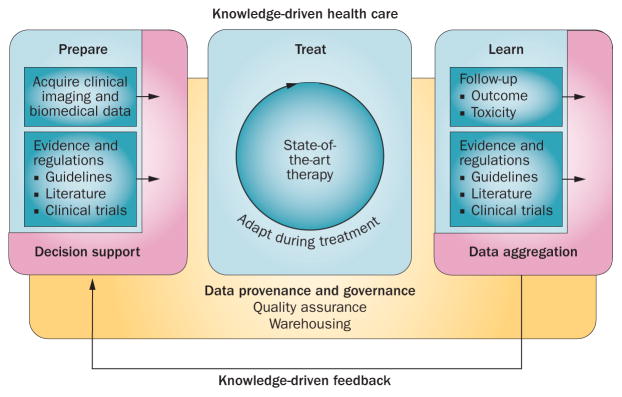
With the emergence of individualized medicine and the increasing amount and complexity of available medical data, a growing need exists for the development of clinical decision-support systems based on prediction models of treatment outcome. In radiation oncology, these models combine both predictive and prognostic data factors from clinical, imaging, molecular and other sources to achieve the highest accuracy to predict tumour response and follow-up event rates. In this Review, we provide an overview of the factors that are correlated with outcome-including survival, recurrence patterns and toxicity-in radiation oncology and discuss the methodology behind the development of prediction models, which is a multistage process. Even after initial development and clinical introduction, a truly useful predictive model will be continuously re-evaluated on different patient datasets from different regions to ensure its population-specific strength. In the future, validated decision-support systems will be fully integrated in the clinic, with data and knowledge being shared in a standardized, instant and global manner.
Conflict of interest statement
The authors declare no competing interests.
Figures




References
-
- Vogelzang NJ, et al. Clinical cancer advances 2011: annual report on progress against cancer from the American Society of Clinical Oncology. J Clin Oncol. 2012;30:88–109. - PubMed
-
- Fraass BA, Moran JM. Quality, technology and outcomes: evolution and evaluation of new treatments and/or new technology. Semin Radiat Oncol. 2012;22:3–10. - PubMed
Publication types
MeSH terms
Grants and funding
LinkOut - more resources
Full Text Sources
Other Literature Sources
Medical
