


The Peru cervical cancer prevention study (PERCAPS): community-based participatory research in Manchay, Peru
- PMID: 23165314
- PMCID: PMC3529758
- DOI: 10.1097/IGC.0b013e318275b007
The Peru cervical cancer prevention study (PERCAPS): community-based participatory research in Manchay, Peru
Abstract
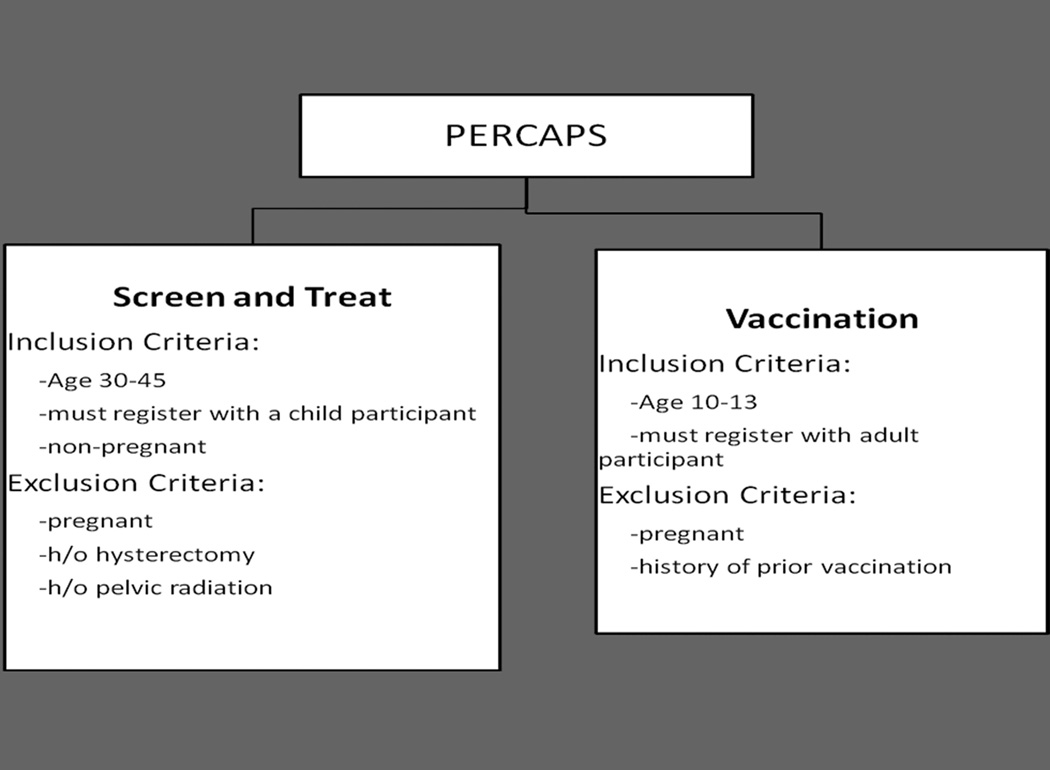
Objective: Cervical cancer is a preventable disease which causes significant morbidity and mortality, particularly in developing countries. Although technology for early detection continues to improve, prevention programs suffer from significant barriers. Community-based participatory research is an approach to research which focuses on collaboration with the community to surmount these barriers. The objective of this study was to evaluate the utility of community-based participatory research techniques in a mother-child screen/treat and vaccinate program for cervical cancer prevention in Manchay, Peru.
Materials and methods: Human papillomavirus (HPV) self-sampling and cryotherapy were used for the screen/treat intervention, and the Gardasil vaccine was used for the vaccine intervention. Community health workers from Manchay participated in a 3-day educational course, designed by the research team. The community health workers then decided how to implement the interventions in their community. The success of the program was measured by (1) the ability of the community health workers to determine an implementation plan, (2) the successful use of research forms provided, (3) participation and retention rates, and (4) satisfaction of the participants.
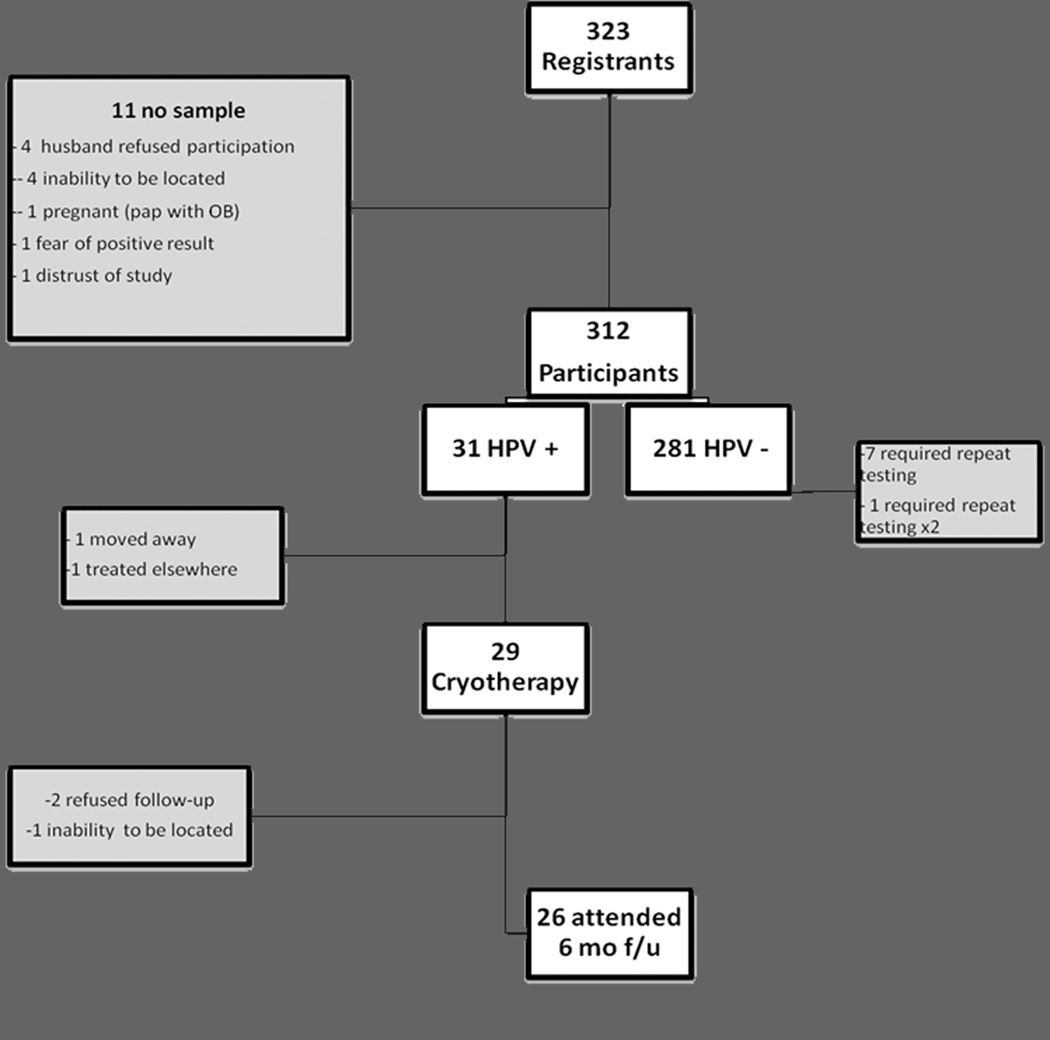
Results: (1) The community health workers used a door-to-door approach through which participants were successfully registered and both interventions were successfully carried out; (2) registration forms, consent forms, and result forms were used correctly with minimal error; (3) screen/treat intervention: 97% of registered participants gave an HPV sample, 94% of HPV-positive women were treated, and 90% returned for 6-month follow-up; vaccine intervention: 95% of registered girls received the first vaccine, 97% of those received the second vaccine, and 93% the third; (4) 96% of participants in the screen/treat intervention reported high satisfaction.
Conclusions: Community-based participatory research techniques successfully helped to implement a screen/treat and vaccinate cervical cancer prevention program in Manchay, Peru. These techniques may help overcome barriers to large-scale preventive health-care interventions.
Figures

References
-
- Barbee L, Kobetz E, Menard J, et al. Assessing the acceptability of self-sampling for HPV among Haitian immigrant women: CBPR in action. Cancer Causes Control. 2010;21:421–431. - PubMed
-
- Christopher S, Gidley A, Letiecq B, et al. A Cervical Cancer Community-Based Participatory Research Project in a Native American Community. Health Education and Behavior. 2008;35:821–834. - PubMed
-
- Ma GX, Shive S, Tan Y, et al. Community-based colorectal cáncer intervention in underserved Korean Americans. Cancer Epidemiology. 2009;33:381–386. - PubMed
-
- Minkler M, Wallerstein N, editors. Community-Based Participatory Research for Health: From Process to Outcomes, Second Edition. San Francisco, CA: John Wiley and Sons; 2008. Part One: Introduction to Community-Based Participatory Research; pp. 5–19.
-
- Walboomers JM, Jacobs MV, Manos MM, et al. Human papillomavirus is a necessary cause of invasive cervical cancer worldwide. J Pathol. 1999;189:12–19. - PubMed
Publication types
MeSH terms
Substances
Grants and funding
LinkOut - more resources
Full Text Sources
Other Literature Sources
Medical
