


Open release of male mosquitoes infected with a wolbachia biopesticide: field performance and infection containment
- PMID: 23166845
- PMCID: PMC3499408
- DOI: 10.1371/journal.pntd.0001797
Open release of male mosquitoes infected with a wolbachia biopesticide: field performance and infection containment
Abstract
Background: Lymphatic filariasis (LF) is a globally significant disease, with 1.3 billion persons in 83 countries at risk. A coordinated effort of administering annual macrofilaricidal prophylactics to the entire at-risk population has succeeded in impacting and eliminating LF transmission in multiple regions. However, some areas in the South Pacific are predicted to persist as transmission sites, due in part to the biology of the mosquito vector, which has led to a call for additional tools to augment drug treatments. Autocidal strategies against mosquitoes are resurging in the effort against invasive mosquitoes and vector borne disease, with examples that include field trials of genetically modified mosquitoes and Wolbachia population replacement. However, critical questions must be addressed in anticipation of full field trials, including assessments of field competitiveness of transfected males and the risk of unintended population replacement.
Methodology/principal findings: We report the outcome of field experiments testing a strategy that employs Wolbachia as a biopesticide. The strategy is based upon Wolbachia-induced conditional sterility, known as cytoplasmic incompatibility, and the repeated release of incompatible males to suppress a population. A criticism of the Wolbachia biopesticide approach is that unintended female release or horizontal Wolbachia transmission can result in population replacement instead of suppression. We present the outcome of laboratory and field experiments assessing the competitiveness of transfected males and their ability to transmit Wolbachia via horizontal transmission.
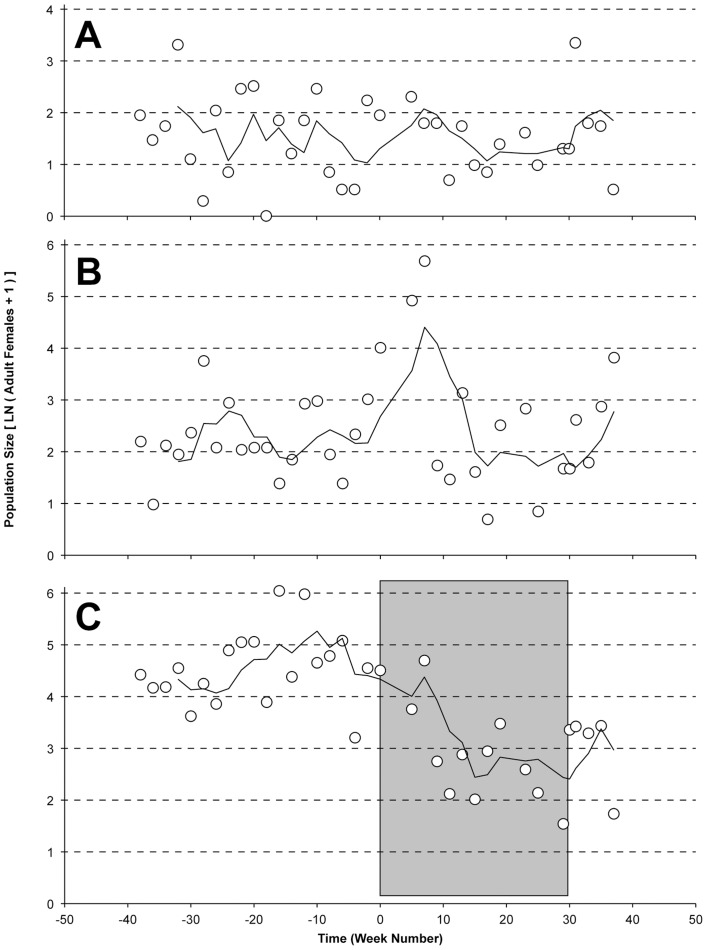
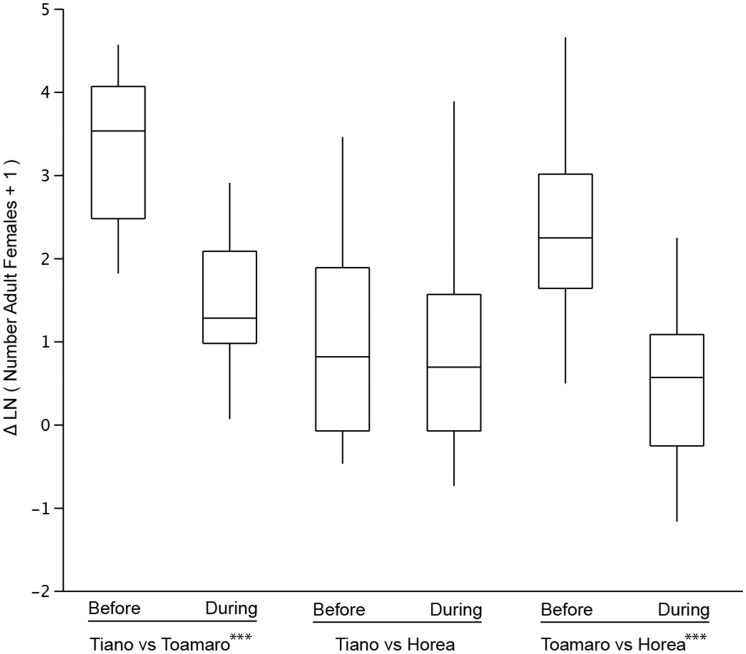
Conclusions/significance: The results demonstrate that Wolbachia-transfected Aedes polynesiensis males are competitive under field conditions during a thirty-week open release period, as indicated by mark, release, recapture and brood-hatch failure among females at the release site. Experiments demonstrate the males to be 'dead end hosts' for Wolbachia and that methods were adequate to prevent population replacement at the field site. The findings encourage the continued development and extension of a Wolbachia autocidal approach to additional medically important mosquito species.
Conflict of interest statement
The authors have declared that no competing interests exist.
Figures
Comment in
-
Male mosquitoes make waves in paradise.Pathog Glob Health. 2013 Jun;107(4):161. doi: 10.1179/2047772413Z.000000000134. Pathog Glob Health. 2013. PMID: 23816506 Free PMC article. No abstract available.
References
-
- Pichon G (2002) Limitation and facilitation in the vectors and other aspects of the dynamics of filarial transmission: the need for vector control against Anopheles-transmitted filariasis. Ann Trop Med Parasitol 96 Suppl 2: S143–S152. - PubMed
-
- Southgate BA (1992) The significance of low density microfilaraemia in the transmission of lymphatic filarial parasites. J Trop Med Hyg 95: 79–86. - PubMed
-
- Esterre P, Plichart C, Sechan Y, Nguyen NL (2001) The impact of 34 years of massive DEC chemotherapy on Wuchereria bancrofti infection and transmission: the Maupiti cohort. Trop Med Int Health 6: 190–195. - PubMed
-
- Bockarie MJ, Pedersen EM, White GB, Michael E (2009) Role of vector control in the global program to eliminate lymphatic filariasis. Annu Rev Entomol 54: 469–487. - PubMed
Publication types
MeSH terms
Grants and funding
LinkOut - more resources
Full Text Sources
Miscellaneous
