First attempt to validate human IgG antibody response to Nterm-34kDa salivary peptide as biomarker for evaluating exposure to Aedes aegypti bites
- PMID: 23166852
- PMCID: PMC3499371
- DOI: 10.1371/journal.pntd.0001905
First attempt to validate human IgG antibody response to Nterm-34kDa salivary peptide as biomarker for evaluating exposure to Aedes aegypti bites
Abstract
Background: Much effort is being devoted for developing new indicators to evaluate the human exposure to Aedes mosquito bites and the risk of arbovirus transmission. Human antibody (Ab) responses to mosquito salivary components could represent a promising tool for evaluating the human-vector contact.
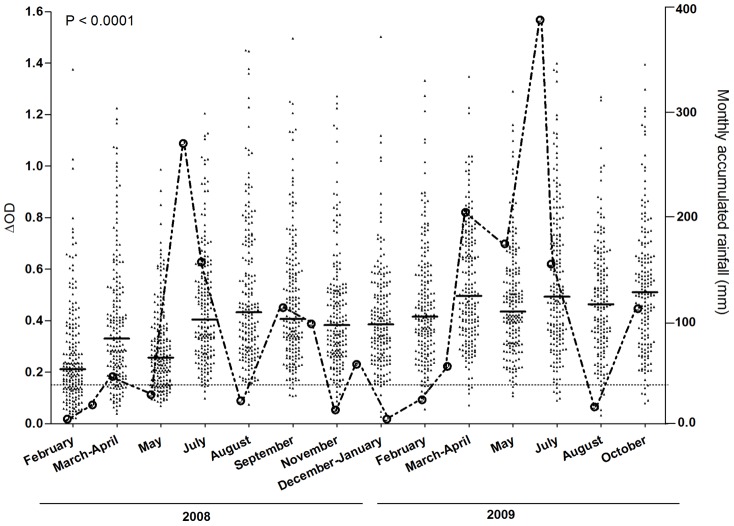
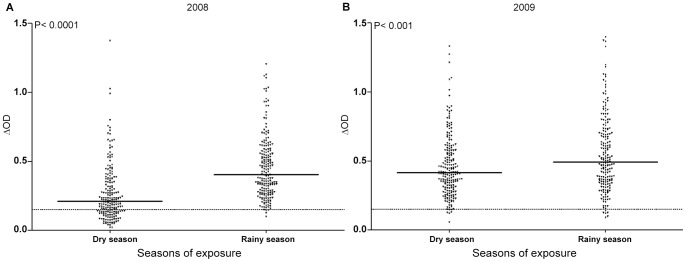
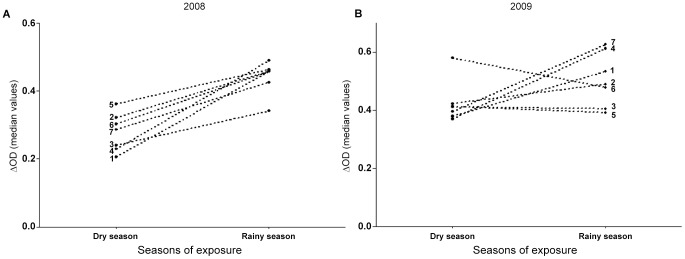
Methodology/principal findings: To develop a specific biomarker of human exposure to Aedes aegypti bites, we measured IgG Ab response to Ae. aegypti Nterm-34 kDa salivary peptide in exposed children in 7 villages of Southern Benin (West Africa). Results showed that specific IgG response presented high inter-individual heterogeneity between villages. IgG response was associated with rainfall and IgG level increased from dry (low exposure) to rainy (high exposure) seasons. These findings indicate that IgG Ab to Nterm-34 kDa salivary peptide may represent a reliable biomarker to detect variation in human exposure to Ae. aegypti bites.
Conclusion/significance: This preliminary study highlights the potential use of Ab response to this salivary peptide for evaluating human exposure to Ae. aegypti. This biomarker could represent a new promising tool for assessing the risk of arbovirus transmission and for evaluating the efficacy of vector control interventions.
Conflict of interest statement
The authors declared no conflict of interest concerning the work presented in this paper.
Figures
References
-
- Focks DA, Chadee DD (1997) Pupal survey: an epidemiologically significant surveillance method for Aedes aegypti: an example using data from Trinidad. Am J Trop Med Hyg 56: 159–167. - PubMed
-
- Tun-Lin W, Kay BH, Barnes A (1995) The Premise Condition Index: a tool for streamlining surveys of Aedes aegypti . Am J Trop Med Hyg 53: 591–594. - PubMed
-
- Focks DA (2004) A rewiew of entomological sampling methods andi ndicators for Dengue vectors. Geneva: World Health Organization. 40 p.
-
- Dibo MR, Chierotti AP, Ferrari MS, Mendonca AL, Chiaravalloti Neto F (2008) Study of the relationship between Aedes (Stegomyia) aegypti egg and adult densities, dengue fever and climate in Mirassol, state of Sao Paulo, Brazil. Mem Inst Oswaldo Cruz 103: 554–560. - PubMed
-
- Remoue F CS, Ngom A, Boulanger D, and Simondon F (2005) Immune responses to arthropod bites during vector-borne diseases. In: Ed OG, editor. Update in Tropical Immunology. pp. 377–400.
Publication types
MeSH terms
Substances
LinkOut - more resources
Full Text Sources
Other Literature Sources
Medical