


Identification and characterization of the bacterial etiology of clinically problematic acute otitis media after tympanocentesis or spontaneous otorrhea in German children
- PMID: 23167692
- PMCID: PMC3544702
- DOI: 10.1186/1471-2334-12-312
Identification and characterization of the bacterial etiology of clinically problematic acute otitis media after tympanocentesis or spontaneous otorrhea in German children
Erratum in
-
Erratum to: 'Identification and characterization of the bacterial etiology of clinically problematic acute otitis media after tympanocentesis or spontaneous otorrhea in German children'.BMC Infect Dis. 2016 Mar 9;16:118. doi: 10.1186/s12879-016-1415-4. BMC Infect Dis. 2016. PMID: 26961920 Free PMC article. No abstract available.
Abstract
Background: Acute Otitis Media (AOM) is an important and common disease of childhood. Bacteria isolated from cases of clinically problematic AOM in German children were identified and characterized.
Methods: In a prospective non-interventional study in German children between 3 months and less than 60 months of age with Ear, Nose and Throat Specialist -confirmed AOM, middle ear fluid was obtained by tympanocentesis (when clinically indicated) or by careful sampling of otorrhea through/at an existing perforation.
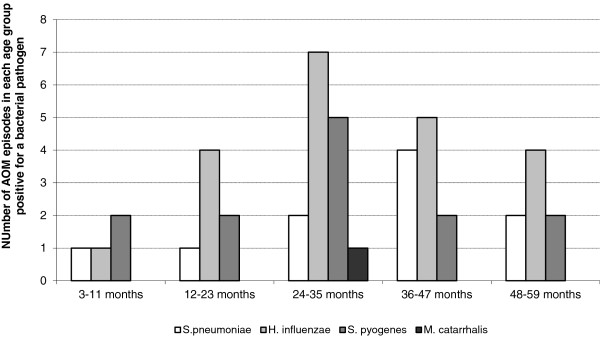
Results: In 100 children with severe AOM, Haemophilus influenzae was identified in 21% (18/21, 85.7% were non-typeable [NTHi]), Streptococcus pneumoniae in 10%, S. pyogenes in 13% and Moraxella catarrhalis in 1%. H. influenzae was the most frequently identified pathogen in children from 12 months of age. H. influenzae and S. pneumoniae were equally prevalent in children aged 3-11 months, but S. pyogenes was most frequently isolated in this age group. NTHi AOM disease appeared prevalent in all ages.
Conclusions: NTHi, S. pneumoniae and S. pyogenes are implicated as important causes of complicated AOM in children in Germany. NTHi disease appears prevalent in all ages. The impact of vaccination to prevent NTHi and S. pneumoniae AOM may be substantial in this population and is worth investigating.
Figures
References
Publication types
MeSH terms
LinkOut - more resources
Full Text Sources
Medical
