


Evaluating sleep in bipolar disorder: comparison between actigraphy, polysomnography, and sleep diary
- PMID: 23167935
- PMCID: PMC3549461
- DOI: 10.1111/bdi.12021
Evaluating sleep in bipolar disorder: comparison between actigraphy, polysomnography, and sleep diary
Abstract
Objectives: Bipolar disorder is an illness characterized by sleep and circadian disturbance, and monitoring sleep in this population may signal an impending mood change. Actigraphy is an important clinical and research tool for examining sleep, but has not yet been systematically compared to polysomnography or sleep diary in bipolar disorder. The present study compares actigraphy, polysomnography, and sleep diary estimates of five standard sleep parameters in individuals with bipolar disorder and matched controls across two nights of assessment.
Methods: Twenty-seven individuals who met diagnostic criteria for bipolar disorder type I or II and were currently between mood episodes, along with 27 matched controls with no history of psychopathology or sleep disturbance, underwent two nights of research laboratory monitoring. Sleep was estimated via polysomnography, actigraphy, and sleep diary.
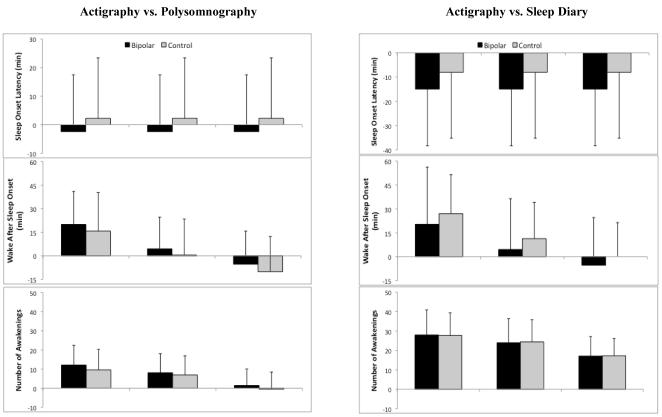
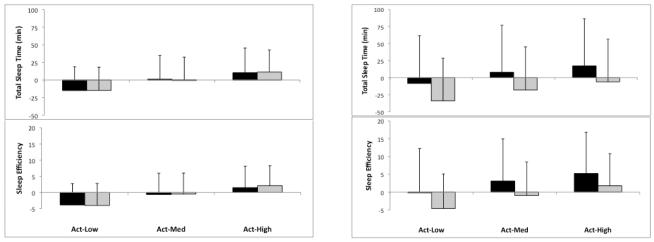
Results: Over the 108 nights available for comparison, sleep parameter estimates from actigraphy and polysomnography were highly correlated and did not differ between the two groups or across the two nights for sleep onset latency, wake after sleep onset, number of awakenings, total sleep time, or sleep efficiency percentage. The medium wake threshold algorithm in the actigraphy software was the most concordant with polysomnography and diaries across the five sleep parameters. Concordance between actigraphy, polysomnography, and sleep diary was largely independent of insomnia presence and medication use.
Conclusions: Actigraphy is a valid tool for estimating sleep length and fragmentation in bipolar disorder.
© 2012 John Wiley and Sons A/S.
Figures
References
-
- Millar A, Espie C, Scott J. The sleep of remitted bipolar outpatients: a controlled naturalistic study using actigraphy. J Affect Disord. 2004;80:145–153. - PubMed
-
- Ehlers CL, Frank E, Kupfer DJ. Social zeitgebers and biological rhythms: a unified approach to understanding the etiology of depression. Arch Gen Psychiatry. 1988;45:948–952. - PubMed
-
- Frank E. Interpersonal and social rhythm therapy: managing the chaos of bipolar disorder. Biol Psychiatry. 2000;48:593–604. - PubMed
Publication types
MeSH terms
Grants and funding
LinkOut - more resources
Full Text Sources
Medical
Miscellaneous
