


Resetting of the sympathetic baroreflex is associated with the onset of hypertension during chronic intermittent hypoxia
- PMID: 23167993
- PMCID: PMC3529839
- DOI: 10.1016/j.autneu.2012.10.015
Resetting of the sympathetic baroreflex is associated with the onset of hypertension during chronic intermittent hypoxia
Abstract
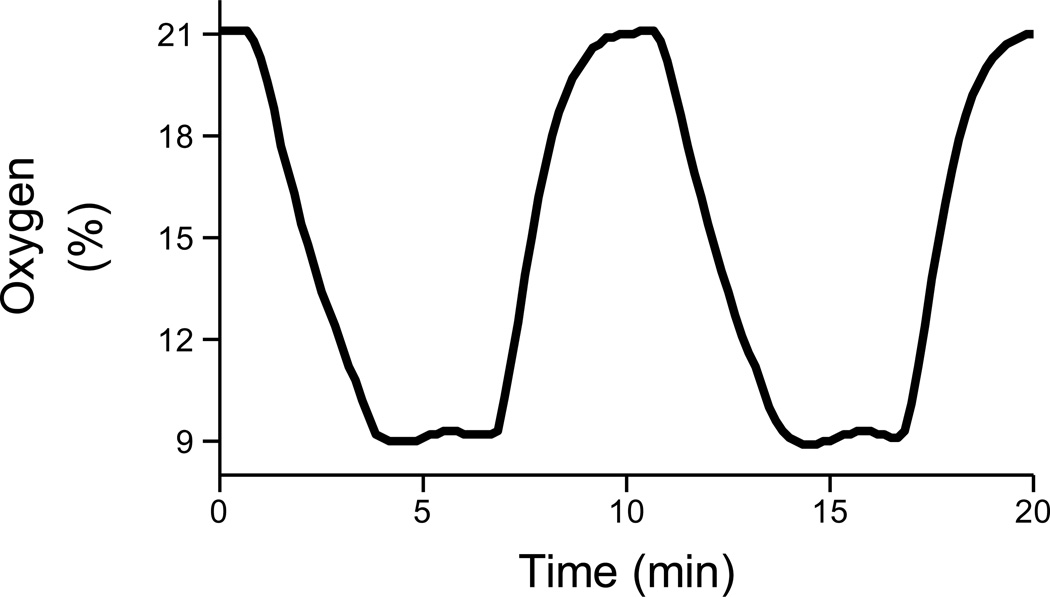
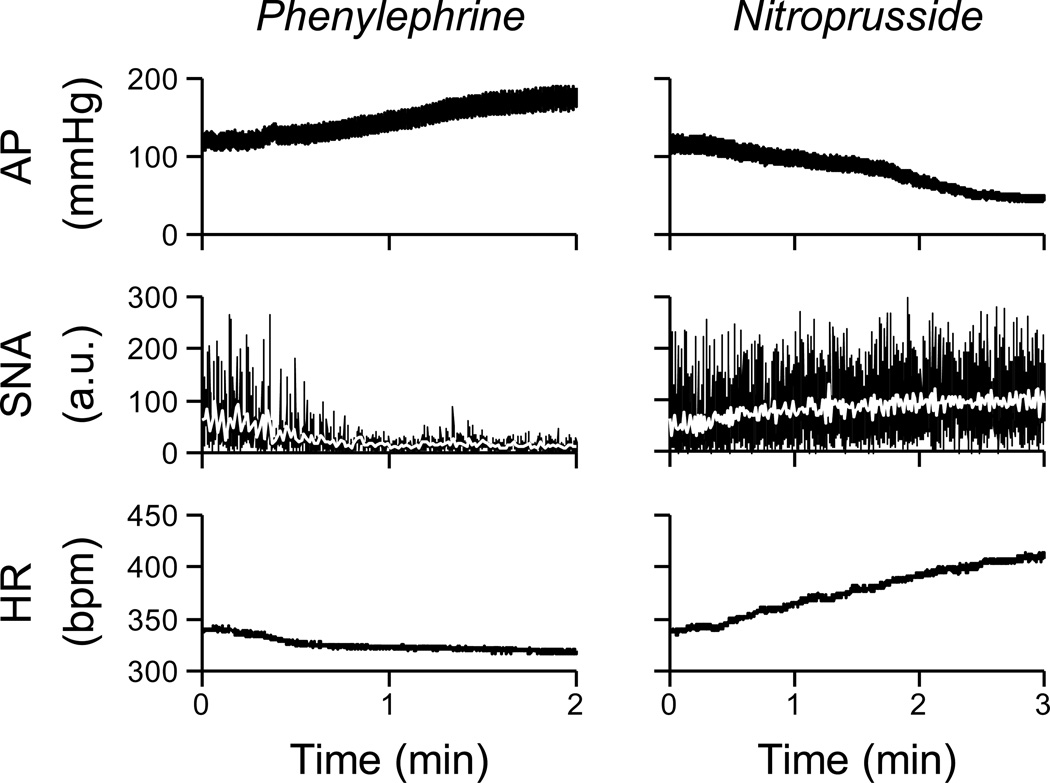
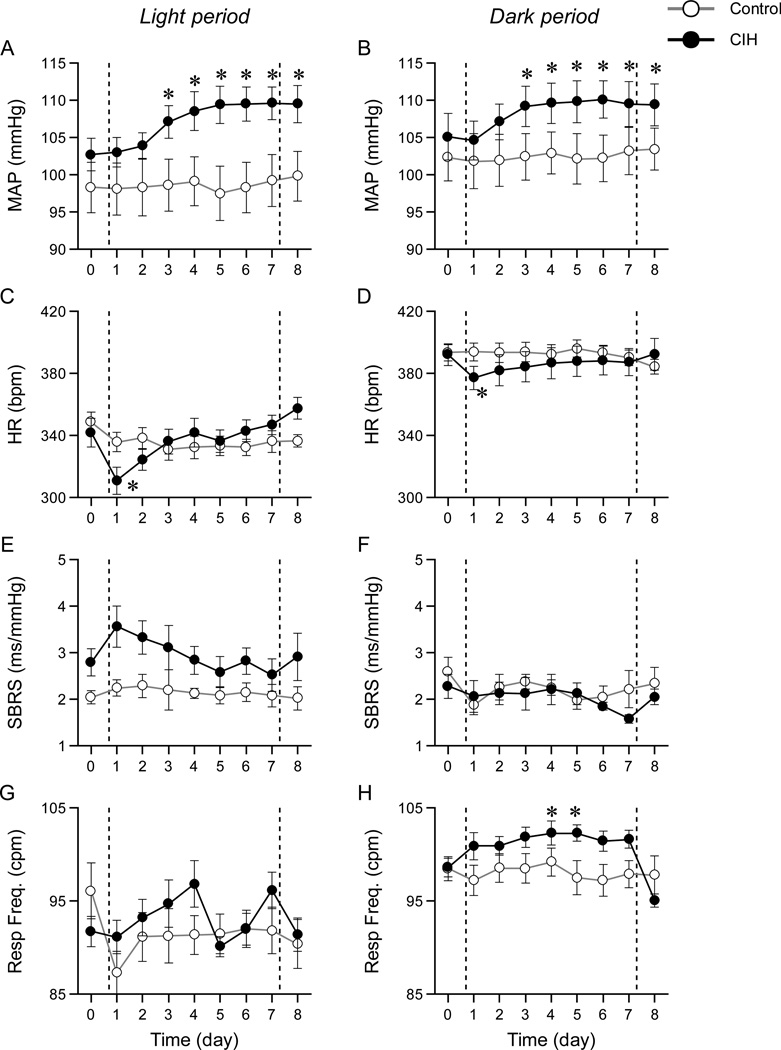
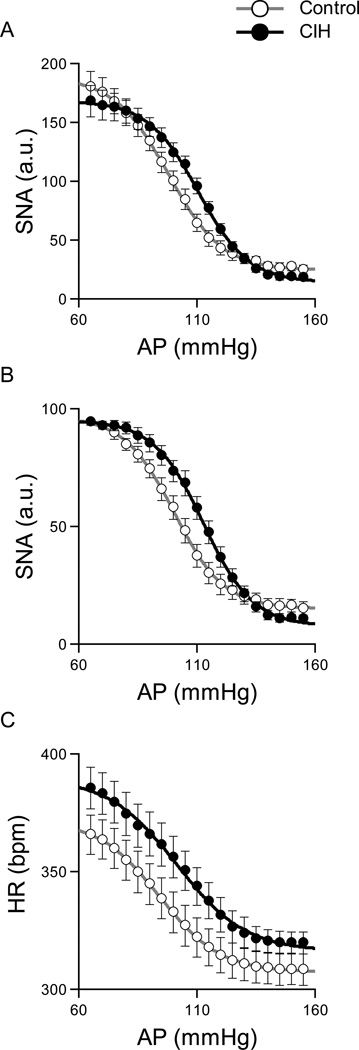
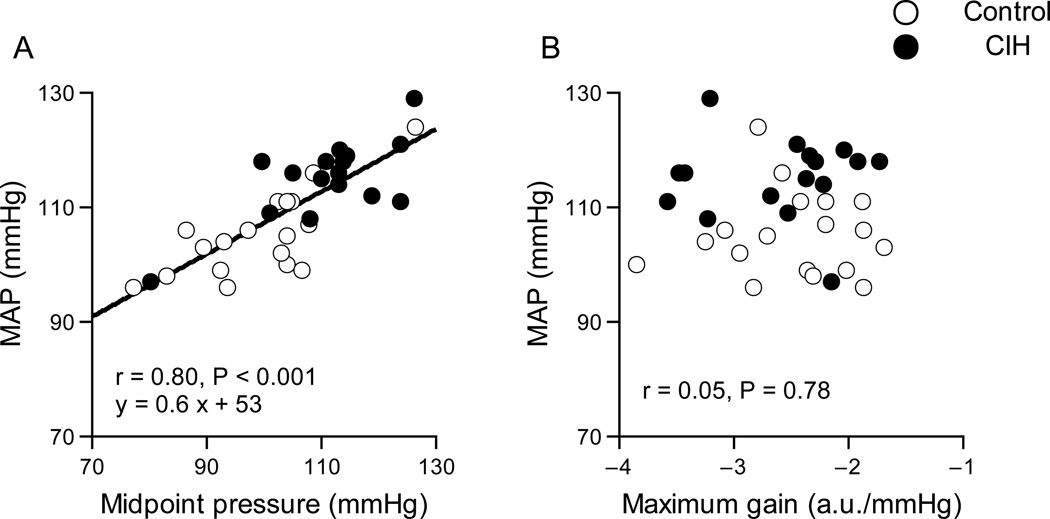
Chronic intermittent hypoxia (CIH) is a model of arterial hypoxemia that accompanies sleep apnea and increases resting arterial pressure (AP). We examined the effects of 7 days of exposure to CIH on arterial baroreflex control of renal sympathetic nerve activity (RSNA) and heart rate (HR) in rats. Sprague-Dawley rats (15±2 weeks old) were exposed to CIH (9% oxygen for 3 min every 10 min, 8 h per day) for 7 days (n=16) while control rats (n=18) were maintained in normoxia. Baroreflex regulation of RSNA and HR were estimated in Inactin anesthetized and artificially ventilated rats during infusions of phenylephrine and nitroprusside to manipulate AP. After exposure to CIH, resting mean AP was higher in CIH than that in control group (115±7 vs. 105±7, P<0.001). Resting HR did not differ between the two groups. Exposure to CIH shifted the AP-RSNA relationship rightward (approximately 10 mm Hg, P<0.01). CIH did not alter maximum gain of the baroreflex control of RSNA (-2.6±0.6 vs. -2.5±0.6 arbitrary units (a.u.)/mm Hg) and HR (-1.8±0.6 vs. -1.8±0.7 bpm/mm Hg, CIH vs. control). In addition, cardiac spontaneous baroreflex sensitivity in conscious rats (n=8) also did not change during exposure to CIH. These results indicate that resetting of the sympathetic baroreflex control, rather than an impairment of its sensitivity, is associated with an onset of hypertension induced by CIH.
Copyright © 2012 Elsevier B.V. All rights reserved.
Figures
References
-
- Fletcher EC. Invited review: Physiological consequences of intermittent hypoxia: systemic blood pressure. J Appl Physiol. 2001;90:1600–1605. - PubMed
-
- Fletcher EC, Bao G, Li R. Renin activity and blood pressure in response to chronic episodic hypoxia. Hypertension. 1999;34:309–314. - PubMed
-
- Fletcher EC, Lesske J, Behm R, Miller CC, 3rd, Stauss H, Unger T. Carotid chemoreceptors, systemic blood pressure, and chronic episodic hypoxia mimicking sleep apnea. J Appl Physiol. 1992a;72:1978–1984. - PubMed
-
- Fletcher EC, Lesske J, Culman J, Miller CC, Unger T. Sympathetic denervation blocks blood pressure elevation in episodic hypoxia. Hypertension. 1992b;20:612–619. - PubMed
-
- Fletcher EC, Lesske J, Qian W, Miller CC, 3rd, Unger T. Repetitive, episodic hypoxia causes diurnal elevation of blood pressure in rats. Hypertension. 1992c;19:555–561. - PubMed
Publication types
MeSH terms
Substances
Grants and funding
LinkOut - more resources
Full Text Sources
Other Literature Sources
Medical
