Reproductive preferences and contraceptive use: a comparison of monogamous and polygamous couples in northern Malawi
- PMID: 23168093
- PMCID: PMC3566591
- DOI: 10.1017/S0021932012000569
Reproductive preferences and contraceptive use: a comparison of monogamous and polygamous couples in northern Malawi
Abstract
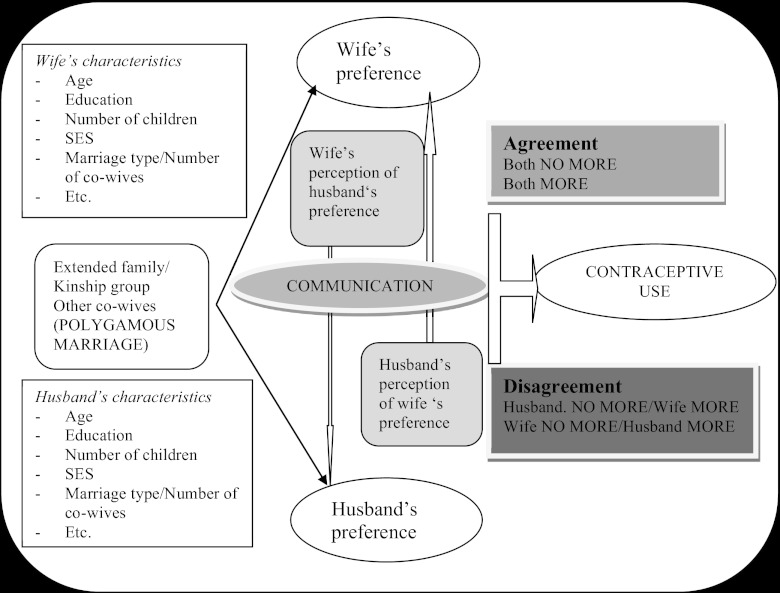
There is now widespread agreement on the importance of men's role in reproductive decision-making. Several studies have argued that fertility preferences and their translation into behaviour differ between polygamous and monogamous unions. Studies investigating the dominance of men's preferences over women's preferences, in cases of couple disagreement, found mixed evidence of the effect of polygamy. However, an often cited limitation of these studies has been the inability to link husband's intention with each of his wives in a polygamous union. By adding fertility-intention questions to an on-going Demographic Surveillance Site in Karonga District in northern Malawi the fertility preferences and contraceptive use of husbands and wives were investigated. An analysis of the relationship between the level of agreement and disagreement between husbands' and wives' fertility preferences was then performed to gain insight into the reproductive decision-making process of polygamous couples.
References
-
- Agadjanian V. & Ezeh A. C. (2000) Polygyny, gender relations, and reproduction in Ghana. Journal of Comparative Family Studies 31(4), 427–441
-
- Anderton D. & Emigh R. (1989) Polygymous fertility: sexual competition versus progeny. American Journal of Sociology 94(4), 832–855 - PubMed
-
- Bankole A. (1995) Desired fertility and fertility behaviour among the Yoruba of Nigeria: a study of couple preference and subsequent fertility. Population Studies 49, 317–328
-
- Bankole A. & Singh S. (1998) Couple's fertility and contraceptive decision-making in developing countries: hearing the man's voice. International Family Planning Pespectives 24(1), 15–23
-
- Becker S. (1996) Couples and reproductive health: a review of couple studies. Studies in Family Planning 27(6), 291–306 - PubMed
Publication types
MeSH terms
Grants and funding
LinkOut - more resources
Full Text Sources