


Contributions of Epstein-Barr nuclear antigen 1 (EBNA1) to cell immortalization and survival
- PMID: 23170171
- PMCID: PMC3499818
- DOI: 10.3390/v4091537
Contributions of Epstein-Barr nuclear antigen 1 (EBNA1) to cell immortalization and survival
Abstract
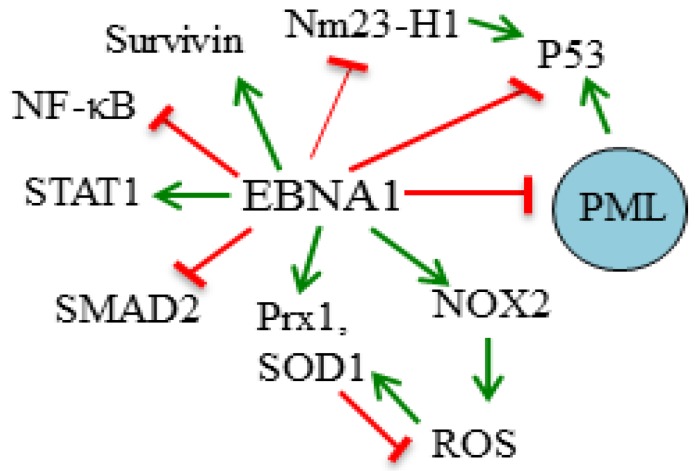
Epstein-Barr virus (EBV) immortalizes host cells as part of its latent mode of infection. As a result of this ability to promote cell proliferation and survival, EBV infection contributes to the development of several kinds of B-cell lymphomas and epithelial tumours. The EBV Epstein-Barr nuclear antigen 1 (EBNA1) protein is the only EBV protein expressed in all EBV-associated tumours and plays multiple important roles in EBV latency. In addition to its well-studied roles in viral DNA replication, segregation and transcriptional activation, several studies have identified roles of EBNA1 in manipulating cellular processes that result in reduced apoptosis and increased cell survival. This review discusses these cellular effects of EBNA1 and mechanisms by which they occur.
Keywords: EBNA1; NFκB; Nm23-H1; PML; ROS; STAT1; USP7; oxidative stress; p53; survivin.
Figures
References
Publication types
MeSH terms
Substances
LinkOut - more resources
Full Text Sources
Other Literature Sources
Research Materials
Miscellaneous
