


Increasing physical activity with mobile devices: a meta-analysis
- PMID: 23171838
- PMCID: PMC3514847
- DOI: 10.2196/jmir.2171
Increasing physical activity with mobile devices: a meta-analysis
Abstract
Background: Regular physical activity has established physical and mental health benefits; however, merely one quarter of the U.S. adult population meets national physical activity recommendations. In an effort to engage individuals who do not meet these guidelines, researchers have utilized popular emerging technologies, including mobile devices (ie, personal digital assistants [PDAs], mobile phones). This study is the first to synthesize current research focused on the use of mobile devices for increasing physical activity.
Objective: To conduct a meta-analysis of research utilizing mobile devices to influence physical activity behavior. The aims of this review were to: (1) examine the efficacy of mobile devices in the physical activity setting, (2) explore and discuss implementation of device features across studies, and (3) make recommendations for future intervention development.
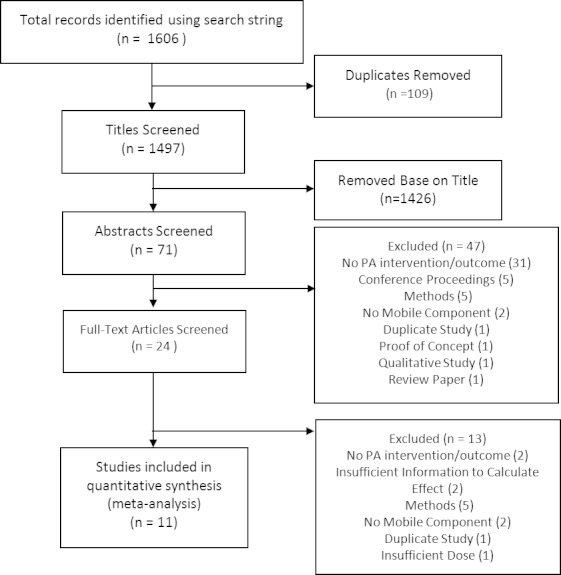
Methods: We searched electronic databases (PubMed, PsychINFO, SCOPUS) and identified publications through reference lists and requests to experts in the field of mobile health. Studies were included that provided original data and aimed to influence physical activity through dissemination or collection of intervention materials with a mobile device. Data were extracted to calculate effect sizes for individual studies, as were study descriptives. A random effects meta-analysis was conducted using the Comprehensive Meta-Analysis software suite. Study quality was assessed using the quality of execution portion of the Guide to Community Preventative Services data extraction form.
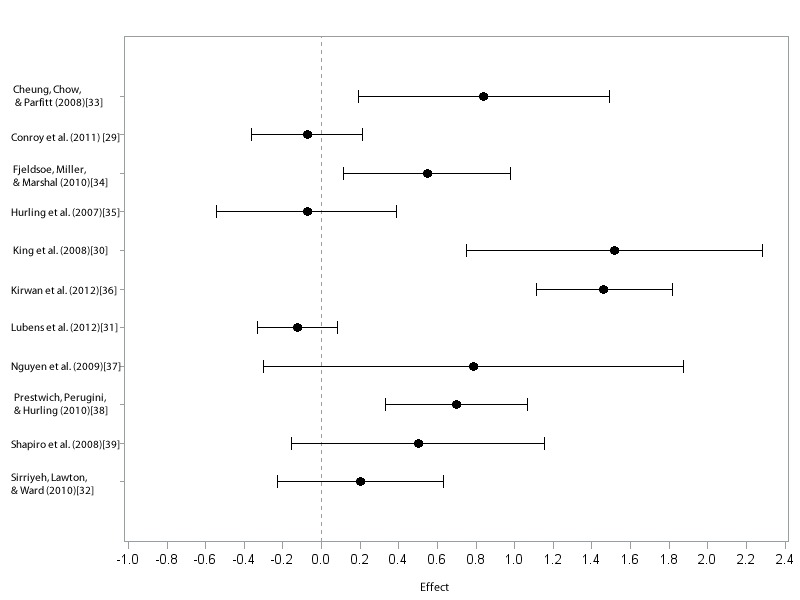
Results: Four studies were of "good" quality and seven of "fair" quality. In total, 1351 individuals participated in 11 unique studies from which 18 effects were extracted and synthesized, yielding an overall weight mean effect size of g = 0.54 (95% CI = 0.17 to 0.91, P = .01).
Conclusions: Research utilizing mobile devices is gaining in popularity, and this study suggests that this platform is an effective means for influencing physical activity behavior. Our focus must be on the best possible use of these tools to measure and understand behavior. Therefore, theoretically grounded behavior change interventions that recognize and act on the potential of smartphone technology could provide investigators with an effective tool for increasing physical activity.
Conflict of interest statement
None declared.
Figures
References
-
- Blair SN, Kohl HW, Paffenbarger RS, Clark DG, Cooper KH, Gibbons LW. Physical fitness and all-cause mortality. A prospective study of healthy men and women. JAMA. 1989 Nov 3;262(17):2395–401. - PubMed
-
- Warburton DE, Katzmarzyk PT, Rhodes RE, Shephard RJ. Evidence-informed physical activity guidelines for Canadian adults. Can J Public Health. 2007;98 Suppl 2:S16–68. - PubMed
-
- Wolin KY, Yan Y, Colditz GA, Lee IM. Physical activity and colon cancer prevention: a meta-analysis. Br J Cancer. 2009 Feb 24;100(4):611–6. doi: 10.1038/sj.bjc.6604917. http://dx.doi.org/10.1038/sj.bjc.66049176604917 - DOI - PMC - PubMed
-
- Centers for Disease Control and Prevention FastStats. 2011. [2012-11-19]. Exercise or Physical Activity Statistics http://www.cdc.gov/nchs/fastats/exercise.htm. - PubMed
Publication types
MeSH terms
Grants and funding
LinkOut - more resources
Full Text Sources
Medical
