


The NO donor sodium nitroprusside: evaluation of skeletal muscle vascular and metabolic dysfunction
- PMID: 23174313
- PMCID: PMC3556448
- DOI: 10.1016/j.mvr.2012.11.006
The NO donor sodium nitroprusside: evaluation of skeletal muscle vascular and metabolic dysfunction
Abstract
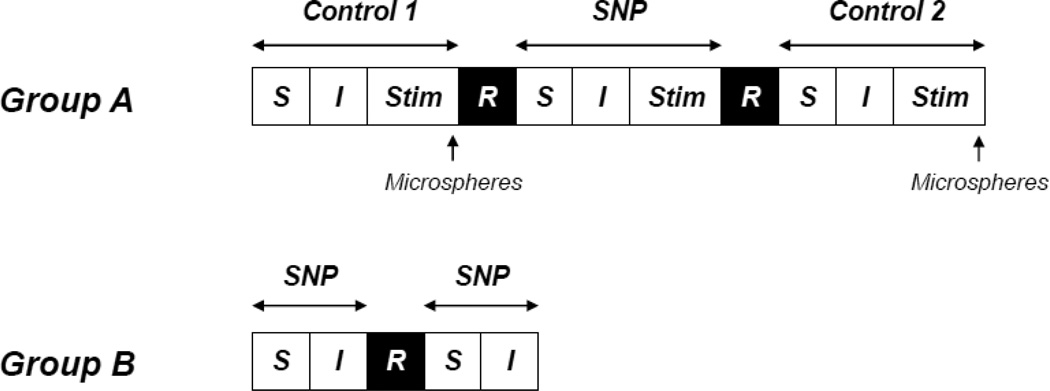
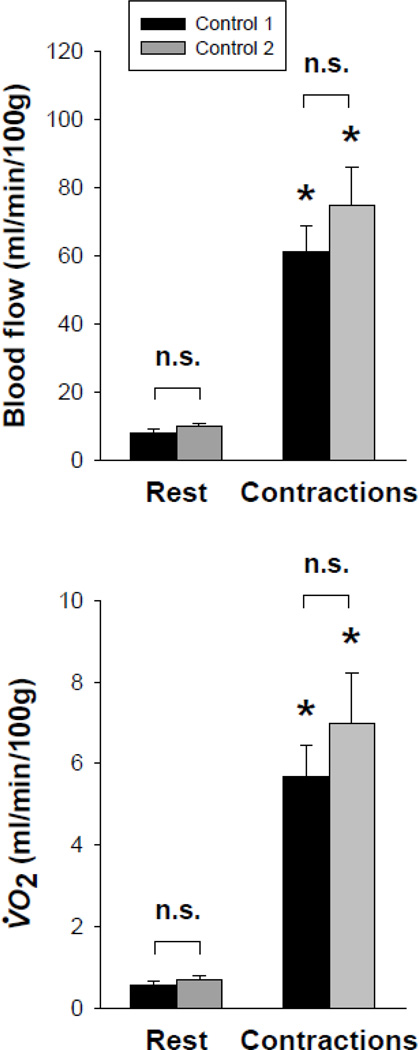
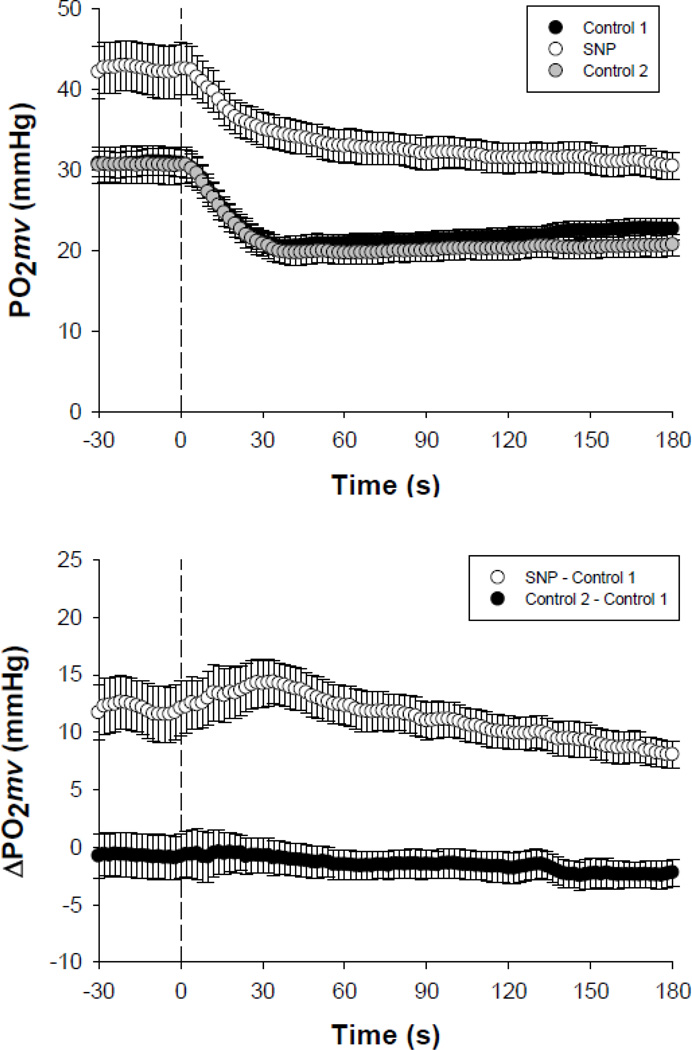
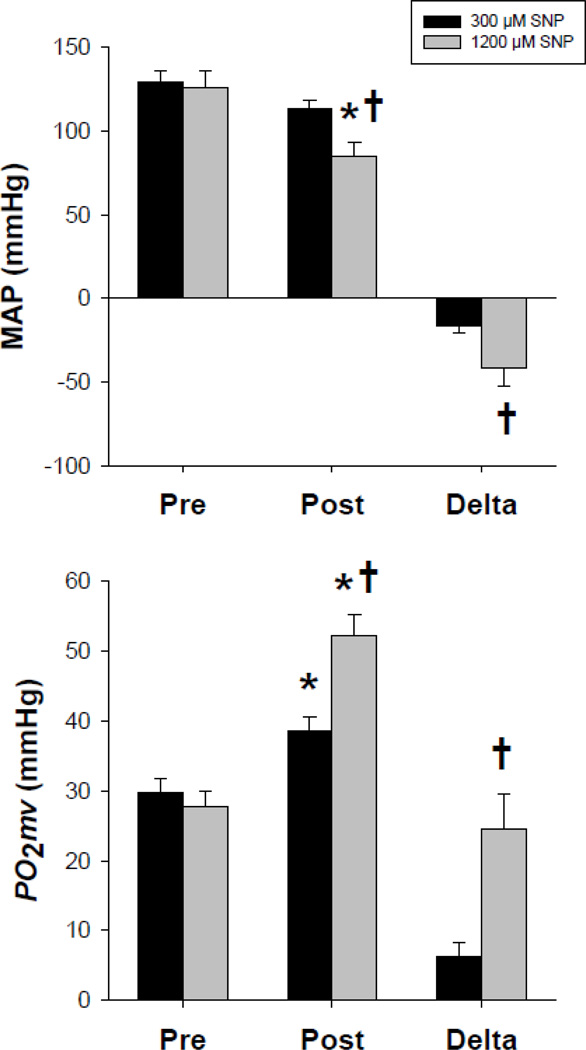
The nitric oxide (NO) donor sodium nitroprusside (SNP) may promote cyanide-induced toxicity and systemic and/or local responses approaching maximal vasodilation. The hypotheses were tested that SNP superfusion of the rat spinotrapezius muscle exerts 1) residual impairments in resting and contracting blood flow, oxygen utilization (VO(2)) and microvascular O(2) pressure (PO(2)mv); and 2) marked hypotension and elevation in resting PO(2)mv. Two superfusion protocols were performed: 1) Krebs-Henseleit (control 1), SNP (300 μM; a dose used commonly in superfusion studies) and Krebs-Henseleit (control 2), in this order; 2) 300 and 1200 μM SNP in random order. Spinotrapezius muscle blood flow (radiolabeled microspheres), VO(2) (Fick calculation) and PO(2)mv (phosphorescence quenching) were determined at rest and during electrically-induced (1 Hz) contractions. There were no differences in spinotrapezius blood flow, VO(2) or PO(2)mv at rest and during contractions pre- and post-SNP condition (control 1 and control 2; p>0.05 for all). With regard to dosing, SNP produced a graded elevation in resting PO(2)mv (p<0.05) with a reduction in mean arterial pressure only at the higher concentration (p<0.05). Contrary to our hypotheses, skeletal muscle superfusion with the NO donor SNP (300 μM) improved microvascular oxygenation during the transition from rest to contractions (PO(2)mv kinetics) without precipitating residual impairment of muscle hemodynamic or metabolic control or compromising systemic hemodynamics. These data suggest that SNP superfusion (300 μM) constitutes a valid and important tool for assessing the functional roles of NO in resting and contracting skeletal muscle function without incurring residual alterations consistent with cyanide accumulation and poisoning.
Copyright © 2012 Elsevier Inc. All rights reserved.
Figures
References
-
- Altman PL, Dittmer DS. Biology Data Book. Bethesda, MD: FASEB; 1974.
-
- Bailey JK, et al. Spinotrapezius muscle microcirculatory function: effects of surgical exteriorization. Am J Physiol Heart Circ Physiol. 2000;279:H3131–H3137. - PubMed
-
- Behnke BJ, et al. Dynamics of oxygen uptake following exercise onset in rat skeletal muscle. Respir Physiol Neurobiol. 2002;133:229–239. - PubMed
-
- Behnke BJ, et al. Dynamics of microvascular oxygen pressure across the rest-exercise transition in rat skeletal muscle. Respir Physiol. 2001;126:53–63. - PubMed
Publication types
MeSH terms
Substances
Grants and funding
LinkOut - more resources
Full Text Sources
Other Literature Sources
