


Evaluation of the hepatoprotective Effects of Lantadene A, a pentacyclic triterpenoid of Lantana plants against acetaminophen-induced liver damage
- PMID: 23178309
- PMCID: PMC6268155
- DOI: 10.3390/molecules171213937
Evaluation of the hepatoprotective Effects of Lantadene A, a pentacyclic triterpenoid of Lantana plants against acetaminophen-induced liver damage
Retraction in
-
Retraction: Sasidharan et al. Evaluation of the hepatoprotective effects of lantadene A, a pentacyclic triterpenoid of Lantana plants against acetaminophen-induced liver damage. Molecules 2012, 17, 13937-13947.Molecules. 2013 Mar 27;18(4):3839-40. doi: 10.3390/molecules18043839. Molecules. 2013. PMID: 23535517 Free PMC article.
Abstract
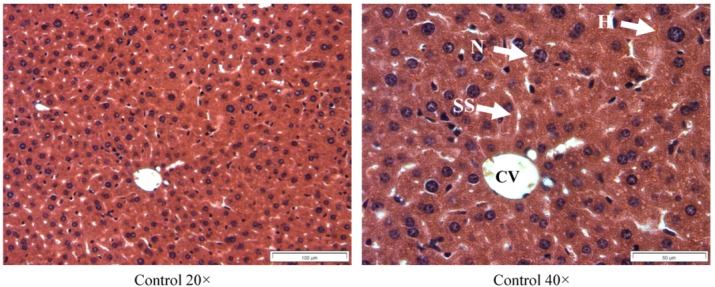
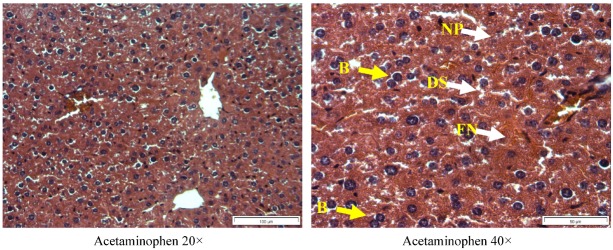
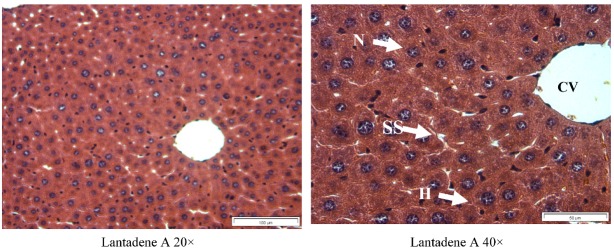
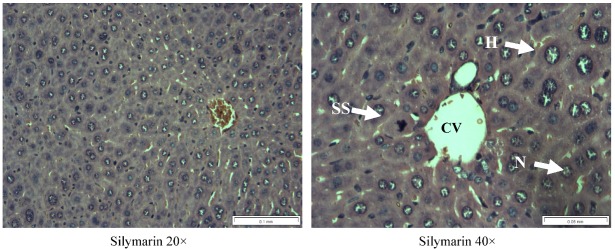
The aim of the present study was to evaluate the hepatoprotective activity of lantadene A against acetaminophen-induced liver toxicity in mice was studied. Activity was measured by monitoring the levels of aspartate aminotransferase (AST), alanine aminotransferase (ALT), alkaline phosphatase (ALP) and bilirubin, along with histo-pathological analysis. Silymarin was used as positive control. A bimodal pattern of behavioural toxicity was exhibited by the lantadene A-treated group at the beginning of the treatment. However, treatment with lantadene A and silymarin resulted in an increase in the liver weight compared with the acetaminophen treated group. The results of the acetaminophen-induced liver toxicity experiments showed that mice treated with lantadene A (500 mg/kg) showed a significant decrease in the activity of ALT, AST and ALP and the level of bilirubin, which were all elevated in the acetaminophen treated group (p < 0.05). Histological studies supported the biochemical findings and a maximum improvement in the histoarchitecture was seen. The lantadene A-treated group showed remarkable protective effects against histopathological alterations, with comparable results to the silymarin treated group. The current study confirmed the hepatoprotective effects of lantadene A against the model hepatotoxicant acetaminophen, which is likely related to its potent antioxidative activity.
Figures
Comment in
-
Remarks on Sasidharan et al. "Evaluation of the hepatoprotective effects of lantadene A, a pentacyclic triterpenoid of Lantana plants against acetaminophen-induced liver damage". Molecules 2012, 17, 13937-13947.Molecules. 2013 Mar 14;18(3):3442-4. doi: 10.3390/molecules18033442. Molecules. 2013. PMID: 23493106 Free PMC article.
References
Publication types
MeSH terms
Substances
LinkOut - more resources
Full Text Sources
Medical
