A new approach for elimination of gastric cancer deaths in Japan
- PMID: 23180638
- PMCID: PMC3565450
- DOI: 10.1002/ijc.27965
A new approach for elimination of gastric cancer deaths in Japan
Abstract
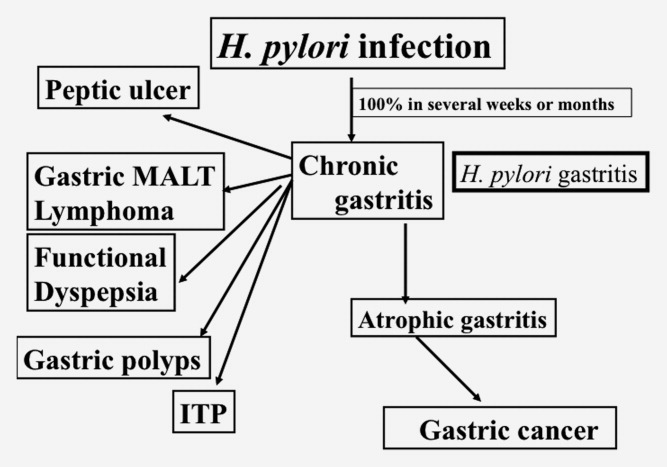
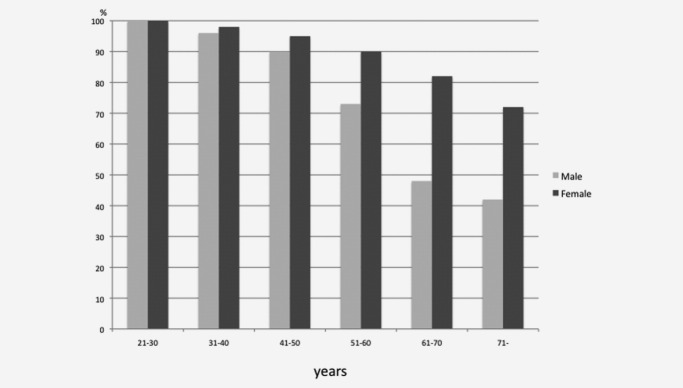
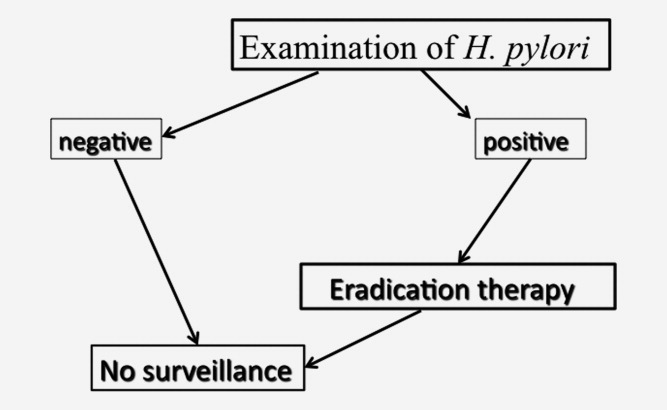
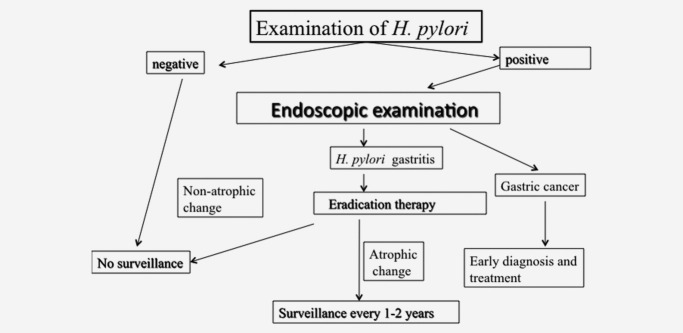
We explore a strategy for the elimination of gastric cancer deaths in Japan. Most gastric cancer is due to H. pylori infection in Japan. The effect of H. pylori eradication therapy on gastric cancer prevention in younger people is excellent, but it declines along with advancing age. Therefore, a test-and-treat approach to H. pylori infection is recommended in younger people, while for people aged 50 years or older a combination of countermeasures for H. pylori eradication that includes primary prevention and secondary prevention by endoscopic examination will reduce gastric cancer deaths, since this method will increase early detection if the disease occurs. In this paper, I described a new strategy of elimination of gastric cancer deaths in Japan due to such a high quality of diagnosis and treatment for gastric cancer. If this strategy succeeds, the incidence of gastric cancer in Japan may decrease much longer than 10 years.
Copyright © 2012 UICC.
Figures
References
-
- Ferlay J, Shin HR, Bray F, et al. Estimates of worldwide burden of cancer in 2008: GLOBOCAN 2008. Int J Cancer. 2010;127:2893–917. - PubMed
-
- Warren JR, Marshall BJ. Unidentified curved bacilli on gastric epithelium in active chronic gastritis. Lancet. 1983;1:1273–5. - PubMed
-
- Fukase K, Kato M, Kikuchi S, et al. Effect of eradication of Helicobacter pylori on incidence of metachronous gastric carcinoma after endoscopic resection of early gastric cancer: an open-label, randomised controlled trial. Lancet. 2008;372:392–7. - PubMed
-
- Hisamichi S, Sugawara N. Mass screening for gastric cancer by X-ray examination. Jpn J Clin Oncol. 1984;11:211–33. - PubMed
MeSH terms
LinkOut - more resources
Full Text Sources
Other Literature Sources
Medical