


Polyamine pathway inhibition as a novel therapeutic approach to treating neuroblastoma
- PMID: 23181218
- PMCID: PMC3499881
- DOI: 10.3389/fonc.2012.00162
Polyamine pathway inhibition as a novel therapeutic approach to treating neuroblastoma
Abstract
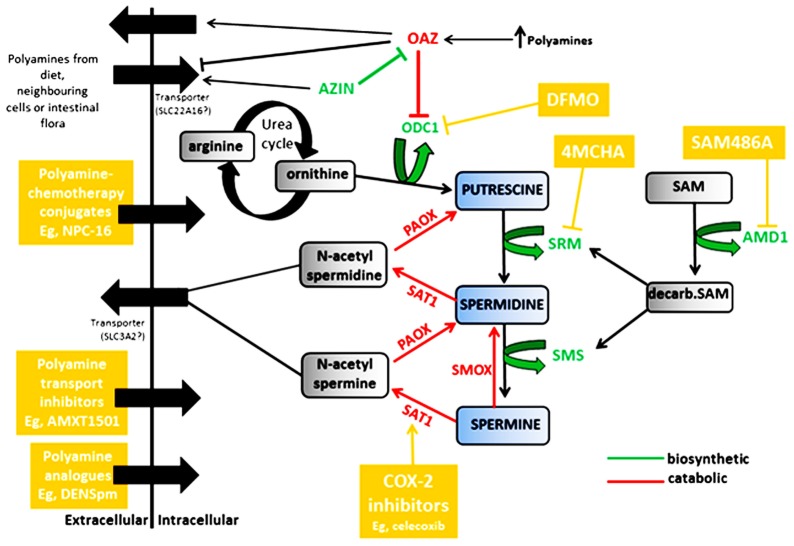
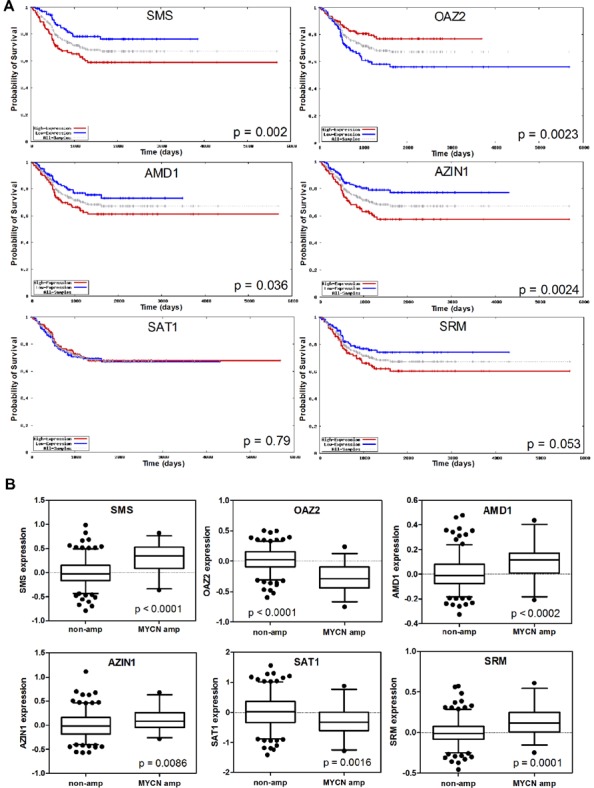
Polyamines are highly regulated essential cations that are elevated in rapidly proliferating tissues, including diverse cancers. Expression analyses in neuroblastomas suggest that up-regulation of polyamine pro-synthetic enzymes and down-regulation of catabolic enzymes is associated with poor prognosis. Polyamine sufficiency may be required for MYCN oncogenicity in MYCN amplified neuroblastoma, and targeting polyamine homeostasis may therefore provide an attractive therapeutic approach. ODC1, an oncogenic MYCN target, is rate-limiting for polyamine synthesis, and is overexpressed in many cancers including neuroblastoma. Inhibition of ODC1 by difluoromethylornithine (DFMO) decreased tumor penetrance in TH-MYCN mice treated pre-emptively, and extended survival and synergized with chemotherapy in treating established tumors in both TH-MYCN and xenograft models. Efforts to augment DFMO activity, or otherwise maximally reduce polyamine levels, are focused on antagonizing polyamine uptake or augmenting polyamine export or catabolism. Since polyamine inhibition appears to be clinically well tolerated, these approaches, particularly when combined with chemotherapy, have great potential for improving neuroblastoma outcome in both MYCN amplified and non-MYCN amplified neuroblastomas.
Keywords: DFMO; MYCN; ODC1; neuroblastoma; polyamines.
Figures
References
-
- Alberts D. S., Dorr R. T., Einspahr J. G., Aickin M., Saboda K., Xu M. J., et al. (2000). Chemoprevention of human actinic keratoses by topical 2-(difluoromethyl)-dl-ornithine. Cancer Epidemiol. Biomarkers Prev. 9 1281–1286 - PubMed
-
- Auvinen M., Paasinen A., Andersson L. C., Holtta E. (1992). Ornithine decarboxylase activity is critical for cell transformation. Nature 360 355–358 - PubMed
-
- Babbar N., Ignatenko N. A., Casero R. A., Jr., Gerner E. W. (2003). Cyclooxygenase-independent induc-tion of apoptosis by sulindac sulfone is mediated by polyamines in colon cancer. J. Biol. Chem. 278 47762–47775 - PubMed
LinkOut - more resources
Full Text Sources
Other Literature Sources
Research Materials
