Review
. 2013 Feb;40(2):123-37.
doi: 10.1111/1440-1681.12034.

Determinants of kidney oxygen consumption and their relationship to tissue oxygen tension in diabetes and hypertension

Affiliations
Review

Determinants of kidney oxygen consumption and their relationship to tissue oxygen tension in diabetes and hypertension

Peter Hansell et al. Clin Exp Pharmacol Physiol. 2013 Feb.

Abstract

The high renal oxygen (O(2) ) demand is associated primarily with tubular O(2) consumption (Qo(2) ) necessary for solute reabsorption. Increasing O(2) delivery relative to demand via increased blood flow results in augmented tubular electrolyte load following elevated glomerular filtration, which, in turn, increases metabolic demand. Consequently, elevated kidney metabolism results in decreased tissue oxygen tension. The metabolic efficiency for solute transport (Qo(2) /T(Na) ) varies not only between different nephron sites, but also under different conditions of fluid homeostasis and disease. Contributing mechanisms include the presence of different Na(+) transporters, different levels of oxidative stress and segmental tubular dysfunction. Sustained hyperglycaemia results in increased kidney Qo(2) , partly due to mitochondrial dysfunction and reduced electrolyte transport efficiency. This results in intrarenal tissue hypoxia because the increased Qo(2) is not matched by a similar increase in O(2) delivery. Hypertension leads to renal hypoxia, mediated by increased angiotensin receptor tonus and oxidative stress. Reduced uptake in the proximal tubule increases load to the thick ascending limb. There, the increased load is reabsorbed, but at greater O(2) cost. The combination of hypertension, angiotensin II and oxidative stress initiates events leading to renal damage and reduced function. Tissue hypoxia is now recognized as a unifying pathway to chronic kidney disease. We have gained good knowledge about major changes in O(2) metabolism occurring in diabetic and hypertensive kidneys. However, further efforts are needed to elucidate how these alterations can be prevented or reversed before translation into clinical practice.


Figures

Fig. 1
Fig. 1
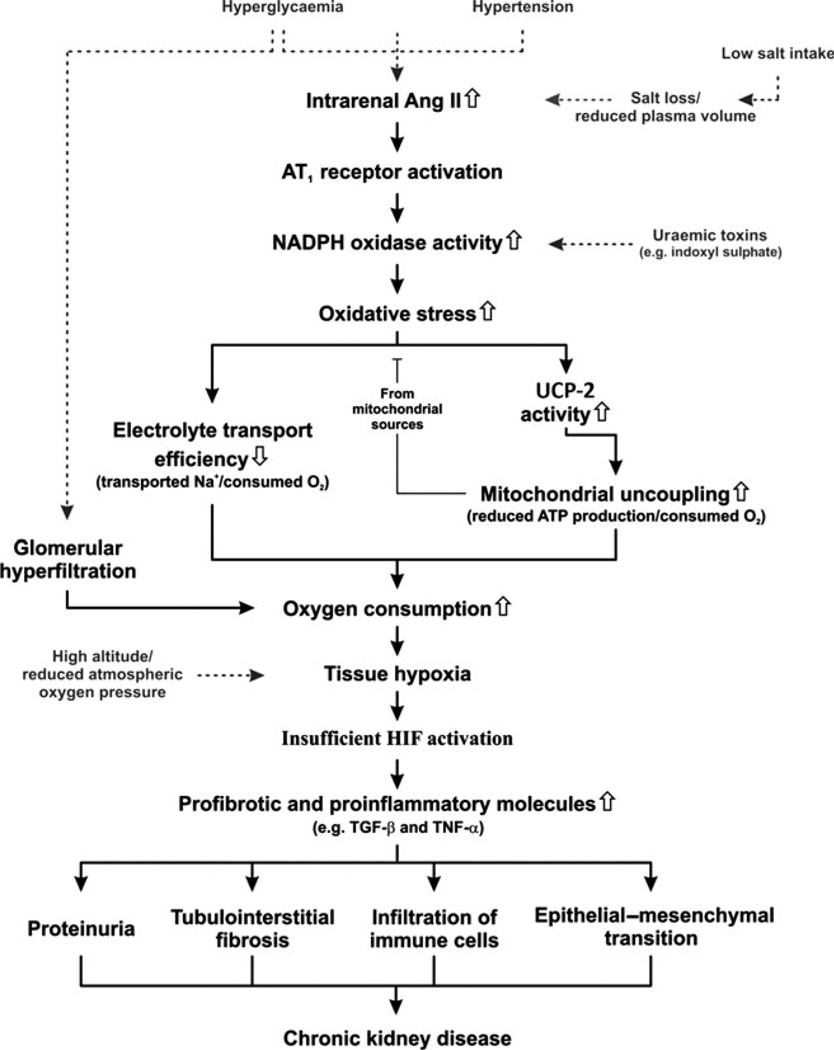
Unifying hypothesis for the development of chronic kidney disease (see text for details). AngII, angiotensin II; UCP, uncoupling protein; HIF, hypoxia-inducible factor; TGF-β, transforming growth factor-β; TNF-α, tumour necrosis factor-α.
Fig. 2
Fig. 2
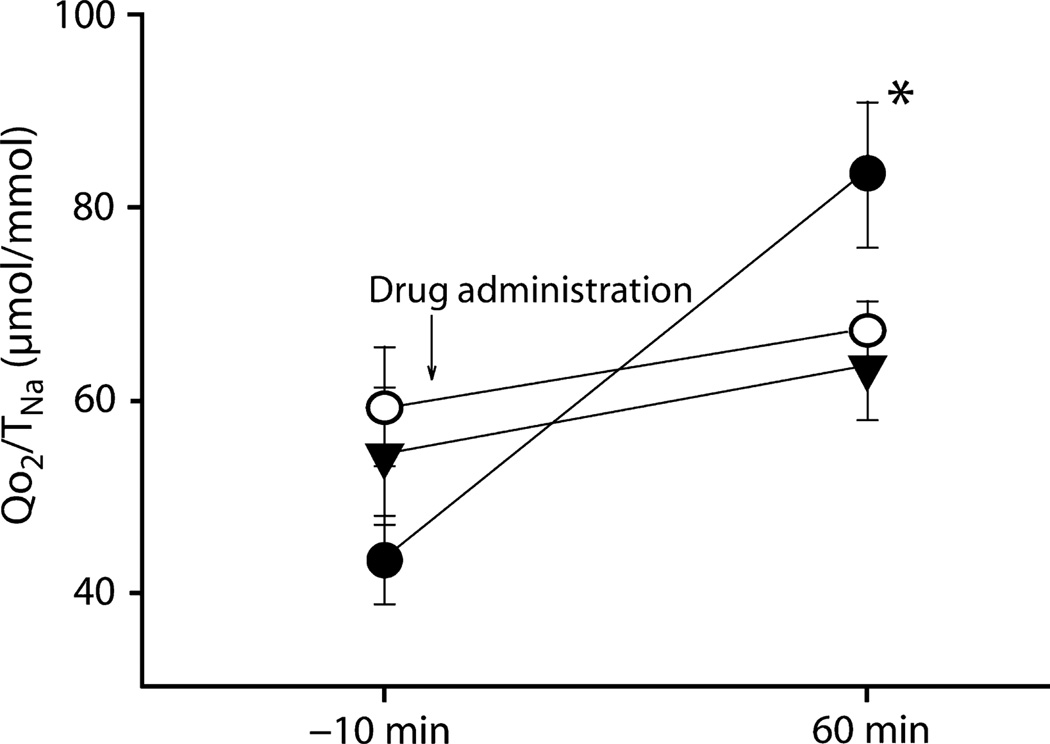
Inhibition of proximal tubular reabsorption by benzolamide (BNZ) increased the cost of Na+ reabsorption (TNa), as determined by the ratio of tubular O2 consumption (QO2)/TNa (●). Concurrent application of BNZ with either the adenosine A1 receptor antagonist 1,3-dipropyl-8-cyclopentylxanthine (○) or the sodium/hydrogen exchange blocker 5-(N-ethyl-N-isopropyl)-amiloride (▼) prevented the BNZ-induced increase in QO2/TNa, suggesting that the BNZ-induced increase in oxygen consumption requires proton secretion and luminal acidification. Data are the mean ± SEM. *P < 0.01 compared with control (10 min before drug administration). Reproduced with permission from Deng et al.
Fig. 3
Fig. 3
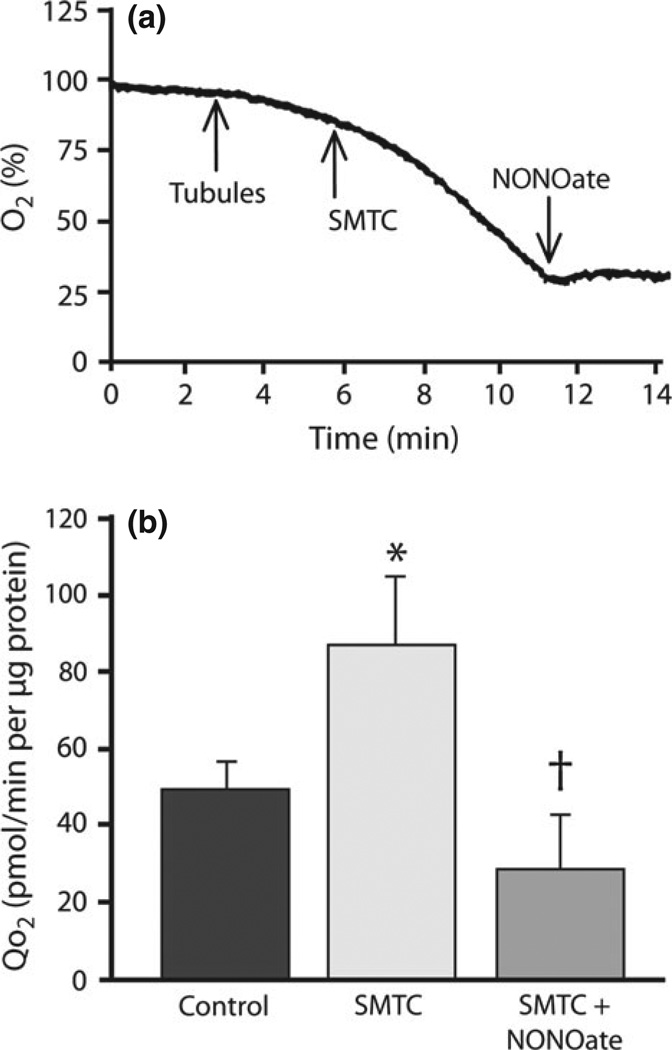
Effects of nitric oxide (NO) and the NO synthase 1 blocker S-methyl-l-thiocitrulline (SMTC) on oxygen consumption (QO2) in freshly harvested isolated proximal tubules. (a) Profile of declining O2% in a metabolic chamber containing proximal tubules. When the NOS-1 inhibitor SMTC is added, QO2 increases (as evidenced by the increase in the slope of decline). When the NO donor NONOate is applied, QO2 decreases significantly. (b) Absolute QO2 is depicted in control tubules and in tubules after the addition of SMTC alone or with NONOate. The increase in QO2 after NOS-1 blockade is totally reversed by application of the NO donor, suggesting NO specificity to the phenomenon. These data suggest a major role for intracellular NOS activity in the regulation of QO2. Data are the mean ± SEM. *P < 0.05 compared with control; P < 0.05 compared with SMTC. Figure partly based on data in Deng et al.
Fig. 4
Fig. 4
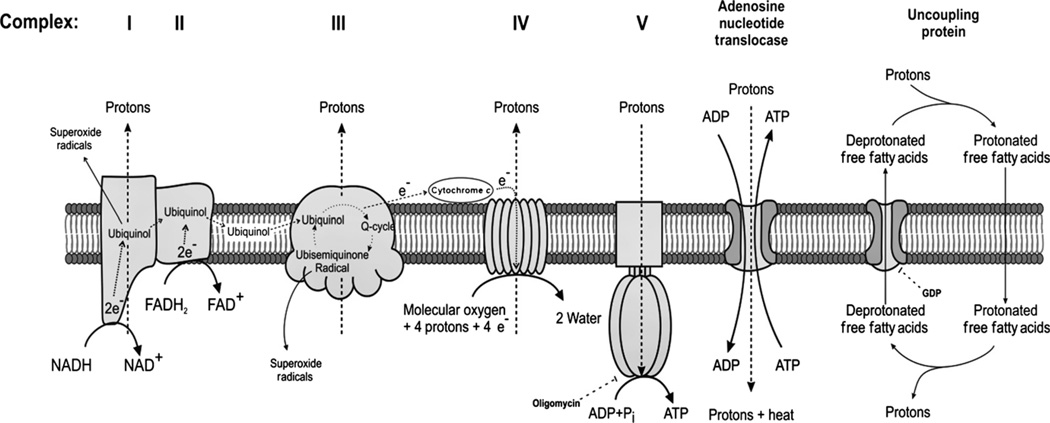
Electron transport chain and the proposed mechanisms of mitochondrial uncoupling via adenosine nucleotide translocase and uncoupling proteins. e, electrons. Reproduced with permission from O’Rourke et al.
Fig. 5
Fig. 5
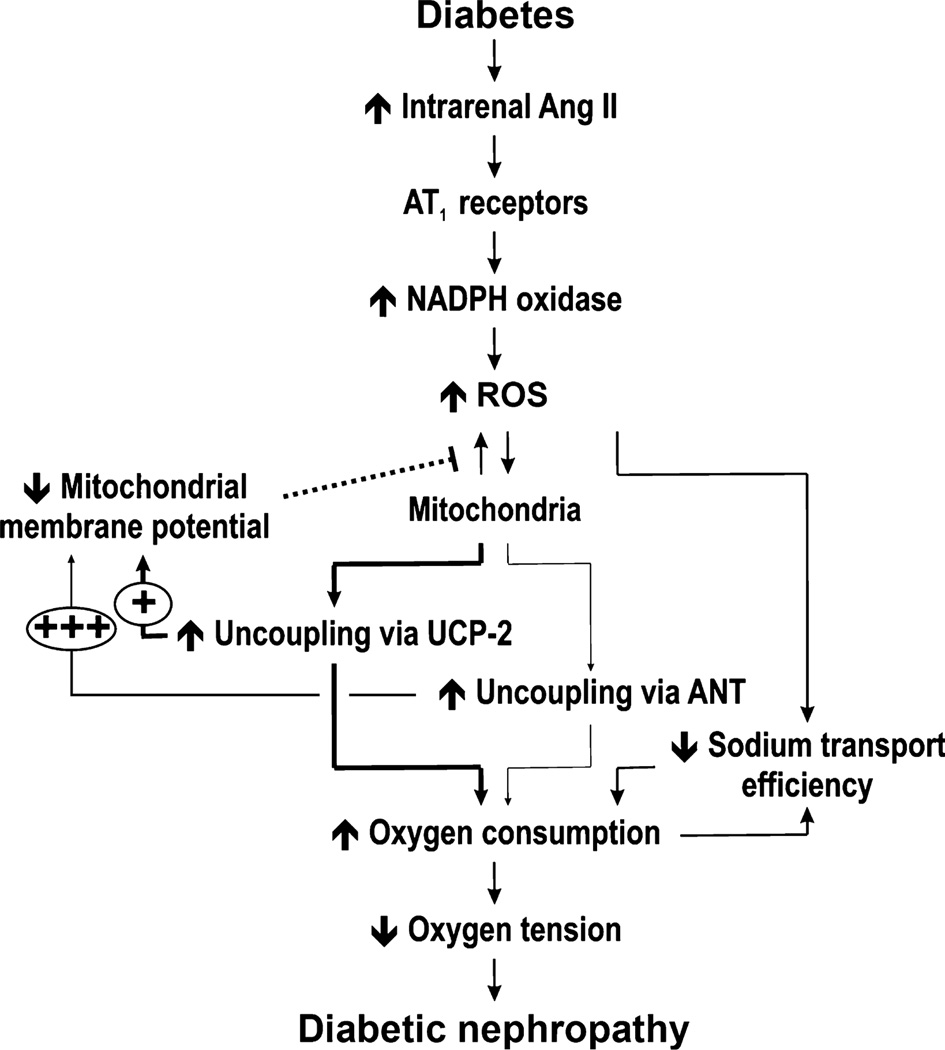
Simplified hypothesis for how diabetes, via mitochondrial uncoupling mediated by either uncoupling protein (UCP)-2 and adenosine nucleotide translocase (ANT) increases kidney oxygen consumption (QO2), which results in kidney tissue hypoxia and the development of diabetic nephropathy. So far, it has only been demonstrated that mitochondrial uncoupling via ANT occurs when normal UCP-2 function is reduced. AngII, angiotensin II; ROS, reactive oxygen species. Modified from Welch et al. and Welch et al.
Fig. 6
Fig. 6
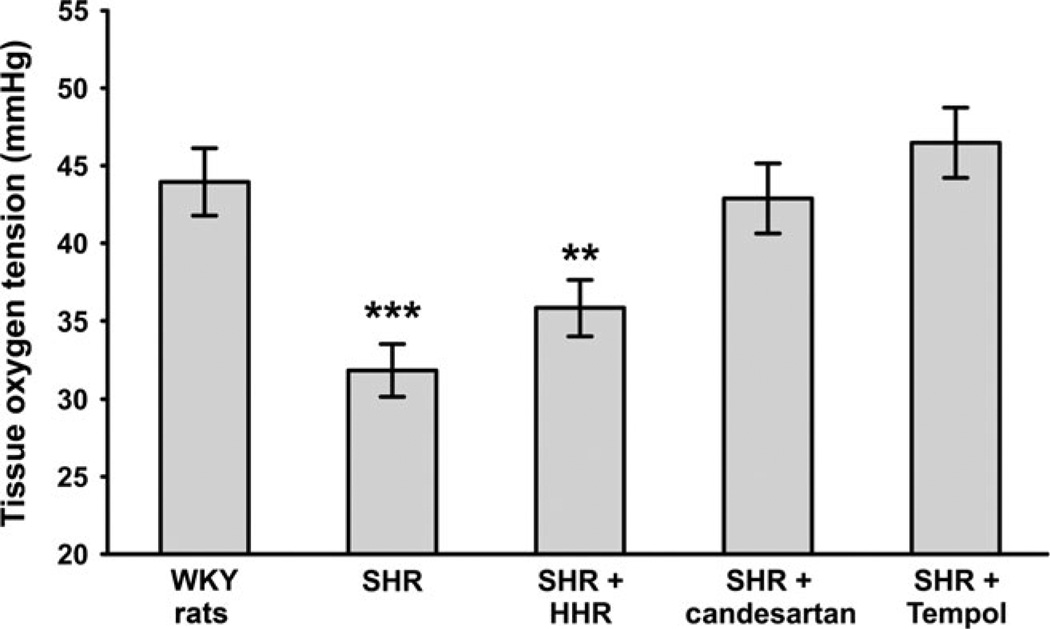
Renal oxygen tension was lower in spontaneously hypertensive rats (SHR) compared with Wistar-Kyoto (WKY) rats and was normalized by the angiotensin receptor blocker candesartan and the anti-oxidant tempol, but not by the antihypertensive combination of hydralazine, hydrochlorothiazide and reserpine (HHR)., Data are the mean ± SEM. **P < 0.01, ***P < 0.001 compared with WKY rats.

References

    1. Levy MN. Effect of variations of blood flow on renal oxygen extraction. Am. J. Physiol. 1960;199:13–18. - PubMed
    1. Persson PB, Ehmke H, Kirchheim HR, et al. Autoregulation and non-homeostatic behaviour of renal blood flow in conscious dogs. J. Physiol. 1993;462:261–273. - PMC - PubMed
    1. Eckardt KU, Bernhardt WM, Weidemann A, et al. Role of hypoxia in the pathogenesis of renal disease. Kidney Int. Suppl. 2005;99:S46–S51. - PubMed
    1. Eckardt KU, Rosenberger C, Jurgensen JS, Wiesener MS. Role of hypoxia in the pathogenesis of renal disease. Blood Purif. 2003;21:253–257. - PubMed
    1. Leong CL, Anderson WP, O’Connor PM, Evans RG. Evidence that renal arterial–venous oxygen shunting contributes to dynamic regulation of renal oxygenation. Am. J. Physiol. Renal Physiol. 2007;292:F1726–F1733. - PubMed

Publication types