


Brain structural correlates of reward sensitivity and impulsivity in adolescents with normal and excess weight
- PMID: 23185306
- PMCID: PMC3504042
- DOI: 10.1371/journal.pone.0049185
Brain structural correlates of reward sensitivity and impulsivity in adolescents with normal and excess weight
Abstract
Introduction: Neuroscience evidence suggests that adolescent obesity is linked to brain dysfunctions associated with enhanced reward and somatosensory processing and reduced impulse control during food processing. Comparatively less is known about the role of more stable brain structural measures and their link to personality traits and neuropsychological factors on the presentation of adolescent obesity. Here we aimed to investigate regional brain anatomy in adolescents with excess weight vs. lean controls. We also aimed to contrast the associations between brain structure and personality and cognitive measures in both groups.
Methods: Fifty-two adolescents (16 with normal weight and 36 with excess weight) were scanned using magnetic resonance imaging and completed the Sensitivity to Punishment and Sensitivity to Reward Questionnaire (SPSRQ), the UPPS-P scale, and the Stroop task. Voxel-based morphometry (VBM) was used to assess possible between-group differences in regional gray matter (GM) and to measure the putative differences in the way reward and punishment sensitivity, impulsivity and inhibitory control relate to regional GM volumes, which were analyzed using both region of interest (ROI) and whole brain analyses. The ROIs included areas involved in reward/somatosensory processing (striatum, somatosensory cortices) and motivation/impulse control (hippocampus, prefrontal cortex).
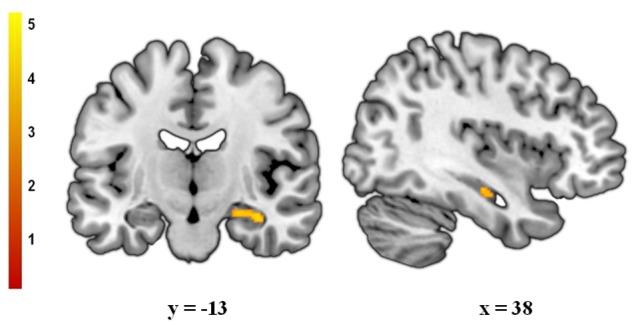
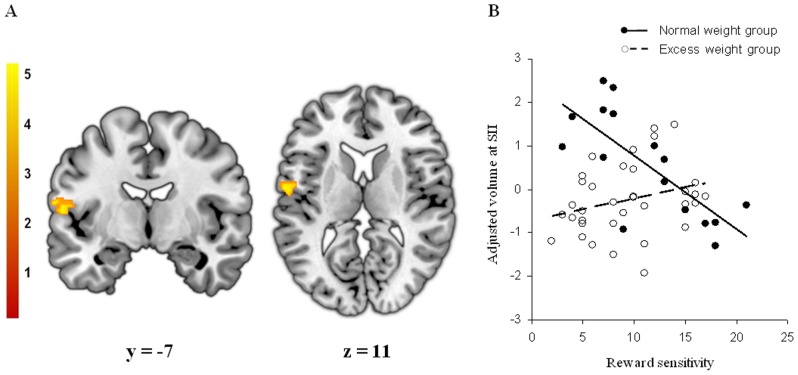
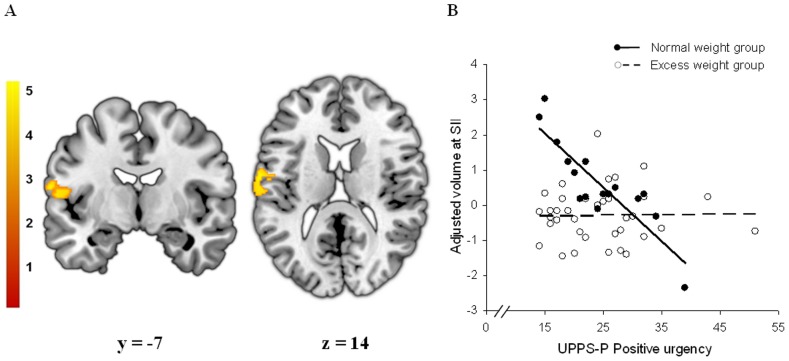
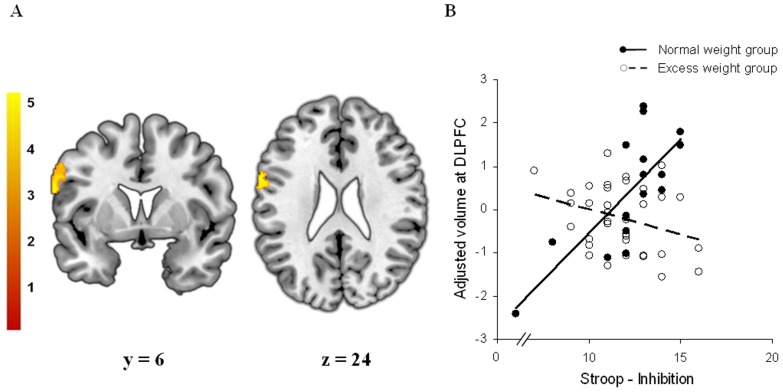
Results: Excess weight adolescents showed increased GM volume in the right hippocampus. Voxel-wise volumes of the second somatosensory cortex (SII) were correlated with reward sensitivity and positive urgency in lean controls, but this association was missed in excess weight adolescents. Moreover, Stroop performance correlated with dorsolateral prefrontal cortex volumes in controls but not in excess weight adolescents.
Conclusion: Adolescents with excess weight have structural abnormalities in brain regions associated with somatosensory processing and motivation.
Conflict of interest statement
Figures
References
-
- Stice E, Presnell K, Shaw H, Rohde P (2011) Psychological and behavioral risk factors for obesity onset in adolescent girls: a prospective study. J Consult Clin Psychol 73: 195–202. - PubMed
-
- Loxton NJ (2004) The role of impulsivity in the development of substance use and eating disorders. Neurosci Biobehav Rev 28: 343–351. - PubMed
-
- Ziauddeen H, Farooqi IS, Fletcher PC (2012) Obesity and the brain: how convincing is the addiction model?. Nat Rev Neurosci 13: 279–286. - PubMed
-
- van den Berg L, Pieterse K, Malik JA, Luman M, Willems van Dijk K, et al. (2011) Association between impulsivity, reward responsiveness and body mass index in children. Int J Obes (Lond) 35: 1301–1307. - PubMed
-
- Delgado-Rico E, Río-Valle JS, González-Jiménez E, Campoy C, Verdejo-García A (2012) BMI predicts emotion-driven impulsivity and cognitive inflexibility in adolescents with excess weight. Obesity 20: 1604–1610. - PubMed
