


Men's preference for women's facial features: testing homogamy and the paternity uncertainty hypothesis
- PMID: 23185437
- PMCID: PMC3504097
- DOI: 10.1371/journal.pone.0049791
Men's preference for women's facial features: testing homogamy and the paternity uncertainty hypothesis
Abstract
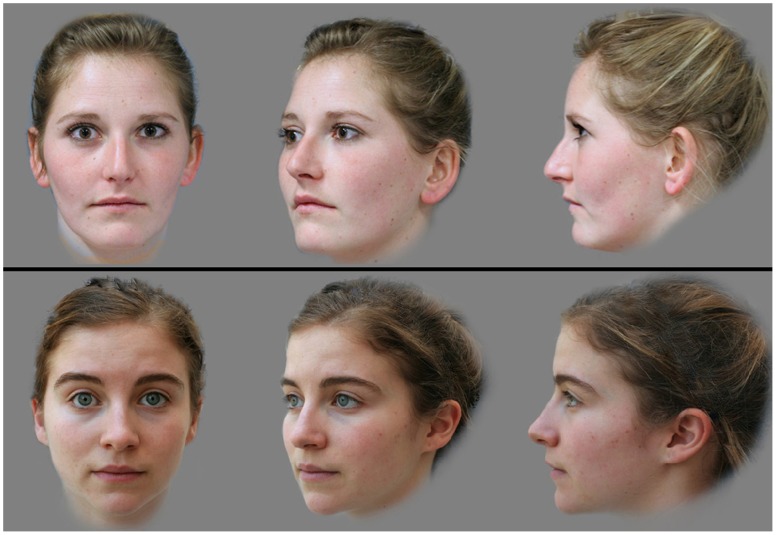
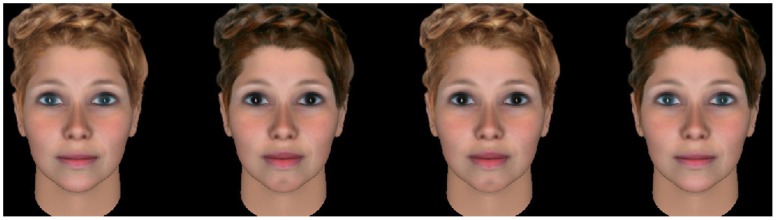
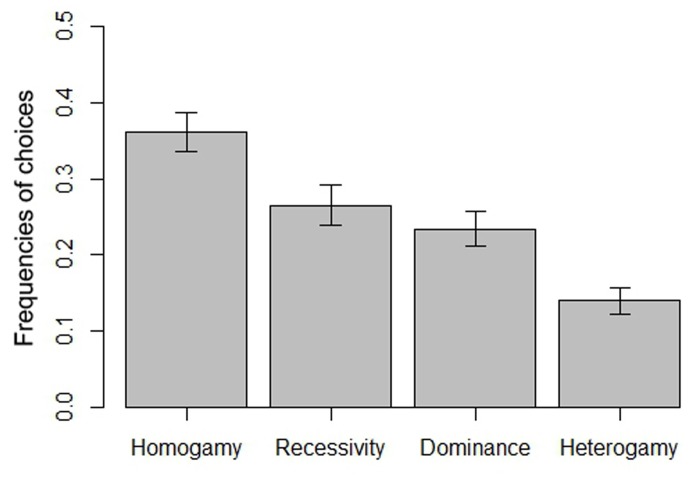
Male mate choice might be based on both absolute and relative strategies. Cues of female attractiveness are thus likely to reflect both fitness and reproductive potential, as well as compatibility with particular male phenotypes. In humans, absolute clues of fertility and indices of favorable developmental stability are generally associated with increased women's attractiveness. However, why men exhibit variable preferences remains less studied. Male mate choice might be influenced by uncertainty of paternity, a selective factor in species where the survival of the offspring depends on postnatal paternal care. For instance, in humans, a man might prefer a woman with recessive traits, thereby increasing the probability that his paternal traits will be visible in the child and ensuring paternity. Alternatively, attractiveness is hypothesized to be driven by self-resembling features (homogamy), which would reduce outbreeding depression. These hypotheses have been simultaneously evaluated for various facial traits using both real and artificial facial stimuli. The predicted preferences were then compared to realized mate choices using facial pictures from couples with at least 1 child. No evidence was found to support the paternity uncertainty hypothesis, as recessive features were not preferred by male raters. Conversely, preferences for self-resembling mates were found for several facial traits (hair and eye color, chin dimple, and thickness of lips and eyebrows). Moreover, realized homogamy for facial traits was also found in a sample of long-term mates. The advantages of homogamy in evolutionary terms are discussed.
Conflict of interest statement
Figures
References
-
- Rhodes G (2006) The evolutionary psychology of facial beauty. Annu Rev Psychol 57: 199–226. - PubMed
-
- Salter F (1996) Carrier females and sender males: An evolutionary hypothesis linking female attractiveness, family resemblance, and paternity confidence. Ethol Sociobiol 17: 211–220.
-
- Penton-Voak IS, Perrett DI, Peirce JW (1999) Computer graphic studies of the role of facial similarity in judgements of attractiveness. Curr Psychol 18: 104–117.
-
- Hinsz VB (1989) Facial resemblance in engaged and married couples. J Soc Pers Relat 6: 223–229.
MeSH terms
LinkOut - more resources
Full Text Sources
