


Nature, source and function of pigments in tardigrades: in vivo raman imaging of carotenoids in Echiniscus blumi
- PMID: 23185564
- PMCID: PMC3503987
- DOI: 10.1371/journal.pone.0050162
Nature, source and function of pigments in tardigrades: in vivo raman imaging of carotenoids in Echiniscus blumi
Abstract
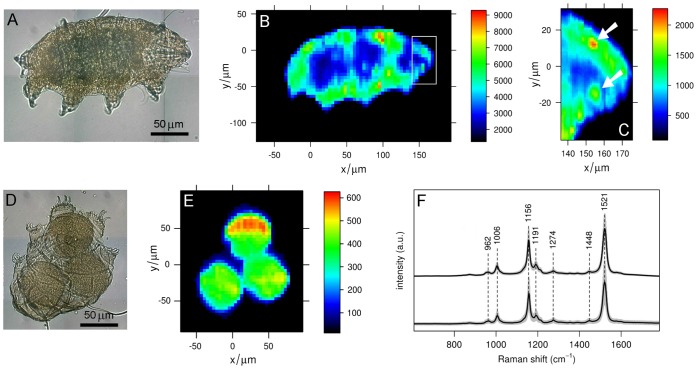
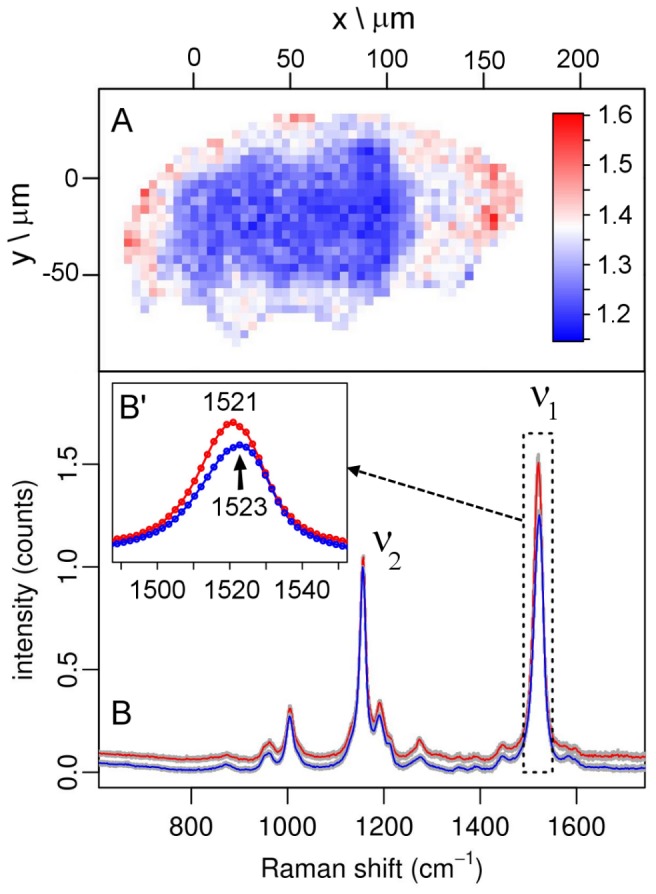
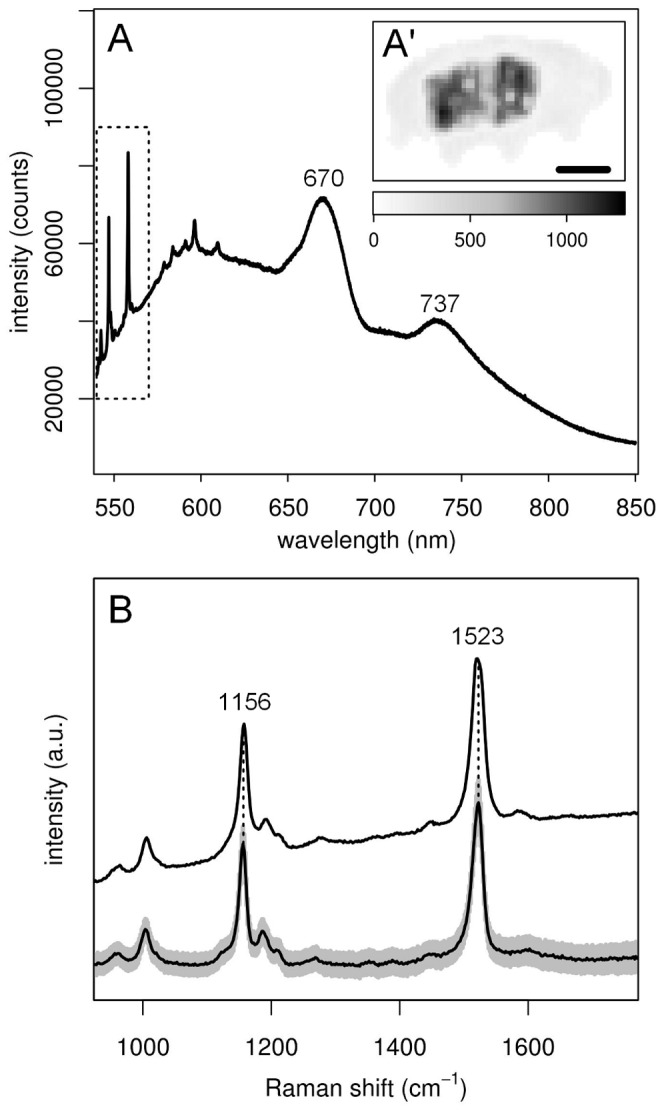
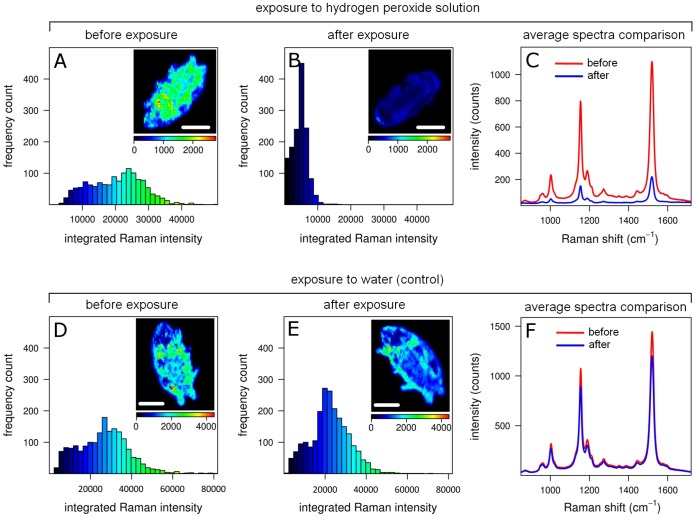
Tardigrades are microscopic aquatic animals with remarkable abilities to withstand harsh physical conditions such as dehydration or exposure to harmful highly energetic radiation. The mechanisms responsible for such robustness are presently little known, but protection against oxidative stresses is thought to play a role. Despite the fact that many tardigrade species are variously pigmented, scarce information is available about this characteristic. By applying Raman micro-spectroscopy on living specimens, pigments in the tardigrade Echiniscus blumi are identified as carotenoids, and their distribution within the animal body is visualized. The dietary origin of these pigments is demonstrated, as well as their presence in the eggs and in eye-spots of these animals, together with their absence in the outer layer of the animal (i.e., cuticle and epidermis). Using in-vivo semi-quantitative Raman micro-spectroscopy, a decrease in carotenoid content is detected after inducing oxidative stress, demonstrating that this approach can be used for studying the role of carotenoids in oxidative stress-related processes in tardigrades. This approach could be thus used in further investigations to test several hypotheses concerning the function of these carotenoids in tardigrades as photo-protective pigments against ionizing radiations or as antioxidants defending these organisms against the oxidative stress occurring during desiccation processes.
Conflict of interest statement
Figures
References
-
- Rebecchi L, Altiero T, Guidetti R (2007) Anhydrobiosis: the extreme limit of desiccation tolerance. Invertebr Surv J 4: 65–81.
-
- Guidetti R, Altiero T, Rebecchi L (2011) On dormancy strategies in tardigrades. J Insect Physiol 57: 567–576. - PubMed
-
- Jönsson KI, Rabbow E, Schill RO, Harms-Ringdahl M, Rettberg P (2008) Tardigrades survive exposure to space in Low Earth Orbit. Curr Biol 18: R729–R731. - PubMed
-
- Rebecchi L, Altiero T, Guidetti R, Cesari M, Bertolani R, et al. (2009) Tardigrade Resistance to Space Effects: first results of experiments on the LIFE-TARSE mission on FOTON-M3 (September 2007). Astrobiology 9: 581–591. - PubMed
-
- Altiero T, Guidetti R, Caselli V, Cesari M, Rebecchi L (2011) Ultraviolet radiation tolerance in hydrated and desiccated eutardigrades. J Zool Syst Evol Res 49: 104–110.
Publication types
MeSH terms
Substances
LinkOut - more resources
Full Text Sources
Medical
