


Titanium dioxide (TiO2) nanoparticles preferentially induce cell death in transformed cells in a Bak/Bax-independent fashion
- PMID: 23185639
- PMCID: PMC3503962
- DOI: 10.1371/journal.pone.0050607
Titanium dioxide (TiO2) nanoparticles preferentially induce cell death in transformed cells in a Bak/Bax-independent fashion
Abstract
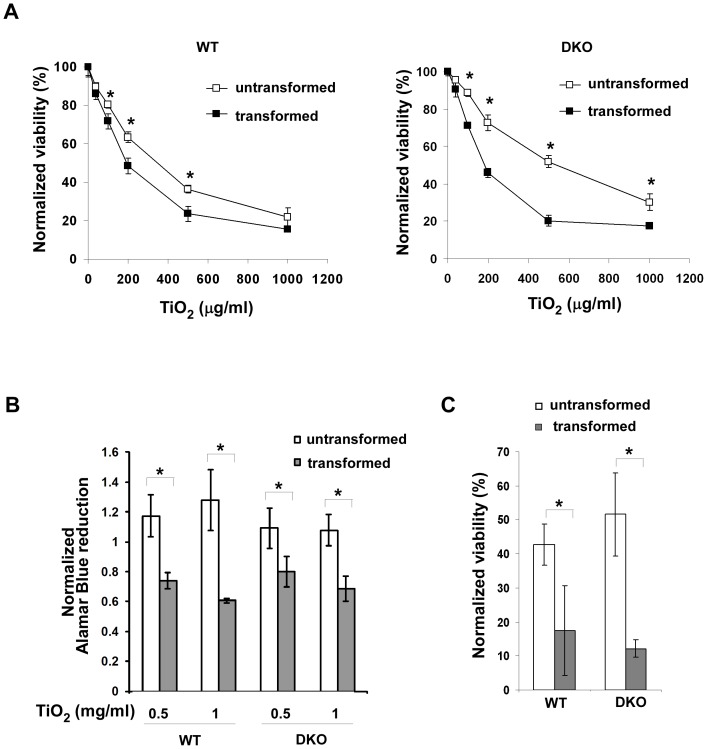
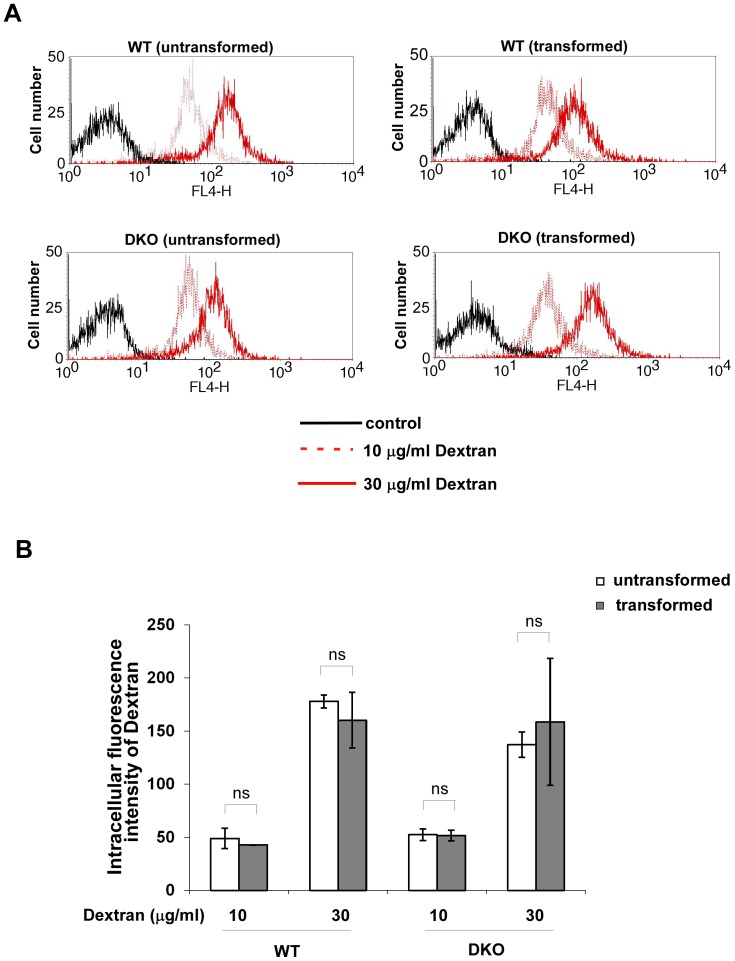
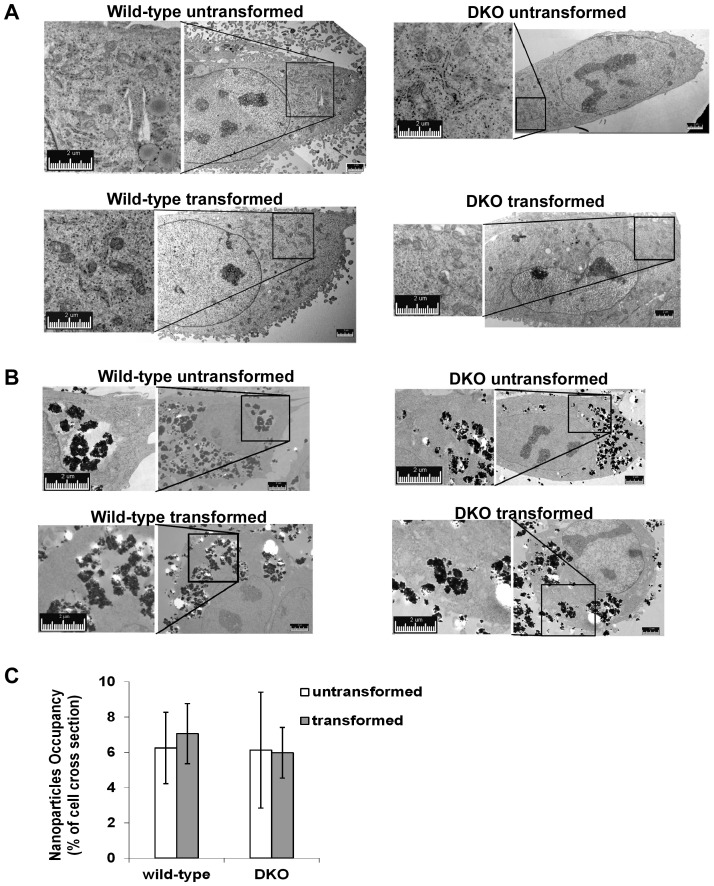
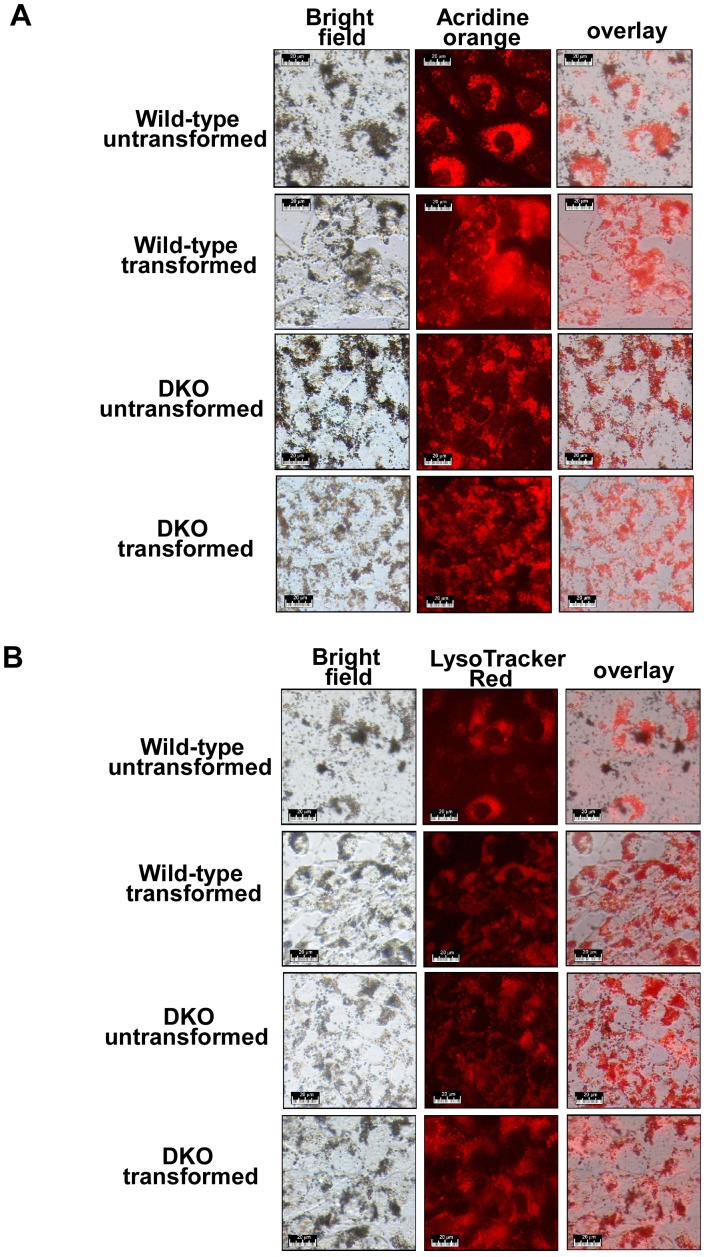
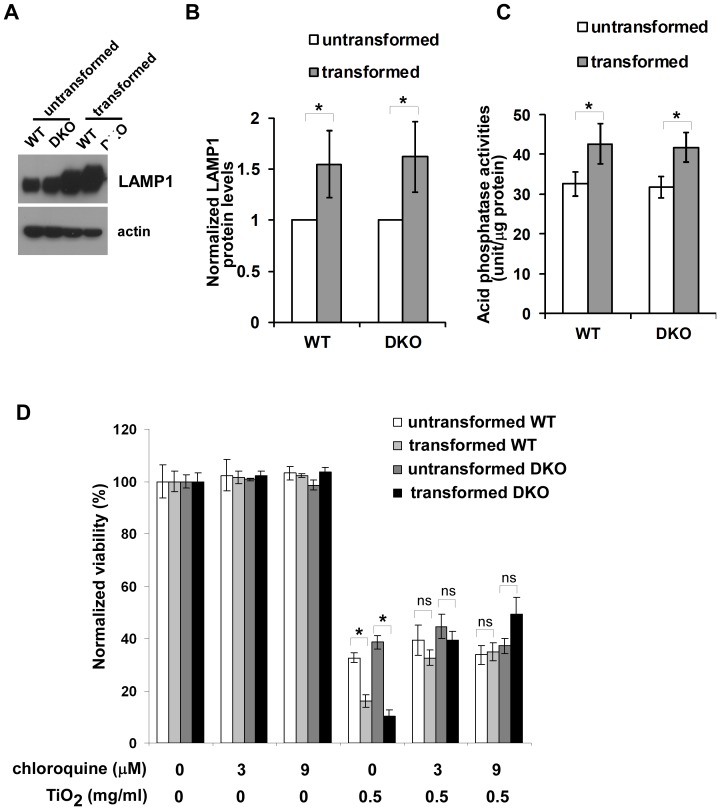
While the cytotoxic effects of titanium dioxide (TiO(2)) nanoparticles have been under intense investigation, the molecular mechanisms of this cytotoxicity remain unknown. Here we investigated the influence of oncogenic transformation and a major apoptotic signaling pathway on cellular responses to TiO(2) nanoparticles. Isogenic wild-type (WT) and apoptosis-resistant (Bak(-/-)Bax(-/-)) cell lines with and without tumorigenic transformation were examined. TiO(2) nanoparticles preferentially reduced viability of tumorigenic cells in a dose-dependent fashion compared with their untransformed counterparts. Importantly, the elevated cytotoxicity of TiO(2) nanoparticles was independent of a major Bak/Bax-dependent apoptosis pathway. Because transformation does not affect cellular fluid-phase endocytosis or nanoparticle uptake, it is likely that the increased cytotoxicity in tumor cells is due to the interaction between TiO(2) nanoparticles and the lysosomal compartment. Overall, our data indicate that TiO(2) nanoparticles induce cytotoxicity preferentially in transformed cells independent of a major apoptotic signaling pathway.
Conflict of interest statement
Figures

References
-
- Newman MD, Stotland M, Ellis JI (2009) The safety of nanosized particles in titanium dioxide- and zinc oxide-based sunscreens. J Am Acad Dermatol 61: 685–692. - PubMed
-
- Marquis BJ, Love SA, Braun KL, Haynes CL (2009) Analytical methods to assess nanoparticle toxicity. Analyst 134: 425–439. - PubMed
-
- Nel A, Xia T, Madler L, Li N (2006) Toxic potential of materials at the nanolevel. Science 311: 622–627. - PubMed
Publication types
MeSH terms
Substances
Grants and funding
LinkOut - more resources
Full Text Sources
Research Materials
