


Chlorogenic acid and rutin play a major role in the in vivo anti-diabetic activity of Morus alba leaf extract on type II diabetic rats
- PMID: 23185641
- PMCID: PMC3503931
- DOI: 10.1371/journal.pone.0050619
Chlorogenic acid and rutin play a major role in the in vivo anti-diabetic activity of Morus alba leaf extract on type II diabetic rats
Abstract
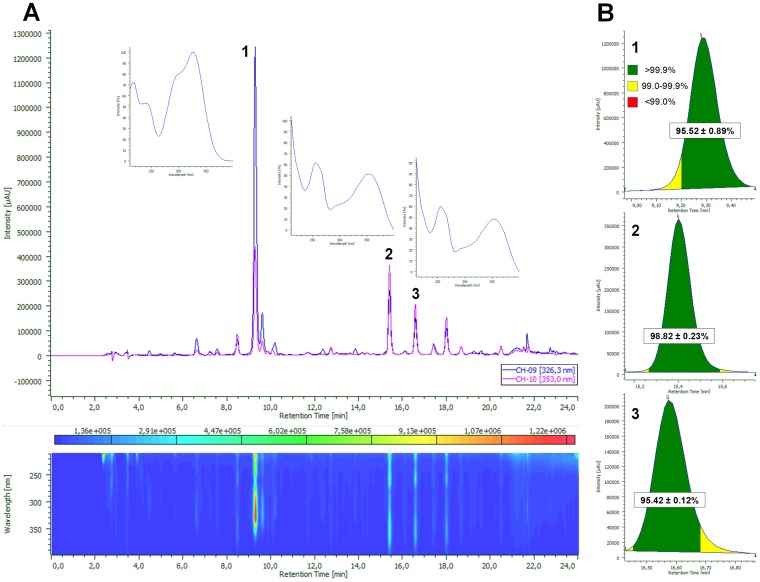
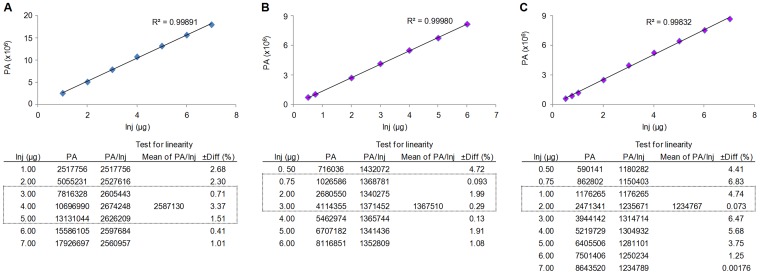
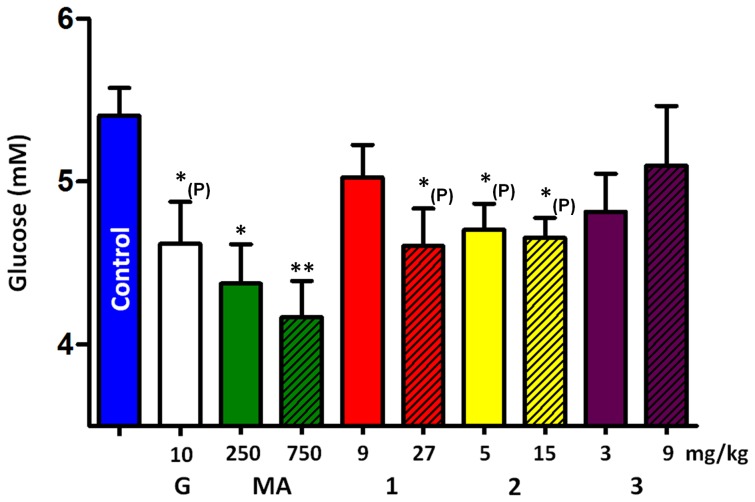
The leaves of the white mulberry tree (Morus alba L.) are used worldwide in traditional medicine as anti-diabetics. Various constituents of mulberry leaves, such as iminosugars (i.e. 1-deoxynojirimicin), flavonoids and related compounds, polysaccharides, glycopeptides and ecdysteroids, have been reported to exert anti-diabetic activity, but knowledge about their contribution to the overall activity is limited. The objective of the present work was to determine the in vivo anti-diabetic activity of an extract of mulberry leaves (MA), and to examine to what extent three major constituents, chlorogenic acid, rutin and isoquercitrin, might contribute to the observed activity. Quantities of the three constituents of interest in the extract were determined by using HPLC-DAD. Activity was determined by using a type II diabetic rat model. After 11 days of per os administration of 250 or 750 mg/kg of MA or the corresponding amounts of each individual compound, a dose dependent decrease of non-fasting blood glucose levels were found for MA, chlorogenic acid and rutin, but not for isoquercitrin. Based on our results, chlorogenic acid and rutin might account for as much as half the observed anti-diabetic activity of MA, hence they can be considered as excellent markers for the quality control of mulberry products.
Conflict of interest statement
Figures

References
-
- Wild SH, Roglic G, Green A, Sicree R, King H (2004) Global Prevalence of Diabetes. Estimates for the year 2000 and projections for 2030. Diabetes Care 27: 1047–1053. - PubMed
-
- Shaw JE, Sicree RA, Zimmet PZ (2009) Global estimates of the prevalence of diabetes for 2010 and 2030. Diabetes Res Clin Pr 87: 4–14. - PubMed
-
- Quaseem A, Humphrey L, Shekelle P (2012) Oral Pharmacological Treatment of Type 2 Diabetes Mellitus. Ann Intern Med 157(1): 76–77.
-
- Hikino H, Mizuno T, Oshima Y, Konno C (1985) Isolation and hypoglycemic activity of Moran A, a glycoprotein of Morus alba root barks. Planta Med 2: 159–160. - PubMed
-
- Chen F, Nakashima N, Kimura I, Kimura M (1995) Hypoglycemic activity and mechanisms of extracts from mulberry leaves (folium mori) and cortex mori radicis in streptozotocin-induced diabetic mice. Yakugaku Zasshi 115: 476–482. - PubMed
Publication types
MeSH terms
Substances
LinkOut - more resources
Full Text Sources
Other Literature Sources
Medical
Miscellaneous
