. 2012 Dec;122(12):4667-74.
doi: 10.1172/JCI64895. Epub 2012 Nov 26.

Gastric bypass and banding equally improve insulin sensitivity and β cell function

Affiliations

Gastric bypass and banding equally improve insulin sensitivity and β cell function

David Bradley et al. J Clin Invest. 2012 Dec.

Abstract

Bariatric surgery in obese patients is a highly effective method of preventing or resolving type 2 diabetes mellitus (T2DM); however, the remission rate is not the same among different surgical procedures. We compared the effects of 20% weight loss induced by laparoscopic adjustable gastric banding (LAGB) or Roux-en-Y gastric bypass (RYGB) surgery on the metabolic response to a mixed meal, insulin sensitivity, and β cell function in nondiabetic obese adults. The metabolic response to meal ingestion was markedly different after RYGB than after LAGB surgery, manifested by rapid delivery of ingested glucose into the systemic circulation, by an increase in the dynamic insulin secretion rate, and by large, early postprandial increases in plasma glucose, insulin, and glucagon-like peptide-1 concentrations in the RYGB group. However, the improvement in oral glucose tolerance, insulin sensitivity, and overall β cell function after weight loss were not different between surgical groups. Additionally, both surgical procedures resulted in a similar decrease in adipose tissue markers of inflammation. We conclude that marked weight loss itself is primarily responsible for the therapeutic effects of RYGB and LAGB on insulin sensitivity, β cell function, and oral glucose tolerance in nondiabetic obese adults.


Figures
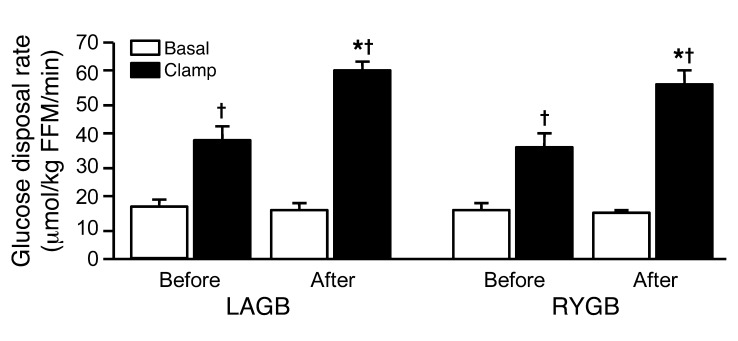
Figure 1
Figure 1. Glucose disposal during basal conditions and insulin infusion before and after 20% weight loss induced by LAGB or RYGB surgery.
*P < 0.001 vs. before surgery; P < 0.001 vs. basal. Values are means ± SEM.
Figure 2
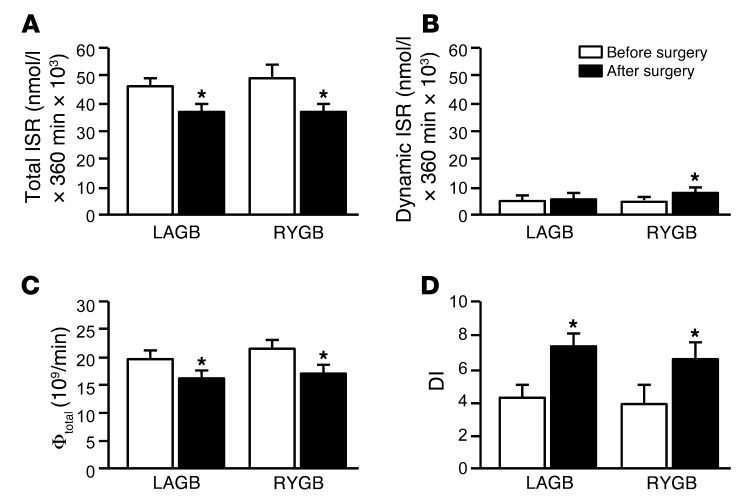
Figure 2. Total ISR (A), dynamic ISR (B), Φtotal (C), and DI (D) before and after 20% weight loss induced by LAGB or RYGB surgery.
*P < 0.001 vs. before surgery. Values are means ± SEM.
Figure 3
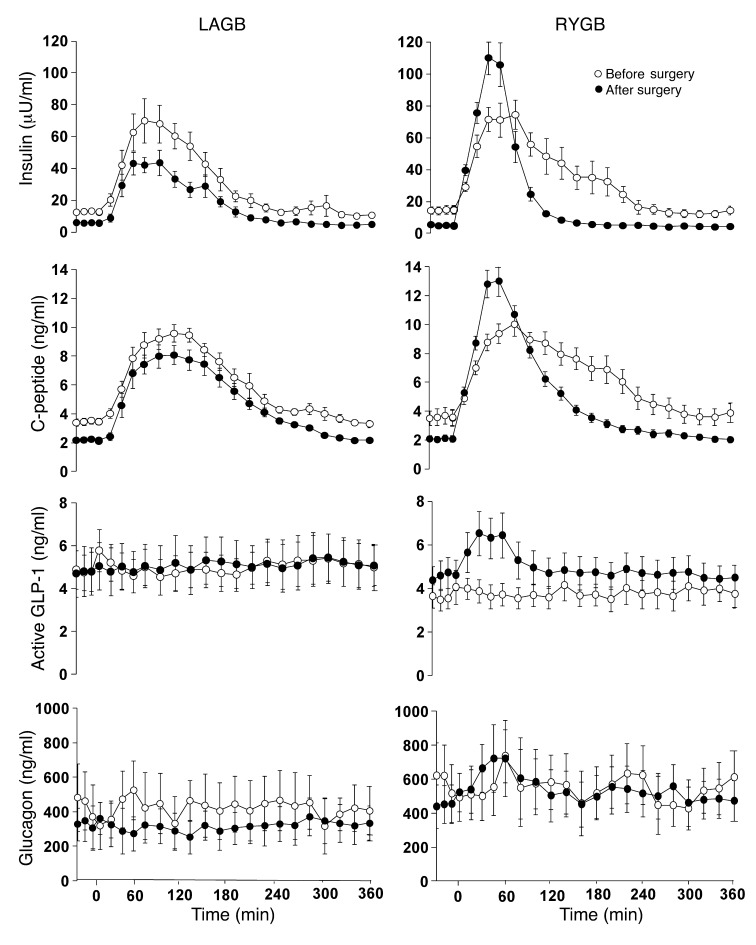
Figure 3. Plasma hormone concentrations after ingestion of a mixed meal (consumed over 30 minutes) before and after 20% weight loss induced by LAGB or RYGB surgery.
Weight loss–induced changes in plasma insulin, C-peptide, and active GLP-1 concentrations were significantly different between LAGB and RYGB groups (P < 0.0001 for all). There was no significant effect of weight loss on plasma glucagon concentrations. Values are means ± SEM.
Figure 4
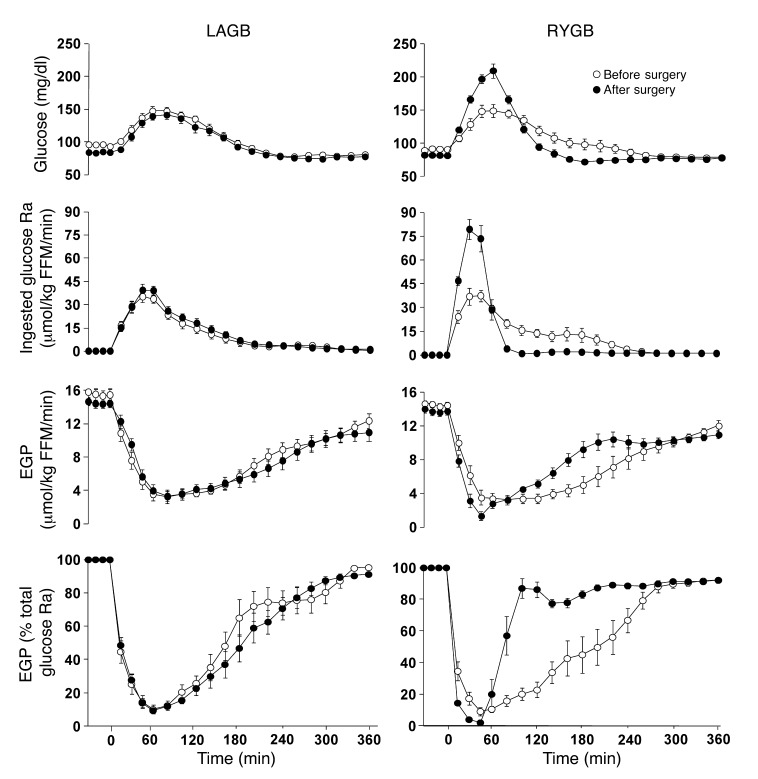
Figure 4. Plasma glucose concentration, ingested glucose Ra into the systemic circulation, EGP rate, and EGP as percentage of total glucose Ra into the systemic circulation after ingestion of a mixed meal (consumed over 30 minutes) before and after 20% weight loss induced by LAGB or RYGB surgery.
Weight loss–induced changes in all parameters shown were significantly different between LAGB and RYGB groups (P < 0.0001). Values are means ± SEM.
Figure 5
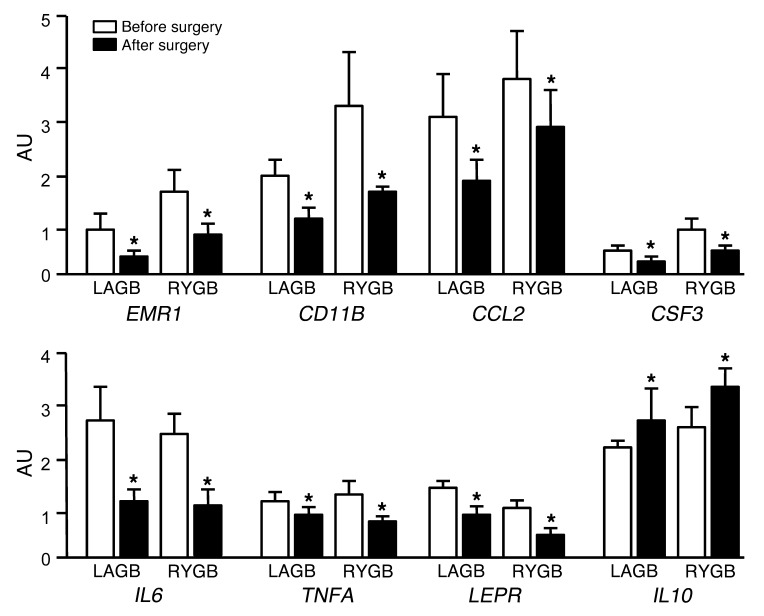
Figure 5. Adipose tissue gene expression of proinflammatory macrophage cell surface markers (EMR1 and CD11B), chemokines (CCL2), cytokines (CSF3, IL6, TNFA, and LEP), and the antiinflammatory cytokine IL10 before and after 20% weight loss induced by LAGB (n = 8) or RYGB (n = 8) surgery.
*P < 0.05 vs. before surgery. Values are means ± SEM.
Figure 6
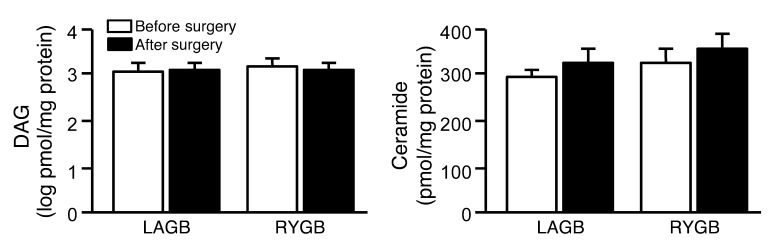
Figure 6. Skeletal muscle DAG and ceramide content before and after 20% weight loss induced by LAGB (n = 10) or RYGB (n = 7) surgery.
Values are means ± SEM.

References

    1. DeFronzo RA. Pathogenesis of type 2 diabetes mellitus. Med Clin North Am. 2004;88(4):787–835, ix. doi: 10.1016/j.mcna.2004.04.013. - DOI - PubMed
    1. Niskanen L, Uusitupa M, Sarlund H, Siitonen O, Paljarvi L, Laakso M. The effects of weight loss on insulin sensitivity, skeletal muscle composition and capillary density in obese non-diabetic subjects. Int J Obes Relat Metab Disord. 1996;20(2):154–160. - PubMed
    1. Gregor MF, et al. Endoplasmic reticulum stress is reduced in tissues of obese subjects after weight loss. Diabetes. 2009;58(3):693–700. doi: 10.2337/db08-1220. - DOI - PMC - PubMed
    1. Villareal DT, Banks MR, Patterson BW, Polonsky KS, Klein S. Weight loss therapy improves pancreatic endocrine function in obese older adults. Obesity (Silver Spring). 2008;16(6):1349–1354. doi: 10.1038/oby.2008.226. - DOI - PMC - PubMed
    1. Guldstrand M, Ahren B, Adamson U. Improved beta-cell function after standardized weight reduction in severely obese subjects. Am J Physiol Endocrinol Metab. 2003;284(3):E557–E565. - PubMed

Publication types

MeSH terms