


Incidence of occupational exposures in a tertiary health care center
- PMID: 23188932
- PMCID: PMC3505302
- DOI: 10.4103/0253-7184.102111
Incidence of occupational exposures in a tertiary health care center
Abstract
Introduction: Occupational exposure to Hepatitis B virus (HBV), human immunodeficiency virus (HIV) and Hepatitis C virus (HCV) infection is a cause of concern to all health care workers (HCWs), especially those, in hospitals. Among the HCWs, nurses, interns, technicians, resident doctors and housekeeping staff have the highest incidence of occupational exposure.
Aims: To analyze the cases of needle stick injuries and other exposures to patient's blood or body fluids among health care workers.
Materials and methods: A detailed account of the exposure is documented which includes incidence of needle stick injuries (NSI) and implementation of post-exposure prophylaxis (PEP) as per the hospital guidelines. We report a two-year continuing surveillance study where 255 health care workers (HCWs) were included. PEP was given to HCWs sustaining NSI or exposures to blood and body fluids when the source is known sero-positive or even unknown where the risk of transmission is high. Follow-up of these HCW's was done after three and six months of exposure.
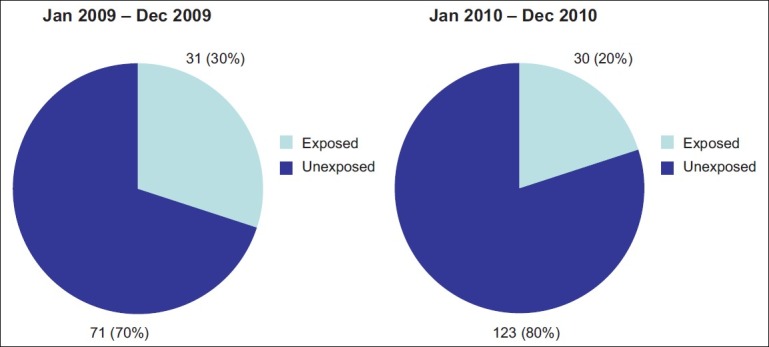
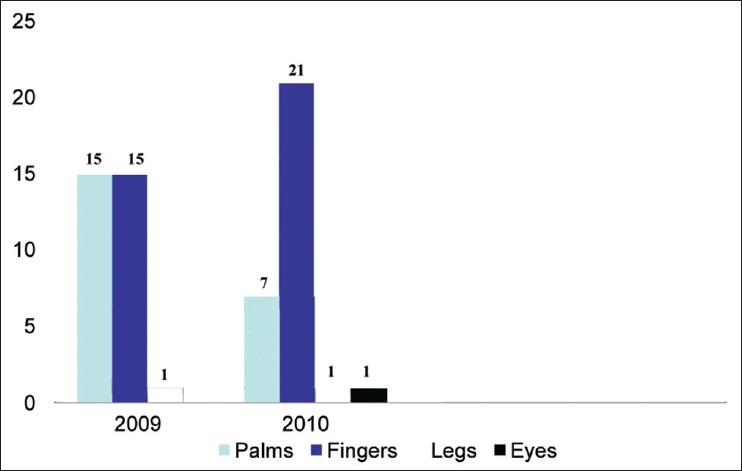
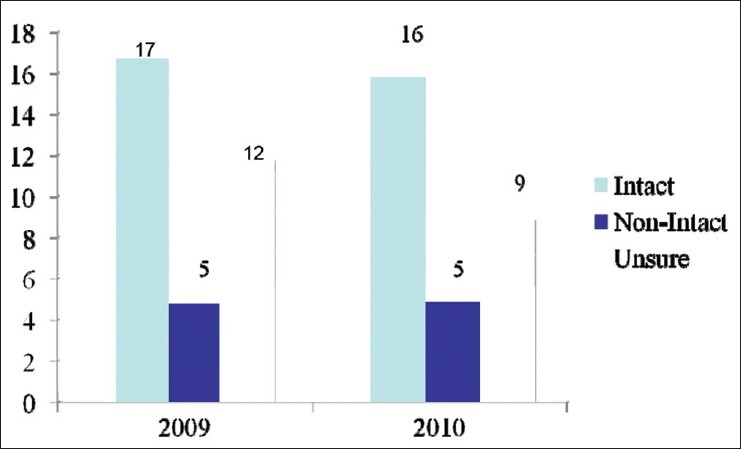
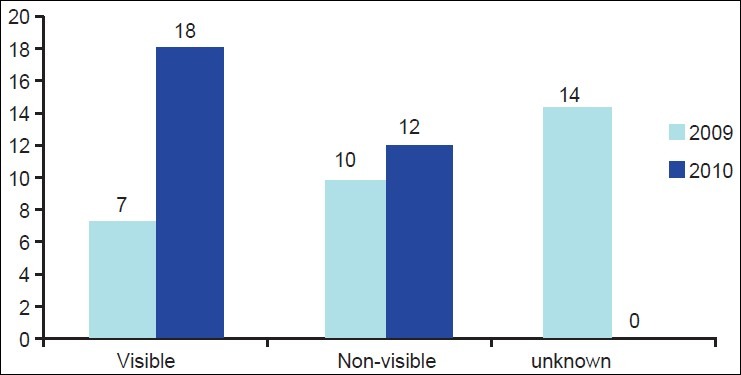
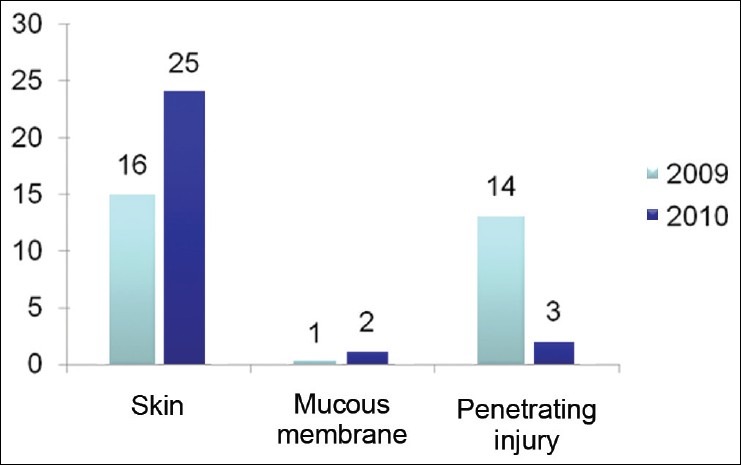
Results: Of the 255 HCWs, 59 sustained needle stick injuries and two were exposed to splashes. 31 of the NSI were from known sources and 28 from unknown sources. From known sources, thirteen were seropositive; seven for HIV, three for HCV and three for HBV. Nineteen of them sustained needle stick during needle re-capping, six of them during clean up, six of them while discarding into the container, 17 during administration of injection, eight of them during suturing, two occurred in restless patient, 17 during needle disposal.
Conclusion: So far, no case of sero-conversion as a result of needle stick injuries was reported at our center.
Keywords: Human immunodeficiency virus; Occupational exposure; hepatitis B and C virus; post-exposure prophylaxis.
Conflict of interest statement
Figures
References
-
- Geneva: World Health Organization; 2002. WHO. Reducing risks. Promoting healthy life. The world health report 2002. - PubMed
-
- Needle- stick transmission of HTLV-3 from a patient infected in Africa. Lancet. 1984;2:1376–7. - PubMed
-
- Chogle NL, Chogle MN, Divatia, Dasgupta D. Awareness of post-exposure prophylaxis guidelines against occupational exposure to HIV in a Mumbai hospital. Natl Med J India. 2002;15:69–72. - PubMed
-
- Rele M, Methur M, Turbadkar D. Risk of needle stick injuries in health care workers: A report. Indian J Med Microbiol. 2002;20:206–7. - PubMed
-
- Tetali S, Choudhury PL. Occupational exposure to sharps and splash: Risk among health care providers in three tertiary care hospitals in South India. Indian J Occup Environ Med. 2006;10:35–40.
LinkOut - more resources
Full Text Sources
Miscellaneous
