


More creative through positive mood? Not everyone!
- PMID: 23189050
- PMCID: PMC3505842
- DOI: 10.3389/fnhum.2012.00319
More creative through positive mood? Not everyone!
Abstract
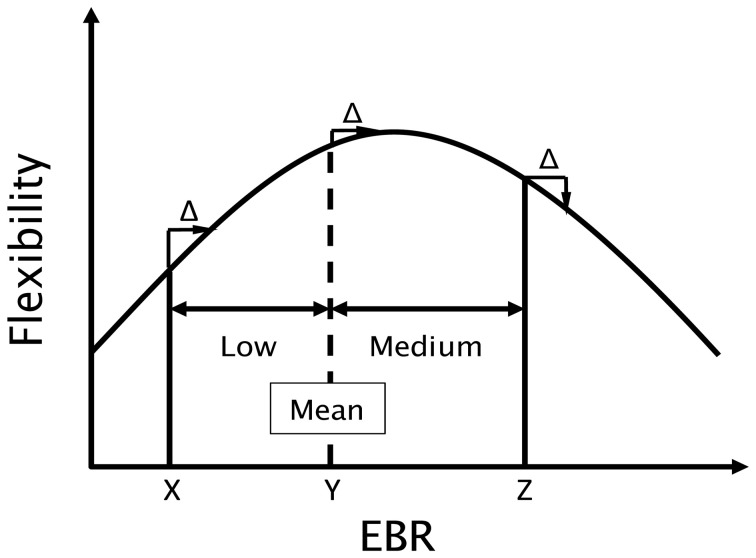
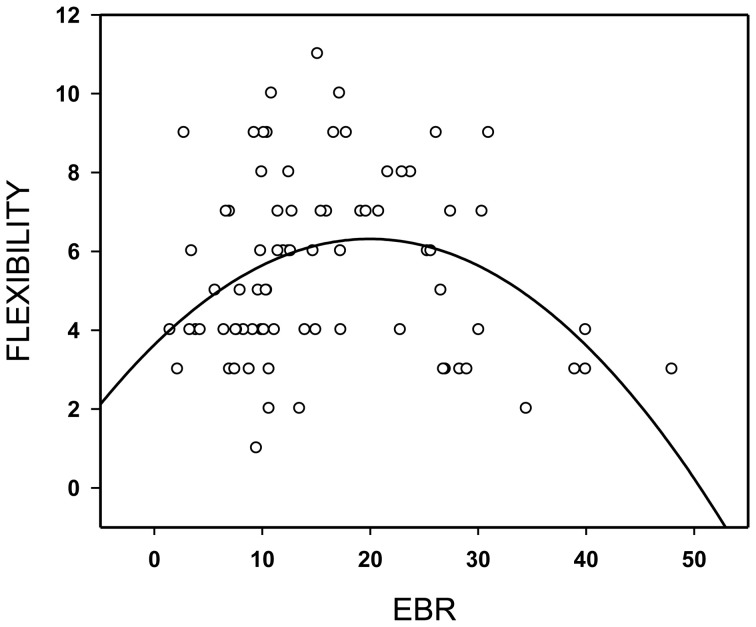
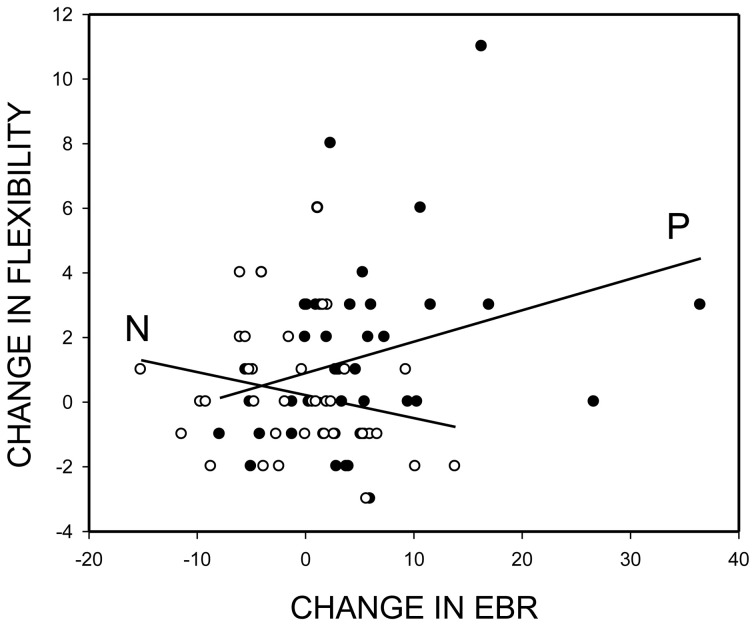
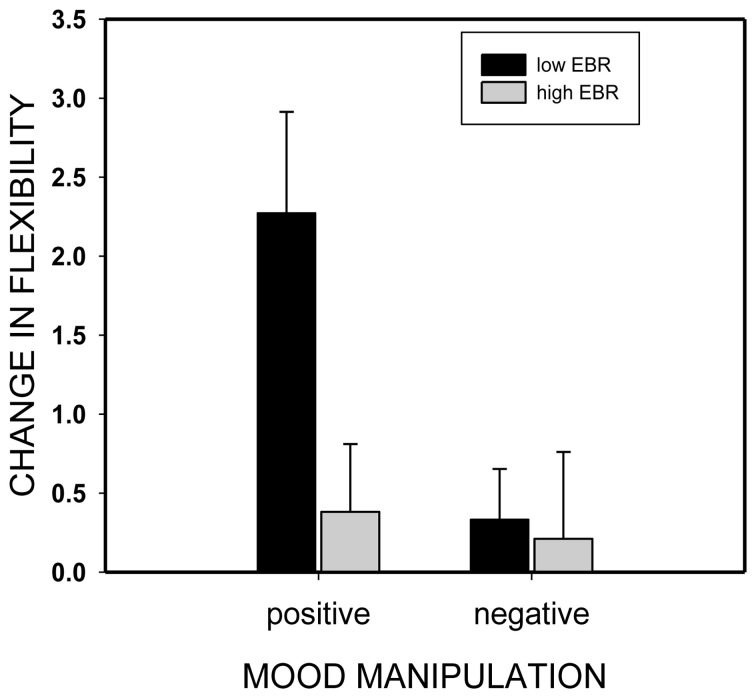
It is commonly assumed that positive mood improves human creativity and that the neurotransmitter dopamine might mediate this association. However, given the non-linear relation between dopamine and flexibility in divergent thinking (Akbari Chermahini and Hommel, 2010), the impact of mood on divergent kinds of creativity might depend on a given individual's tonic dopamine level. We tested this possibility in adults by assessing mood, performance in a divergent thinking task [the Alternate Uses Task (AUT)], and eye blink rates (EBRs), a well-established clinical marker of the individual dopamine level, before and after positive mood or negative mood induction. As expected, the association between flexibility in divergent thinking performance and EBR followed an inverted U-shape function (with best performance for medium levels), positive mood induction raised EBRs and only individuals with below-median EBRs, but not those with above-median EBRs, benefited from positive mood. These observations provide support for dopamine-based approaches to the impact of mood on creativity and challenge the generality of the widely held view that positive mood facilitates creativity.
Keywords: creativity; divergent thinking; dopamine; emotion; eye blink rate.
Figures
References
-
- Ashby F. G., Isen A. M., Turken A. U. (1999). A neuro-psychological theory of positive affect and its influence on cognition. Psychol. Rev. 106, 529–550 - PubMed
-
- Babarto G., Ficca G., Muscettola G., Fichele M., Beatrice M., Rinaldi F. (2000). Diurnal variation in spontaneous eye-blink rate. Psychiatry Res. 93, 145–151 - PubMed
LinkOut - more resources
Full Text Sources
