


ASAP ECMO: Antibiotic, Sedative and Analgesic Pharmacokinetics during Extracorporeal Membrane Oxygenation: a multi-centre study to optimise drug therapy during ECMO
- PMID: 23190792
- PMCID: PMC3543712
- DOI: 10.1186/1471-2253-12-29
ASAP ECMO: Antibiotic, Sedative and Analgesic Pharmacokinetics during Extracorporeal Membrane Oxygenation: a multi-centre study to optimise drug therapy during ECMO
Abstract
Background: Given the expanding scope of extracorporeal membrane oxygenation (ECMO) and its variable impact on drug pharmacokinetics as observed in neonatal studies, it is imperative that the effects of the device on the drugs commonly prescribed in the intensive care unit (ICU) are further investigated. Currently, there are no data to confirm the appropriateness of standard drug dosing in adult patients on ECMO. Ineffective drug regimens in these critically ill patients can seriously worsen patient outcomes. This study was designed to describe the pharmacokinetics of the commonly used antibiotic, analgesic and sedative drugs in adult patients receiving ECMO.
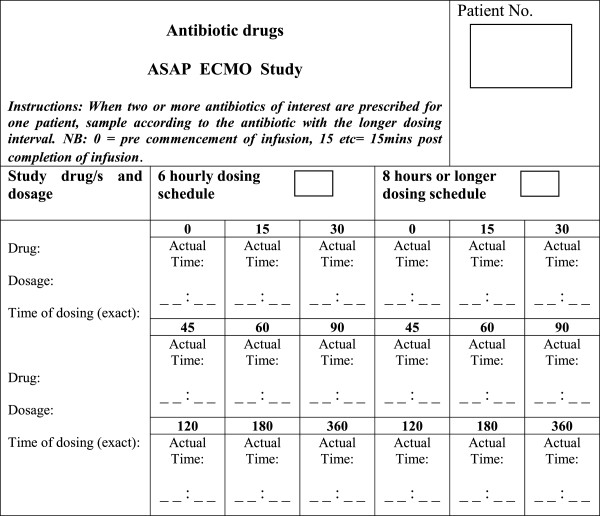
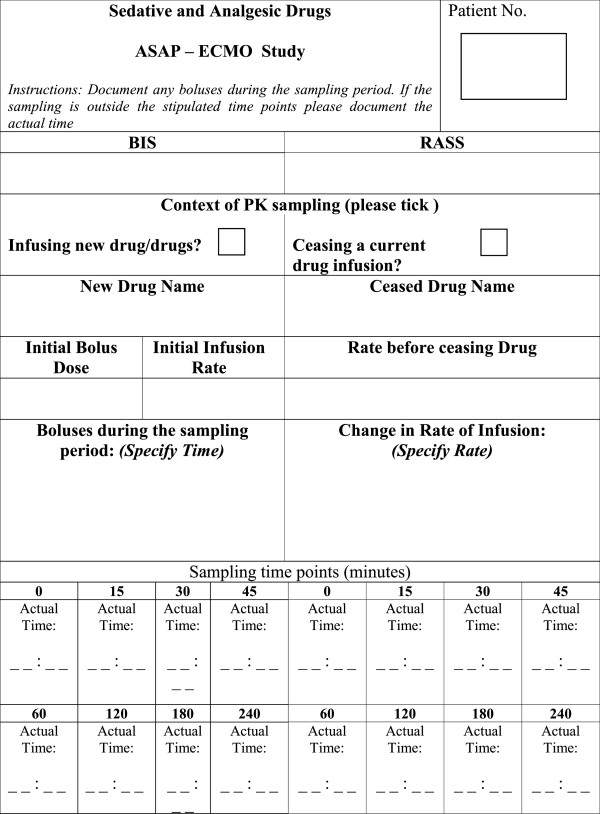
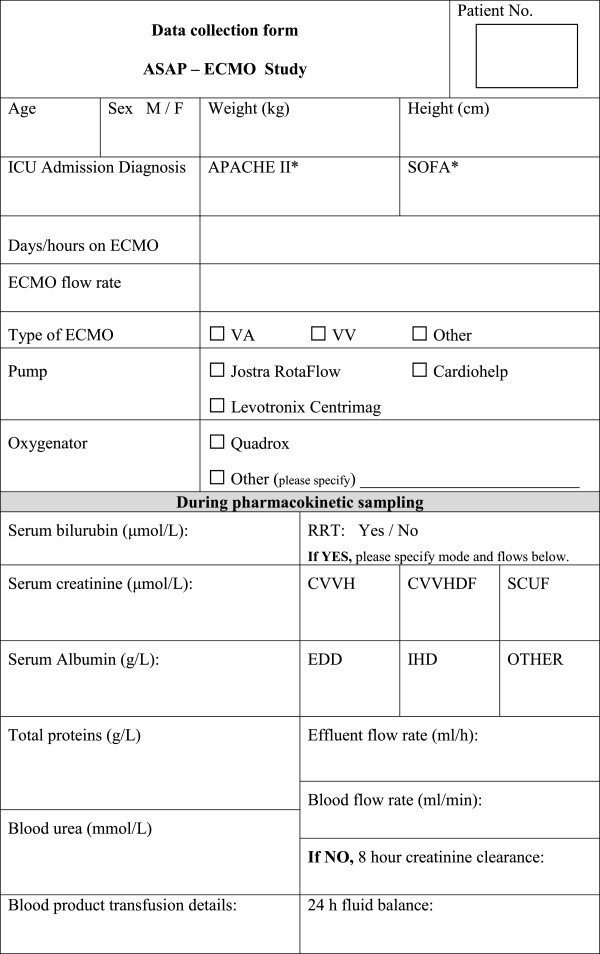
Methods/design: This is a multi-centre, open-label, descriptive pharmacokinetic (PK) study. Eligible patients will be adults treated with ECMO for severe cardiac and/or respiratory failure at five Intensive Care Units in Australia and New Zealand. Patients will receive the study drugs as part of their routine management. Blood samples will be taken from indwelling catheters to investigate plasma concentrations of several antibiotics (ceftriaxone, meropenem, vancomycin, ciprofloxacin, gentamicin, piperacillin-tazobactum, ticarcillin-clavulunate, linezolid, fluconazole, voriconazole, caspofungin, oseltamivir), sedatives and analgesics (midazolam, morphine, fentanyl, propofol, dexmedetomidine, thiopentone). The PK of each drug will be characterised to determine the variability of PK in these patients and to develop dosing guidelines for prescription during ECMO.
Discussion: The evidence-based dosing algorithms generated from this analysis can be evaluated in later clinical studies. This knowledge is vitally important for optimising pharmacotherapy in these most severely ill patients to maximise the opportunity for therapeutic success and minimise the risk of therapeutic failure.
Trial registration: ACTRN12612000559819.
Figures
References
-
- Fraser JF, Shekar K, Diab S, Foley SR, McDonald CI, Passmore M, Simonova G, Roberts JA, Platts DG, Mullany DV, Fung YL. ECMO - the clinician's view. ISBT Science Series. 2012;7:82–88. doi: 10.1111/j.1751-2824.2012.01560.x. - DOI
-
- Beckmann A, Benk C, Beyersdorf F, Haimerl G, Merkle F, Mestres C, Pepper J, Wahba A. Position article for the use of extracorporeal life support in adult patients. Eur J Cardiothorac Surg. 2011;40(3):676–680. - PubMed
-
- ECLS Registry report. Extracorporeal Life Support Organisation. Ann Arbor( MI); 2011.
-
- Davies A, Jones D, Bailey M, Beca J, Bellomo R, Blackwell N, Forrest P, Gattas D, Granger E, Herkes R. et al.Extracorporeal membrane oxygenation for 2009 influenza a(H1N1) acute respiratory distress syndrome. JAMA. 2009;302(17):1888–1895. - PubMed
LinkOut - more resources
Full Text Sources
Medical
