


Epidemiology and control of human schistosomiasis in Tanzania
- PMID: 23192005
- PMCID: PMC3549774
- DOI: 10.1186/1756-3305-5-274
Epidemiology and control of human schistosomiasis in Tanzania
Abstract
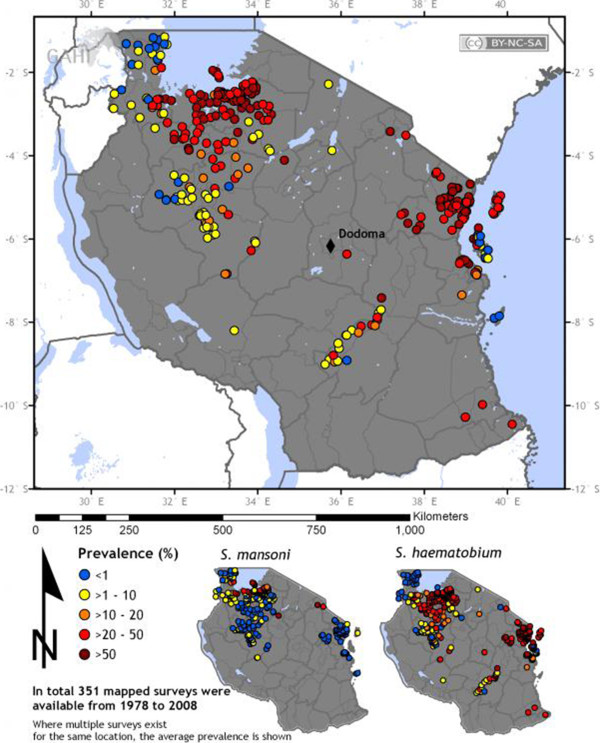
In Tanzania, the first cases of schistosomiasis were reported in the early 19th century. Since then, various studies have reported prevalences of up to 100% in some areas. However, for many years, there have been no sustainable control programmes and systematic data from observational and control studies are very limited in the public domain. To cover that gap, the present article reviews the epidemiology, malacology, morbidity, and the milestones the country has made in efforts to control schistosomiasis and discusses future control approaches. The available evidence indicates that, both urinary and intestinal schistosomiasis are still highly endemic in Tanzania and cause significant morbidity.Mass drug administration using praziquantel, currently used as a key intervention measure, has not been successful in decreasing prevalence of infection. There is therefore an urgent need to revise the current approach for the successful control of the disease. Clearly, these need to be integrated control measures.
Figures

References
-
- Doumenge JP, Mott KE, Reud-Thomas G. Atlas of the Global distribution of schistosomiasis: Talence, CEGET-CNRS. Geneva: WHO Publication; 1987. pp. 233–241.
-
- Malenganisho WLM. he role of HIV, micronutrient status and treatment in Schistosoma mansoni infection and morbidity: a cohort study among adult of Ukerewe and Mwanza districts, Tanzania. 2005. (PhD thesis, Faculty of Science, University of Copenhagen and DBL- Institute for Health Research and Development).
Publication types
MeSH terms
Substances
Grants and funding
LinkOut - more resources
Full Text Sources
Miscellaneous
