


The effects of a mindfulness-based intervention on emotional distress, quality of life, and HbA(1c) in outpatients with diabetes (DiaMind): a randomized controlled trial
- PMID: 23193218
- PMCID: PMC3609486
- DOI: 10.2337/dc12-1477
The effects of a mindfulness-based intervention on emotional distress, quality of life, and HbA(1c) in outpatients with diabetes (DiaMind): a randomized controlled trial
Abstract
Objective: Emotional distress is common in outpatients with diabetes, affecting ∼20-40% of the patients. The aim of this study was to determine the effectiveness of group therapy with Mindfulness-Based Cognitive Therapy (MBCT), relative to usual care, for patients with diabetes with regard to reducing emotional distress and improving health-related quality of life and glycemic control.
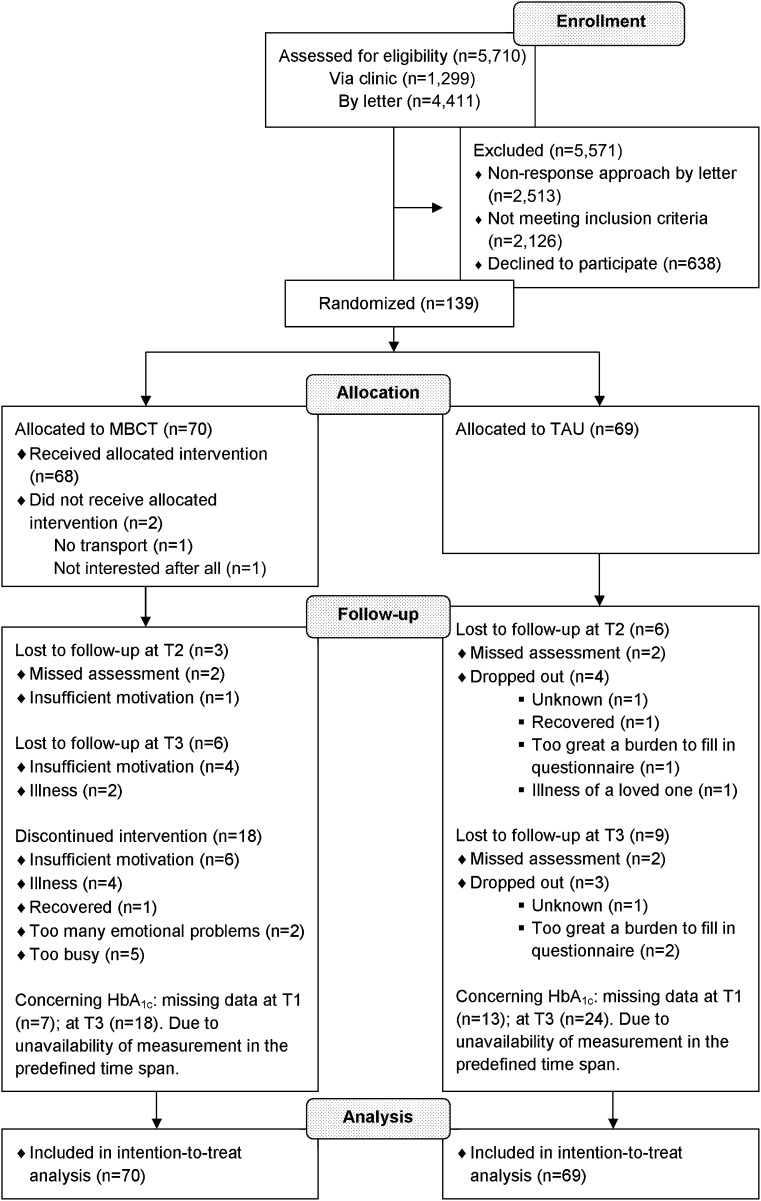
Research design and methods: In the present randomized controlled trial, 139 outpatients with diabetes (type 1 or type 2) and low levels of emotional well-being were randomized to MBCT (n = 70) or a waiting list group (n = 69). Primary outcomes were perceived stress (Perceived Stress Scale), anxiety and depressive symptoms (Hospital Anxiety and Depression Scale), mood (Profiles of Mood States), and diabetes-specific distress (Problem Areas In Diabetes). Secondary outcomes were health-related quality of life (12-Item Short-Form Health Survey), and glycemic control (HbA(1c)). Assessments were conducted at baseline and at 4 and 8 weeks of follow-up.
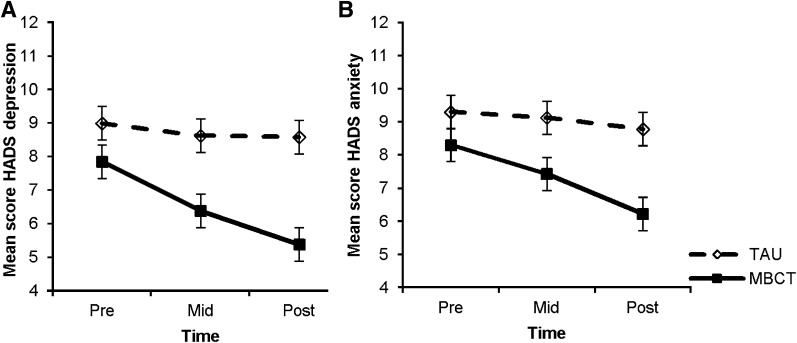
Results: Compared with control, MBCT was more effective in reducing stress (P < 0.001, Cohen d = 0.70), depressive symptoms (P = 0.006, d = 0.59), and anxiety (P = 0.019, d = 0.44). In addition, MBCT was more effective in improving quality of life (mental: P = 0.003, d = 0.55; physical: P = 0.032, d = 0.40). We found no significant effect on HbA(1c) or diabetes-specific distress, although patients with elevated diabetes distress in the MBCT group tended to show a decrease in diabetes distress (P = 0.07, d = 0.70) compared with the control group.
Conclusions: Compared with usual care, MBCT resulted in a reduction of emotional distress and an increase in health-related quality of life in diabetic patients who had lower levels of emotional well-being.
Figures
References
-
- Grigsby AB, Anderson RJ, Freedland KE, Clouse RE, Lustman PJ. Prevalence of anxiety in adults with diabetes: a systematic review. J Psychosom Res 2002;53:1053–1060 - PubMed
-
- Pouwer F, Geelhoed-Duijvestijn PH, Tack CJ, et al. Prevalence of comorbid depression is high in out-patients with type 1 or type 2 diabetes mellitus. Results from three out-patient clinics in the Netherlands. Diabet Med 2010;27:217–224 - PubMed
-
- Makine C, Karşidağ C, Kadioğlu P, et al. Symptoms of depression and diabetes-specific emotional distress are associated with a negative appraisal of insulin therapy in insulin-naïve patients with type 2 diabetes mellitus. A study from the European Depression in Diabetes [EDID] Research Consortium. Diabet Med 2009;26:28–33 - PubMed
Publication types
MeSH terms
Substances
LinkOut - more resources
Full Text Sources
Medical
Miscellaneous
