. 2012:2012:839837.
doi: 10.1155/2012/839837. Epub 2012 Nov 4.

MicroRNA Response Elements-Mediated miRNA-miRNA Interactions in Prostate Cancer

Affiliations

MicroRNA Response Elements-Mediated miRNA-miRNA Interactions in Prostate Cancer

Mohammed Alshalalfa. Adv Bioinformatics. 2012.

Abstract

The cell is a highly organized system of interacting molecules including proteins, mRNAs, and miRNAs. Analyzing the cell from a systems perspective by integrating different types of data helps revealing the complexity of diseases. Although there is emerging evidence that microRNAs have a functional role in cancer, the role of microRNAs in mediating cancer progression and metastasis remains not fully explored. As the amount of available miRNA and mRNA gene expression data grows, more systematic methods combining gene expression and biological networks become necessary to explore miRNA function. In this work I integrated functional miRNA-target interactions with mRNA and miRNA expression to infer mRNA-mediated miRNA-miRNA interactions. The inferred network represents miRNA modulation through common targets. The network is used to characterize the functional role of microRNA response element (MRE) to mediate interactions between miRNAs targeting the MRE. Results revealed that miRNA-1 is a key player in regulating prostate cancer progression. 11 miRNAs were identified as diagnostic and prognostic biomarkers that act as tumor suppressor miRNAs. This work demonstrates the utility of a network analysis as opposed to differential expression to find important miRNAs that regulate prostate cancer.


Figures
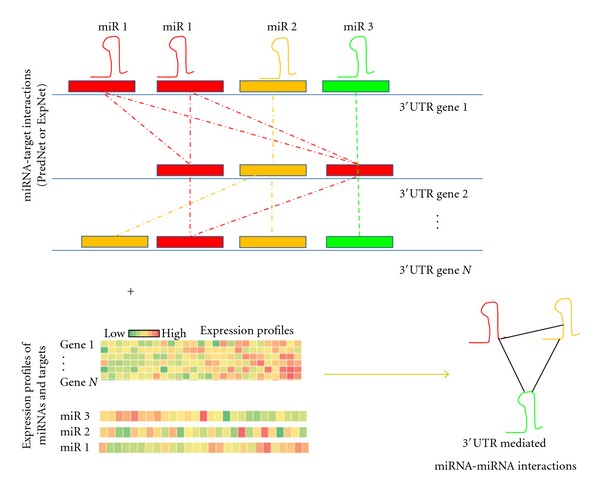
Figure 1
Figure 1
Overview of MRE-mediated miRNA-miRNA network construction. miRNA-miRNA interaction network was constructed by combing miRNA-target networks and expression profiles of both miRNAs and targets. I considered competition between miRNAs for common targets to construct miRNA-miRNA network. miRNAs that target same 3′UTR or MRE and are conditionally dependent on target are anticipated to be functionally associated.
Figure 2
Figure 2
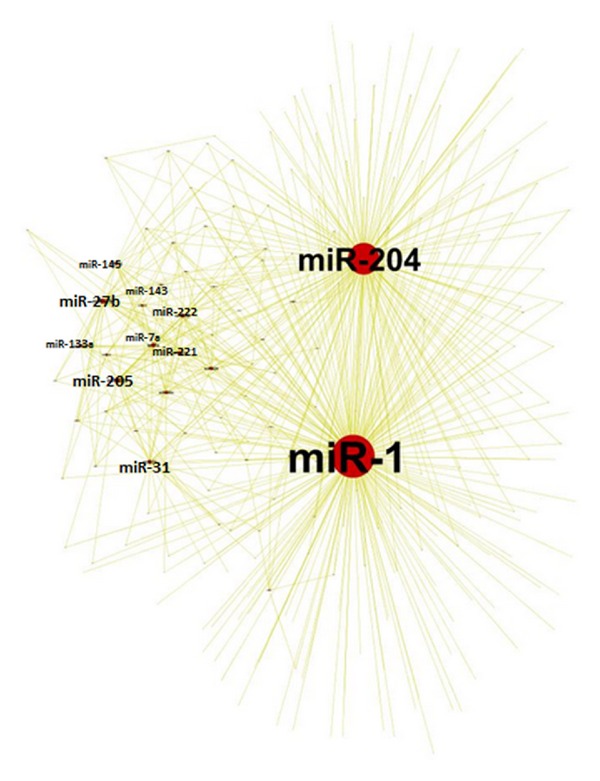
MRE-mediated miRNA-miRNA interactions network using ExpNet. miRNA-miRNA interactions using ExpNet show a list of 11 miRNAs that are highly connected. The network shows 243 miRNA linked with 528 link. miRNA-1 and miRNA-204 are hub miRNAs that are linked to more than 50% of the miRNAs. The size of the miRNA node is proportional to the miRNA connectivity. Cytoscape was used for network visualization [18].
Figure 3
Figure 3
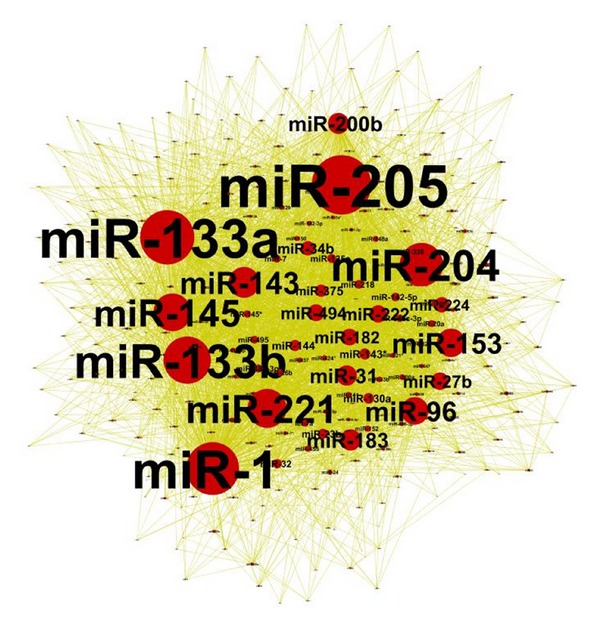
MRE-mediated miRNA-miRNA interactions network using PredNet. 3753 miRNA-miRNA interactions among 345 miRNA was constructed using PredNet. A list of 16 miRNAs that are highly connected. miRNA-1, miR-133a, miR-133b, miR-221, miR-145, and miRNA-205 are hub miRNAs that are linked to more than 50% of the miRNAs. Cytoscape was used for network visualization. It is worth pointing out the difference between Figures 2 and 3 is that Figure 2 uses ExpNet miRNA-target interactions and Figure 3 uses PredNet miRNA-target interactions.
Figure 4
Figure 4
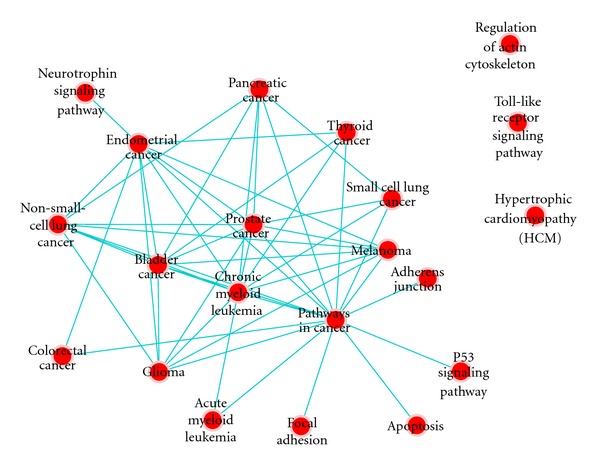
Pathway enrichment analysis of the 450 target genes of the 11 miRNA using Enrichment Map [19]. 450 genes targeted by the 11 miRNA were identified using ExpNet. I used DAVID online tool to identify enriched pathways of the 450 genes using Enrichment Map [19]. Results showed that the target genes are enriched with multiple cancer pathways including prostate, thyroid, and pancreatic cancer pathways.
Figure 5
Figure 5
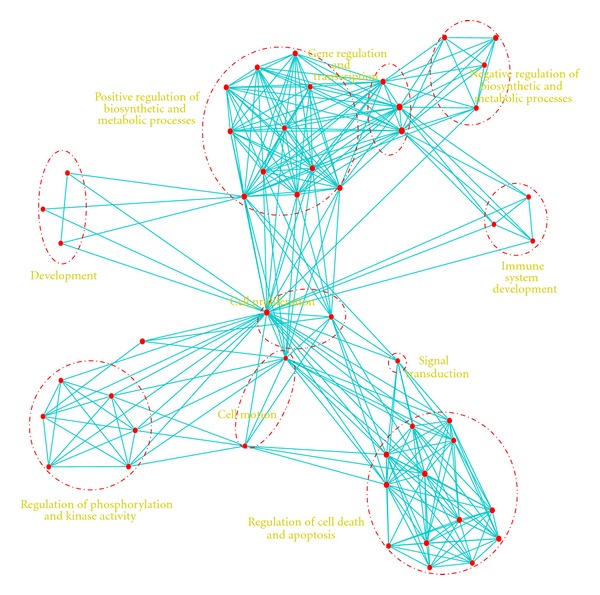
Biological processes enrichment analysis of the 450 target genes of the 11 miRNA using Enrichment Map [19]. Analyzing the biological processes enriched in the miRNA target genes using DAVID tool showed that targets are enriched with several biological processes like cell proliferation, cell death, and biosynthetic metabolism. Enrichment Map [19] was used for visualizing the network of biological processes.
Figure 6
Figure 6
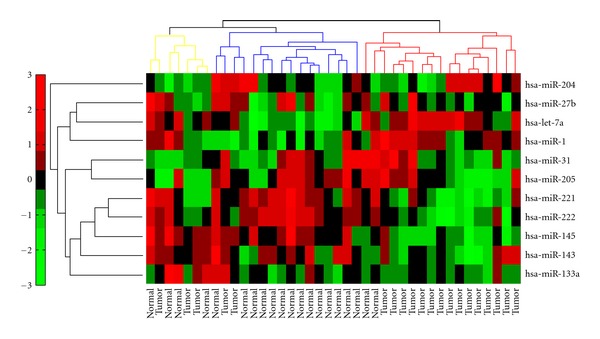
Heatmap of the 11 miRNA in GES23022 prostate data. Heatmap of the 11 miRNAs shows that the 11 miRNAs are effective to group tumor samples. Clustering the samples using k-means revealed three groups, tumor, normal, and mixed cluster.
Figure 7
Figure 7
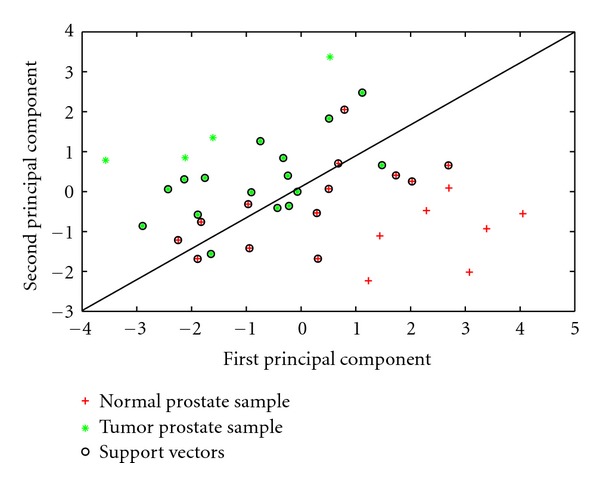
SVM classification of samples in GSE23022 across the first two PCAs. I first identified the first two principal components (PCAs) and then use SVM to classify samples based on the first two components. Results show that normal and tumors samples are separated with some misclassification at the boundary of the support vectors.
Figure 8
Figure 8
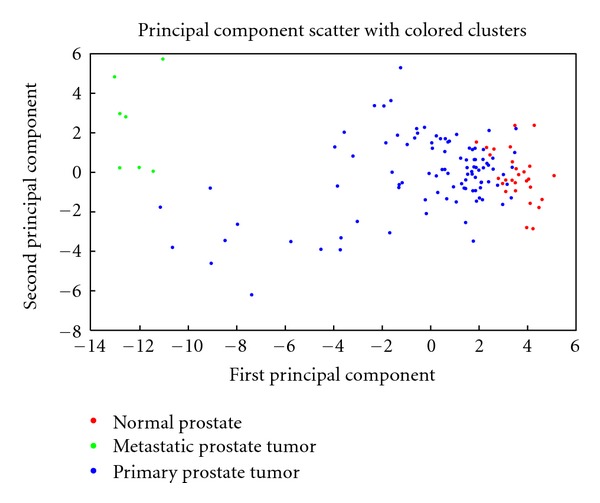
Prostate samples across the first two PCAs using Taylor miRNA expression data. I first identified the first two principal components (PCAs) using Taylor data that has normal, primary, and metastasis samples. Results show that metastasis samples are well separated from normal and primary samples across the first component.
Figure 9
Figure 9
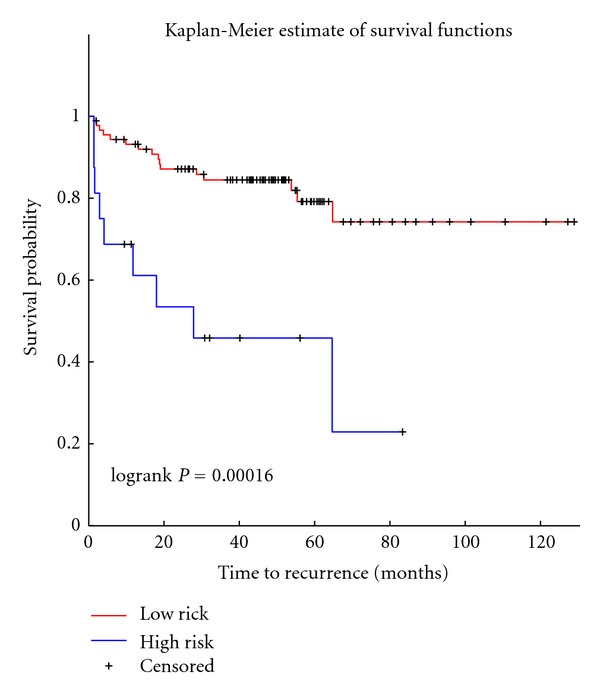
Kaplan Meier plot of the prognostic power of the 11 miRNAs. We characterized the prognostic power of the 11 miRNAs by extracting their expression from Taylor data and group samples based on their expression into two groups. The two groups showed a very significant separation between high-risk and low-risk patients. This indicates that the 11 miRNA can act as therapeutic targets for prostate cancer treatment.

References

    1. Ruvkun G. Molecular biology: glimpses of a tiny RNA world. Science. 2001;294(5543):797–799. - PubMed
    1. Sevli S, Uzumcu A, Solak M, Ittmann M, Ozen M. The function of microRNAs, small but potent molecules, in human prostate cancer. Prostate Cancer and Prostatic Diseases. 2010;13(3):208–217. - PubMed
    1. Gordanpour A, Nam RK, Sugar L, Seth A. MicroRNAs in prostate cancer: from biomarkers to molecularly-based therapeutics. Prostate Cancer and Prostatic Diseases. 2012;1:p. 6. - PubMed
    1. He L, Hannon GJ. MicroRNAs: small RNAs with a big role in gene regulation. Nature Reviews Genetics. 2004;5(8):p. 631.
    1. Pang Y, Young CYF, Yuan H. MicroRNAs and prostate cancer. Acta Biochimica et Biophysica Sinica. 2010;42(6):363–369. - PubMed