


Insulator-like pairing elements regulate silencing and mutually exclusive expression in the malaria parasite Plasmodium falciparum
- PMID: 23197831
- PMCID: PMC3535642
- DOI: 10.1073/pnas.1214572109
Insulator-like pairing elements regulate silencing and mutually exclusive expression in the malaria parasite Plasmodium falciparum
Abstract
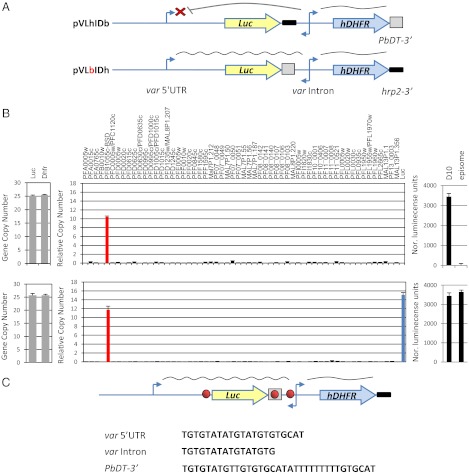
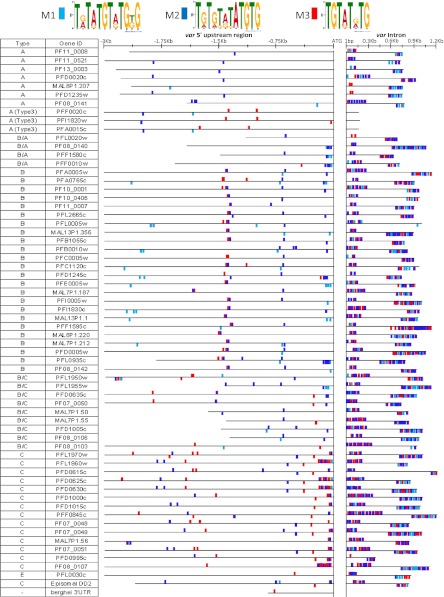
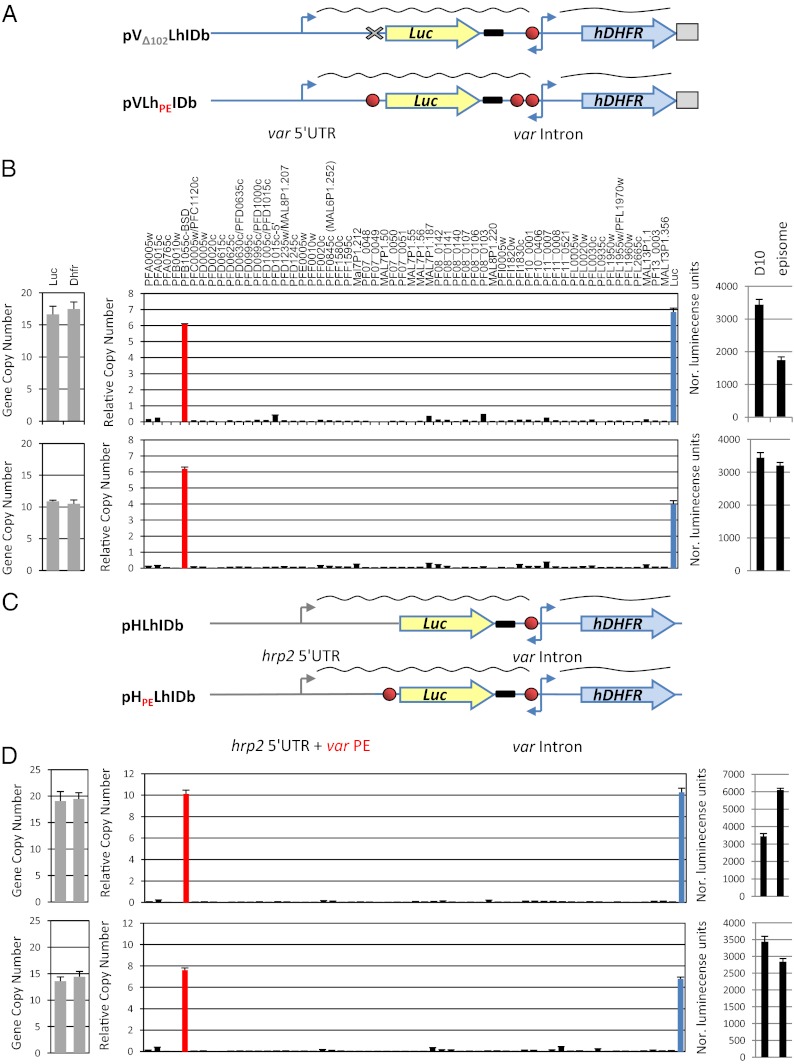
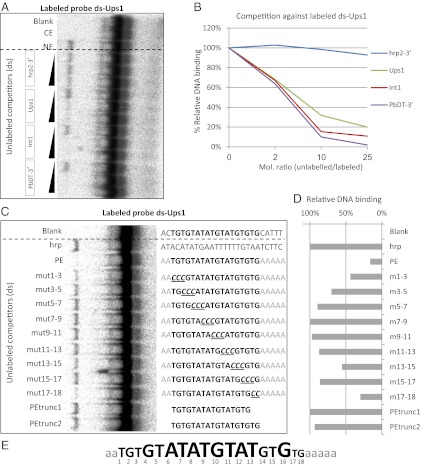
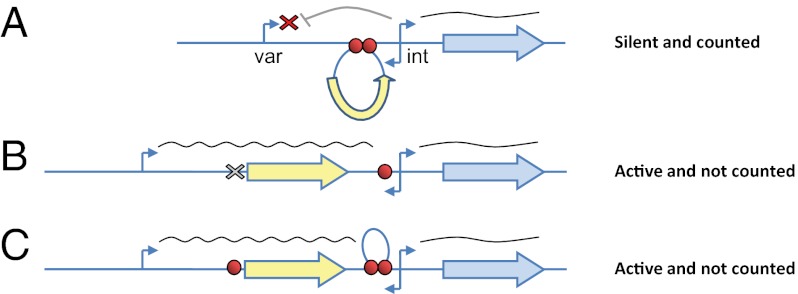
Plasmodium falciparum causes the deadliest form of human malaria. Its virulence is attributed to its ability to modify the infected RBC and to evade human immune attack through antigenic variation. Antigenic variation is achieved through tight regulation of antigenic switches between variable surface antigens named "P. falciparum erythrocyte membrane protein-1" encoded by the var multicopy gene family. Individual parasites express only a single var gene at a time, maintaining the remaining var genes in a transcriptionally silent state. Strict pairing between var gene promoters and a second promoter within an intron found in each var gene is required for silencing and counting of var genes by the mechanism that controls mutually exclusive expression. We have identified and characterized insulator-like DNA elements that are required for pairing var promoters and introns and thus are essential for regulating silencing and mutually exclusive expression. These elements, found in the regulatory regions of each var gene, are bound by distinct nuclear protein complexes. Any alteration in the specific, paired structure of these elements by either deletion or insertion of additional elements results in an unregulated var gene. We propose a model by which silencing and mutually exclusive expression of var genes is regulated by the precise arrangement of insulator-like DNA pairing elements.
Conflict of interest statement
The authors declare no conflict of interest.
Figures
References
-
- WHO 2010. World Malaria Report 2010. (World Health Organization, Geneva)
-
- Chen Q, et al. Developmental selection of var gene expression in Plasmodium falciparum. Nature. 1998;394(6691):392–395. - PubMed
Publication types
MeSH terms
Substances
LinkOut - more resources
Full Text Sources
Research Materials
