


A phase II trial of autologous transplantation of bone marrow stem cells for critical limb ischemia: results of the Naples and Pietra Ligure Evaluation of Stem Cells study
- PMID: 23197862
- PMCID: PMC3659723
- DOI: 10.5966/sctm.2012-0021
A phase II trial of autologous transplantation of bone marrow stem cells for critical limb ischemia: results of the Naples and Pietra Ligure Evaluation of Stem Cells study
Abstract
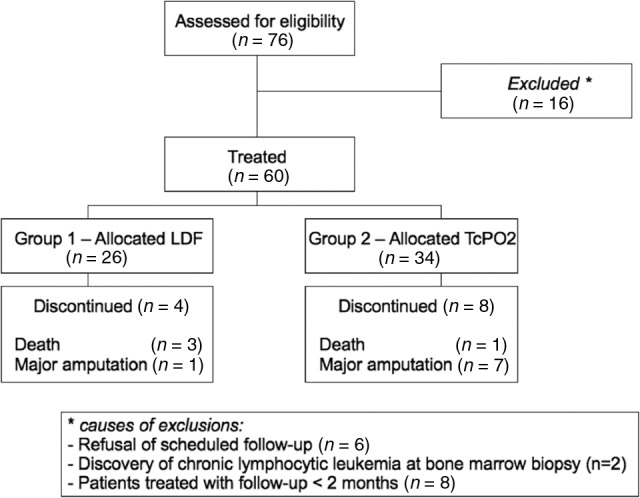
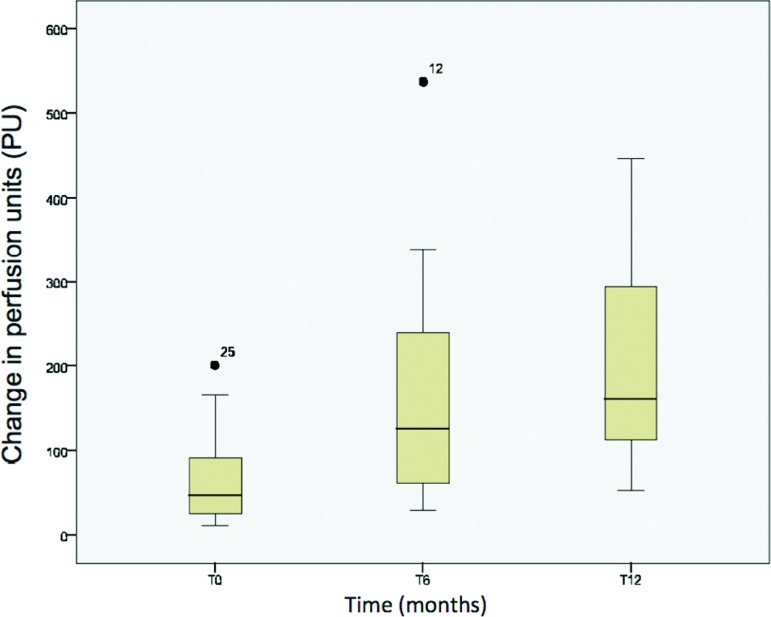
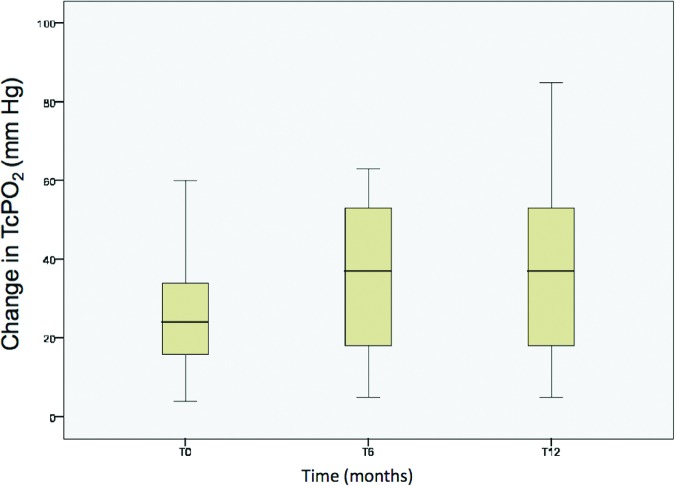
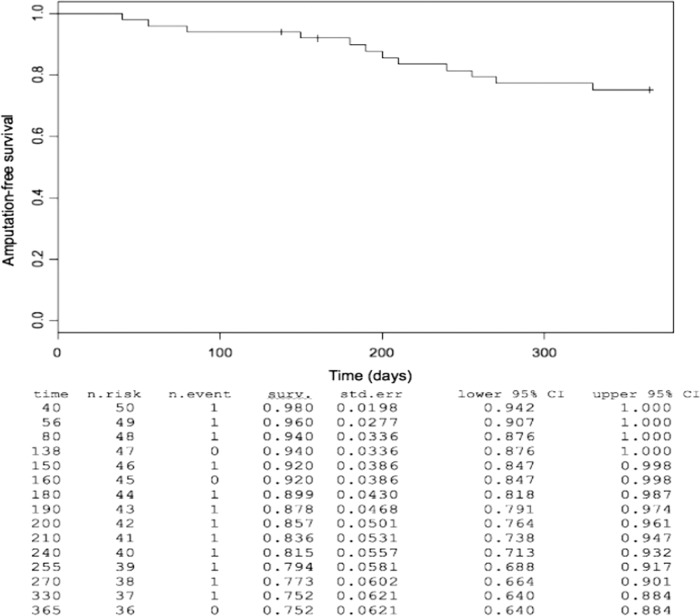
Critical limb ischemia (CLI) is a vascular disease affecting lower limbs, which is going to become a demanding challenge because of the aging of the population. Despite advances in endovascular therapies, CLI is associated with high morbidity and mortality. Patients without direct revascularization options have the worst outcomes. To date, 25%-40% of CLI patients are not candidates for surgical or endovascular approaches, ultimately facing the possibility of a major amputation. This study aimed to assess the safety and efficacy of autologous bone marrow (BM) transplantation performed in "no-option" patients, in terms of restoring blood perfusion by collateral flow and limb salvage. A multicenter, prospective, not-controlled phase II study for no-option CLI patients was performed. Patients were subjected to intra-arterial infusion of autologous bone marrow and followed for 12 months after the treatment. Variation of blood perfusion parameters, evaluated by laser Doppler flowmetry or transcutaneous oximetry, was set as the primary endpoint at 12 months after treatment and amputation-free survival as the secondary endpoint. Sixty patients were enrolled and treated with BM transplantation, showing improvement in objective and subjective measures of perfusion. Furthermore, survival analysis demonstrated improved amputation-free survival rates (75.2%) at 12 months after the treatment. This study provides further evidence that autologous bone marrow transplantation is well tolerated by CLI patients without adverse effects, demonstrating trends toward improvement in perfusion and reduced amputation rate, confirming the feasibility and safety of the procedure.
Figures
References
-
- Hirsch AT, Haskal ZJ, Hertzer NR, et al. ACC/AHA 2005 Practice Guidelines for the management of patients with peripheral arterial disease (lower extremity, renal, mesenteric, and abdominal aortic): A collaborative report from the American Association for Vascular Surgery/Society for Vascular Surgery, Society For Cardiovascular Angiography and Interventions, Society for Vascular Medicine and Biology, Society of Interventional Radiology, and the ACC/AHA Task Force on Practice Guidelines (Writing Committee to Develop Guidelines for the Management of Patients with Peripheral Arterial Disease): Endorsed by the American Association of Cardiovascular and Pulmonary Rehabilitation; National Heart, Lung, and Blood Institute; Society for Vascular Nursing; Transatlantic Inter-society Consensus; and Vascular Disease Foundation. Circulation. 2006;113:e463–e654. - PubMed
-
- Norgren L, Hiatt WR, Dormandy JA, et al. Inter-Society Consensus for the Management of Peripheral Arterial Disease (TASC II) J Vasc Surg. 2007;45(suppl S):S5–S67. - PubMed
-
- Asahara T, Murohara T, Sullivan A, et al. Isolation of putative progenitor endothelial cells for angiogenesis. Science. 1997;275:964–967. - PubMed
-
- Shi Q, Rafii S, Wu MH, et al. Evidence for circulating bone marrow-derived endothelial cells. Blood. 1998;92:362–367. - PubMed
-
- Asahara T, Masuda H, Takahashi T, et al. Bone marrow origin of endothelial progenitor cells responsible for postnatal vasculogenesis in physiological and pathological neovascularization. Circ Res. 1999;85:221–228. - PubMed
Publication types
MeSH terms
LinkOut - more resources
Full Text Sources
Medical
Research Materials
Miscellaneous
