


Intestinal mucosal atrophy and adaptation
- PMID: 23197881
- PMCID: PMC3508630
- DOI: 10.3748/wjg.v18.i44.6357
Intestinal mucosal atrophy and adaptation
Abstract
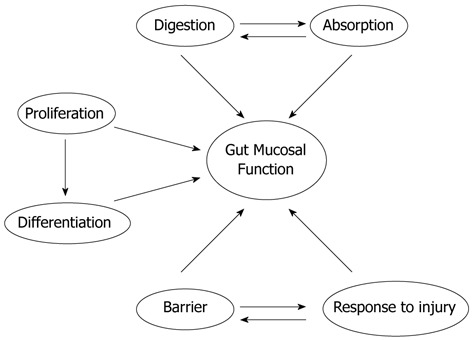
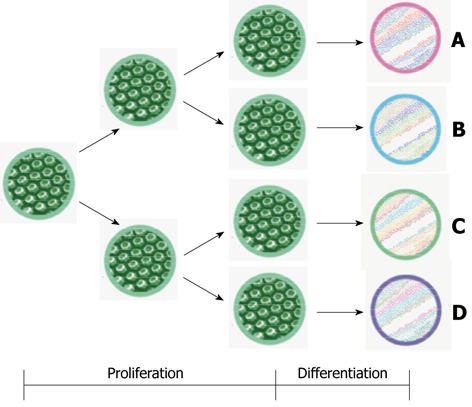
Mucosal adaptation is an essential process in gut homeostasis. The intestinal mucosa adapts to a range of pathological conditions including starvation, short-gut syndrome, obesity, and bariatric surgery. Broadly, these adaptive functions can be grouped into proliferation and differentiation. These are influenced by diverse interactions with hormonal, immune, dietary, nervous, and mechanical stimuli. It seems likely that clinical outcomes can be improved by manipulating the physiology of adaptation. This review will summarize current understanding of the basic science surrounding adaptation, delineate the wide range of potential targets for therapeutic intervention, and discuss how these might be incorporated into an overall treatment plan. Deeper insight into the physiologic basis of adaptation will identify further targets for intervention to improve clinical outcomes.
Keywords: Adaptation; Intestine mucosa; Mucosal differentiation; Short bowel syndrome.
Figures
Comment in
-
Internal frontier: the pathophysiology of the small intestine.World J Gastroenterol. 2013 Jan 14;19(2):161-4. doi: 10.3748/wjg.v19.i2.161. World J Gastroenterol. 2013. PMID: 23345938 Free PMC article.
References
-
- Eroschenko VP, Fiore MSHd. Di Fiore’s atlas of histology with functional correlations. 8th ed. Media: Lippincott Williams & Wilkins; 1996.
-
- Gartner LP, Hiatt JL. Color textbook of histology. 2nd ed. Philadelphia: W.B. Saunders; 2001.
-
- Pácha J. Development of intestinal transport function in mammals. Physiol Rev. 2000;80:1633–1667. - PubMed
Publication types
MeSH terms
Grants and funding
LinkOut - more resources
Full Text Sources
Other Literature Sources
