. 2010 Mar;1(1):164-209.
doi: 10.1007/s13167-010-0001-x. Epub 2010 Apr 10.

Drug delivery systems: Advanced technologies potentially applicable in personalized treatments

Affiliations

Drug delivery systems: Advanced technologies potentially applicable in personalized treatments

Jorge F Coelho et al. EPMA J. 2010 Mar.

Abstract

Advanced drug delivery systems (DDS) present indubitable benefits for drug administration. Over the past three decades, new approaches have been suggested for the development of novel carriers for drug delivery. In this review, we describe general concepts and emerging research in this field based on multidisciplinary approaches aimed at creating personalized treatment for a broad range of highly prevalent diseases (e.g., cancer and diabetes). This review is composed of two parts. The first part provides an overview on currently available drug delivery technologies including a brief history on the development of these systems and some of the research strategies applied. The second part provides information about the most advanced drug delivery devices using stimuli-responsive polymers. Their synthesis using controlled-living radical polymerization strategy is described. In a near future it is predictable the appearance of new effective tailor-made DDS, resulting from knowledge of different interdisciplinary sciences, in a perspective of creating personalized medical solutions.


Figures
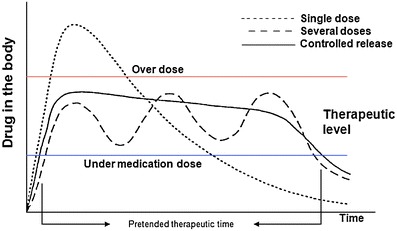
Fig. 1
Fig. 1
Scheme of the effect in drug concentration in the body when using different administration methods (adapted from [6])
Fig. 2
Fig. 2
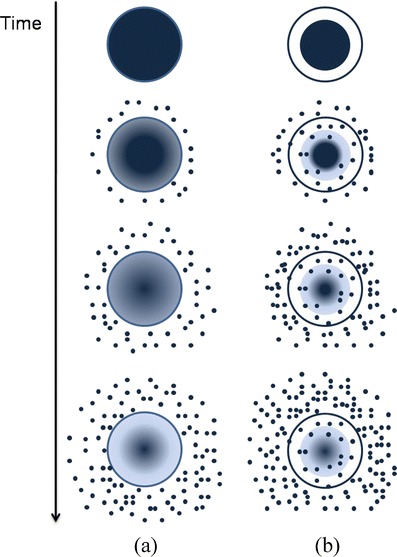
Drug diffusion profile for both matrix (a) and reservoir systems (b)
Fig. 3
Fig. 3
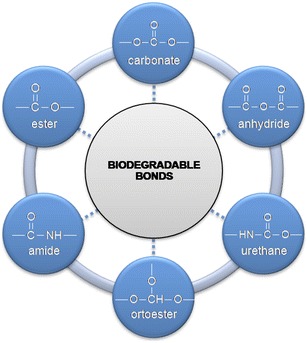
Biodegradable chemical linkages
Fig. 4
Fig. 4
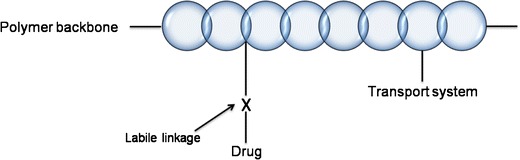
Schematization of general structure of polymer-drug conjugate
Fig. 5
Fig. 5
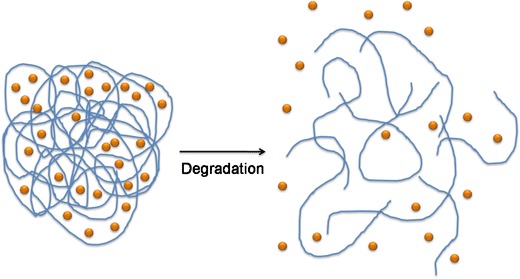
Biodegradation of polymer chains with consequent drug release
Fig. 6
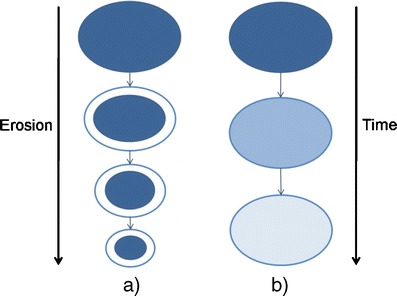
Fig. 6
Scheme representing surface (a) and bulk (b) bioerosion
Fig. 7
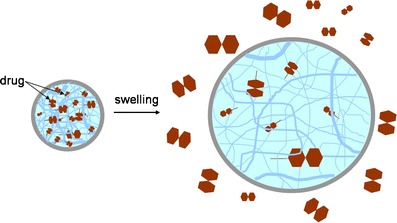
Fig. 7
Drug release resulting from swelling of a polymeric matrix
Fig. 8
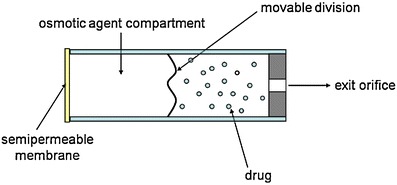
Fig. 8
Scheme of an osmotically controlled DDS
Fig. 9
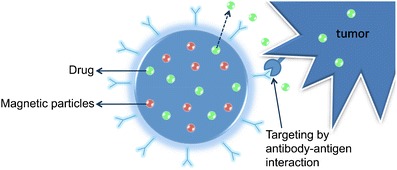
Fig. 9
Drug loaded magnetic particle with specific antibodies attached to the surface applied in cancer treatment
Fig. 10
Fig. 10
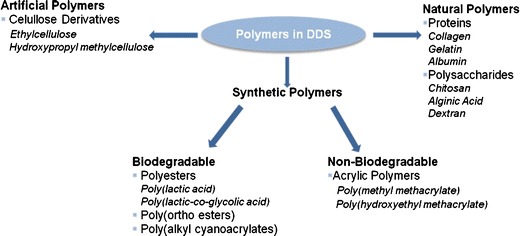
Overview of the polymers used in DDS
Fig. 11
Fig. 11
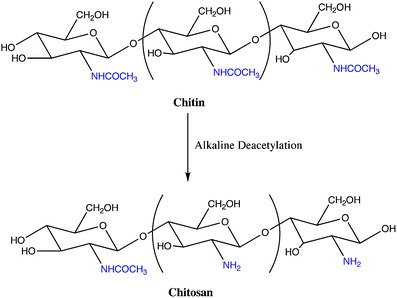
Schematic representation of the alkaline deacetylation of chitin to obtain chitosan
Fig. 12
Fig. 12
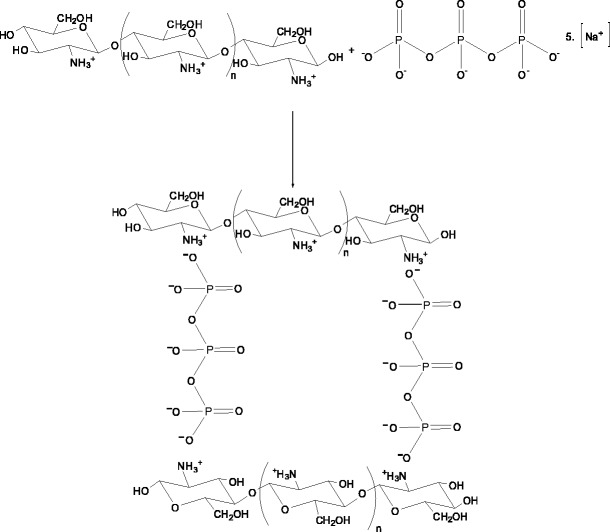
Schematic representation of the interaction of chitosan with sodium tripolyphospate giving micro/nanoparticles
Fig. 13
Fig. 13
Alginate molecular structure
Fig. 14
Fig. 14
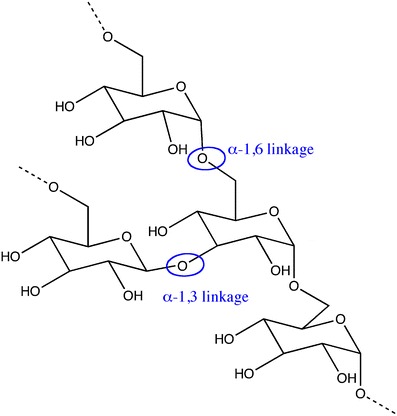
Molecular structure of dextran (adapted from [61])
Fig. 15
Fig. 15
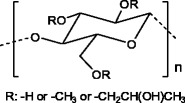
Hydroxypropylcellulose structure
Fig. 16
Fig. 16
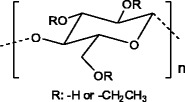
Ethylcellulose structure
Fig. 17
Fig. 17
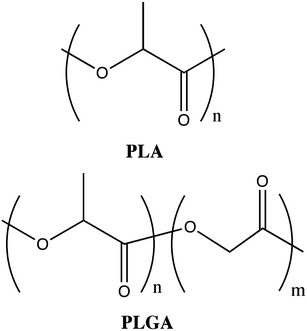
Structures of poly(lactic acid) and poly(lactic co-glycolic acid)
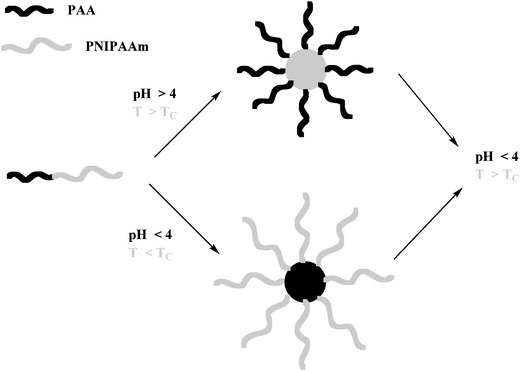
Fig. 18
Fig. 18
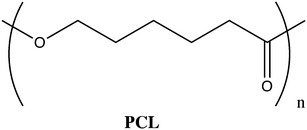
Structure of poly(ε-caprolactone)
Fig. 19
Fig. 19
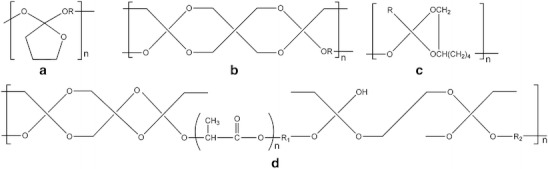
Structures of the different families of poly(ortho esters): a POE I; b POE II; c POE III and d POE IV
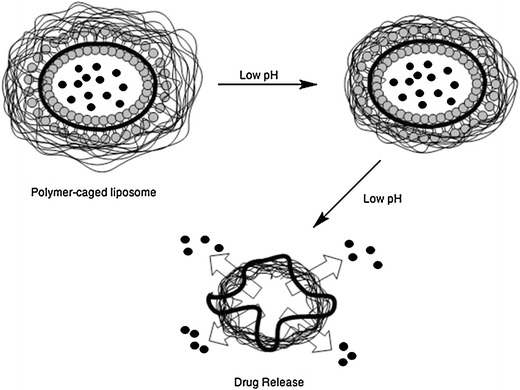
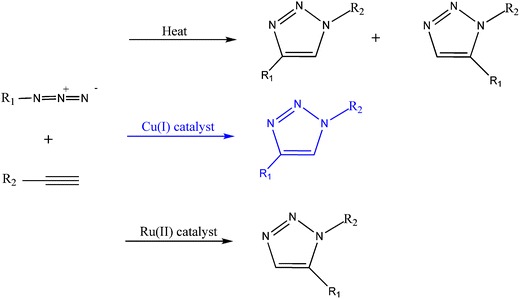
Fig. 20
Fig. 20
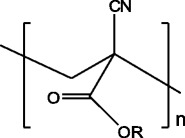
Structure of poly(alkyl cyanoacrylates); R is an alkyl chain of variable length

Fig. 21
Fig. 21
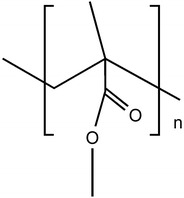
Structure of poly(methyl methacrylate)
Fig. 22
Fig. 22
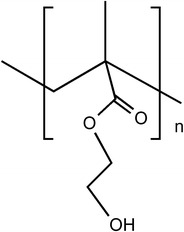
Structure of poly(2-hydroxyethyl methacrylate)
Fig. 23
Fig. 23
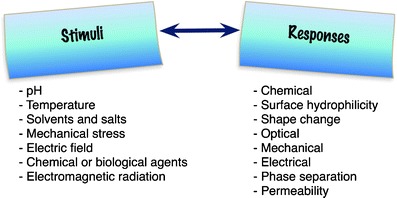
Stimuli and polymer responses (adapted from [13, 101])
Fig. 24
Fig. 24
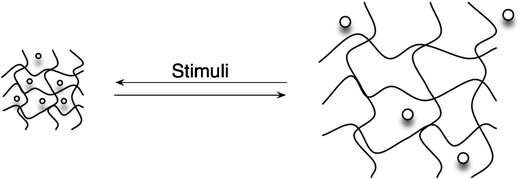
Schematic representation of a stimuli-responsive hydrogel releasing a drug. The predictive transition behaviour of responsive polymers is explained by the readjustment of interactions between polymer-polymer and polymer-solvent in small ranges of pH or temperature. Depending on the polymer structure the stimulus can lead to an abrupt volume change
Fig. 25
Fig. 25
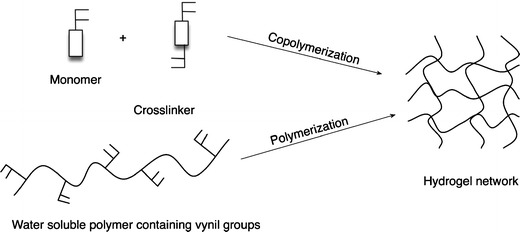
Methods for the synthesis of hydrogels (adapted from [101])
Fig. 26
Fig. 26
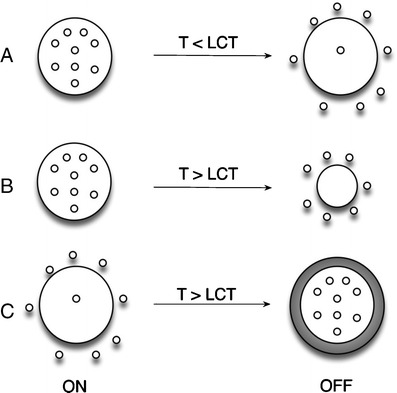
Drug delivery strategies from temperature-responsive hydrogels (adapted from [124])
Fig. 27
Fig. 27
Poly(acrylic acid) behaviour in aqueous solution at low and high pH
Fig. 28
Fig. 28
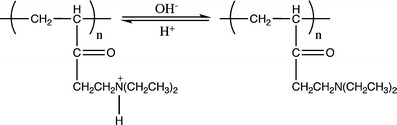
Poly(N,N′-diethylaminoethylmethacrylate) behaviour in aqueous solution at low and high pH
Fig. 29
Fig. 29
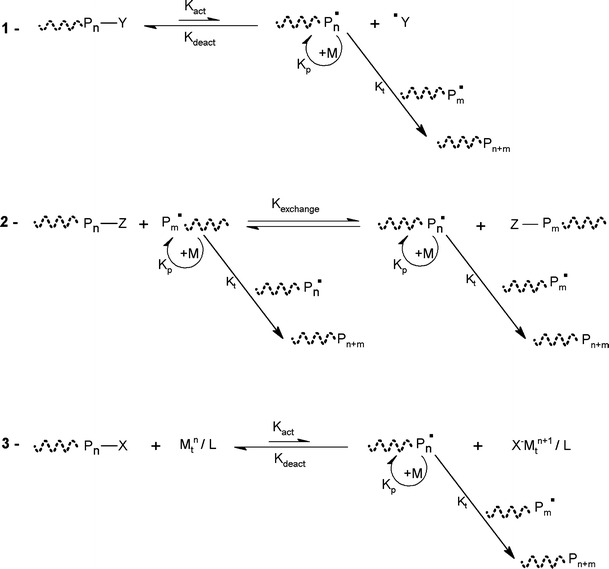
General schemes of the most used LRP methods: (1) SFRP; (2) RAFT/DT and (3) ATRP
Fig. 30
Fig. 30
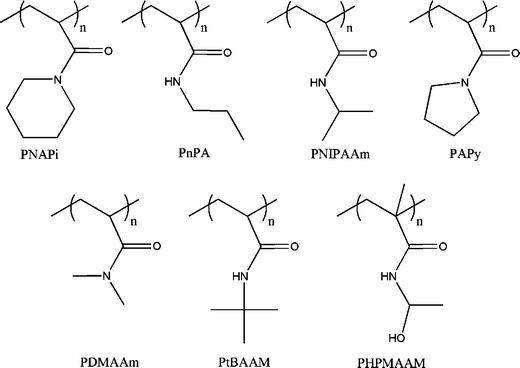
N-substituted acrylamide polymers used to synthesize thermo-responsive structures
Fig. 31
Fig. 31
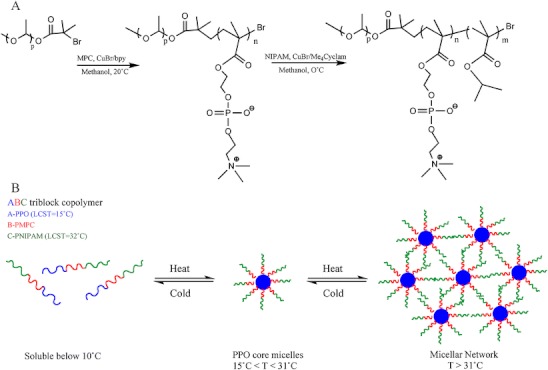
a Reaction scheme reported by Li and co-authors for the synthesis of PPO-PPMC-PNIPAAm triblock copolymer via ATRP; b Schematic representation of aqueous solution behaviour of the PPO-PMPC-PNIPAAm triblock copolymers: molecular dissolution at 5°C, formation of PPO-core micelles between 10 and 20°C, and formation of a micellar gel network above 31°C (adapted from [176])
Fig. 32
Fig. 32
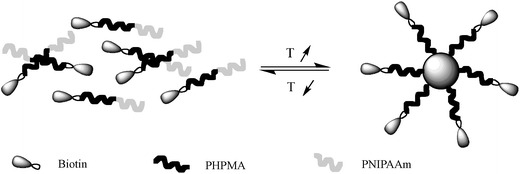
Schematic of the formation of nano core-shell structure from P(NIPAAm-b-HPMA) with biotin on the surface induced by temperature (adapted from [183])
Fig. 33
Fig. 33
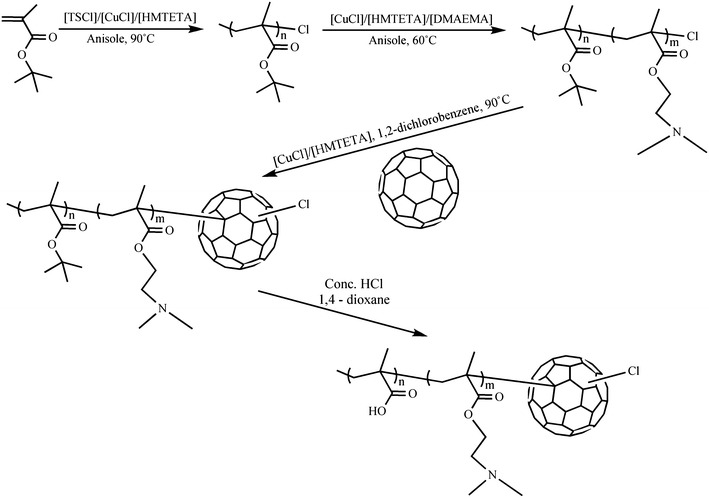
Synthetic scheme reported by Teoh and co-authors for synthesis of P(MAA102-b-DMAEMA67)-b-C60 (adapted from [201])
Fig. 34
Fig. 34
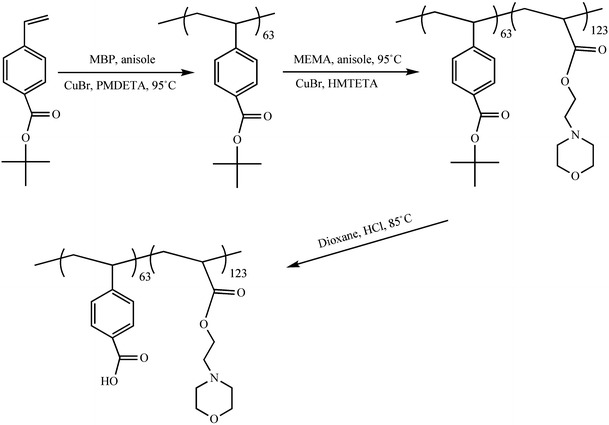
Schematic representation of the synthesis of P(VAB63-b-MEMA123) reported by Armes and co-authors (adapted from [202])
Fig. 35
Fig. 35
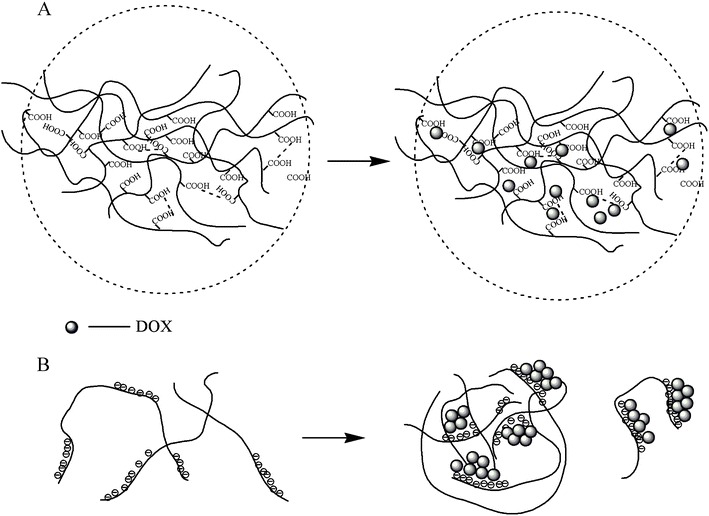
a Schematic representation of the complexation of P85PAA60/DOX behaviour at pH 3.87; b Schematic representation of the complexation of P85PAA60/DOX behaviour at pH 7.2 (adapted from [206])
Fig. 36
Fig. 36
Modes of aggregate formation for block copolymers PNIPAAm-b-PAA in aqueous solution in dependence of pH and temperature (adapted from [212])
Fig. 37
Fig. 37
Drug release from a pH-responsive liposome with a PAA crosslinked shell (adapted from [213])
Fig. 38
Fig. 38
1,3-Dipolar cycloaddition between azides and alkynes
Fig. 39
Fig. 39
Schematic representation of the transformation of a bromide chain end into azide and subsequent reaction alkyne-functionalized molecules
Fig. 40
Fig. 40
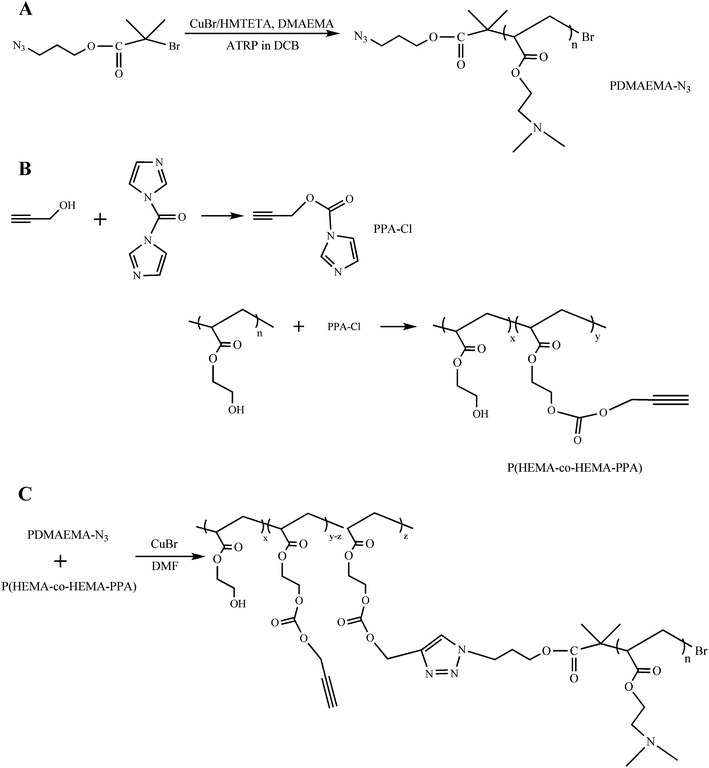
Schematic representation of the strategy reported by [218] to prepare degradable brushes of PHEMA-PDMAEMA. A ATRP of DMAEMA from 2-bromo-isobutyric acid 3-azidopropylester (BiBAP in Dichlorobenzene (DCB); b PHEMA with side chain of alkynes; c “click chemistry” to form degradable brushed PHEMA–PDMAEMA
Fig. 41
Fig. 41
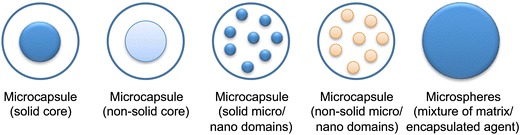
Potential particles morphologies (adapted from [224])
Fig. 42
Fig. 42
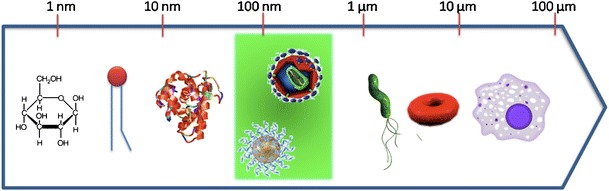
Sizes of nanoparticles compared with other biological entities
Fig. 43
Fig. 43
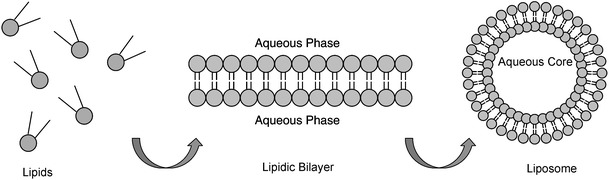
Schematic representation of the liposomes’ formation
Fig. 44
Fig. 44
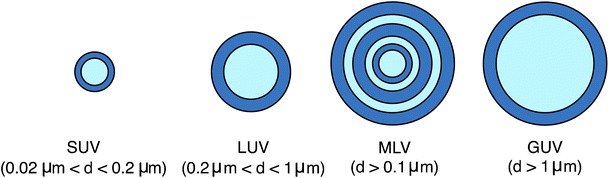
Schematic representation of the different types of liposomes, depending on their size and number of lamellae
Fig. 45
Fig. 45
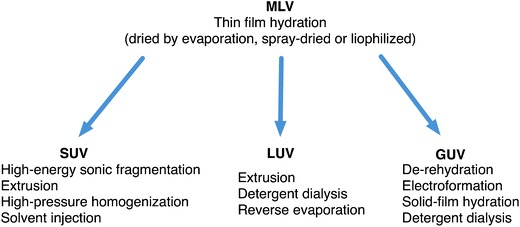
Different methods used in the liposomes preparation (adapted from [240])
Fig. 46
Fig. 46
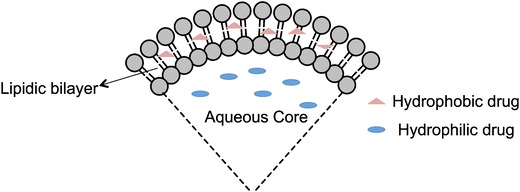
Localization of hydrophilic and hydrophobic drugs within the liposome
Fig. 47
Fig. 47
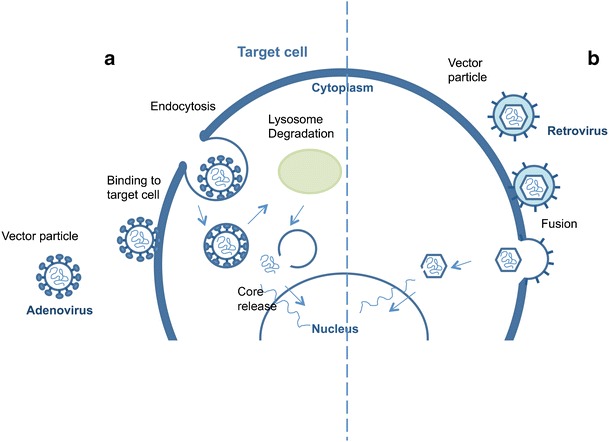
Two different approaches of virus entering the cell, simple capsid (a) and enveloped virions (b) (adapted from [293, 297])
Fig. 48
Fig. 48
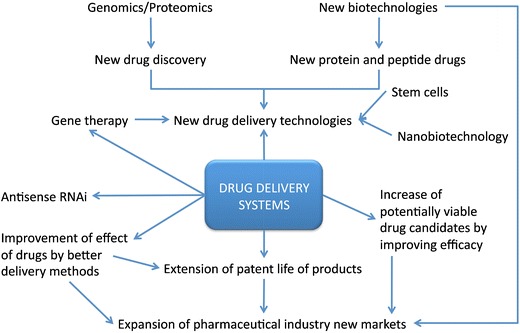
Interrelationship of DDS, pharmaceutical industry and biotechnology (adapted from [3])

References

    1. Zempsky WT. Alternative routes of drug administration—advantages and disadvantages (subject review) Pediatrics. 1998;101:730–1. doi: 10.1542/peds.101.4.730. - DOI - PubMed
    1. Golan DE, Armen H, Tashjian J, Armstrong EJ, et al. Principles of pharmacology: the pathophysiological basis of drug therapy. Philadelphia: Lippincott Williams&Wilkins; 2008.
    1. Jain KK. Drug delivery systems—an overview. In: Jain KK, editor. Drug delivery systems. New York: Humana; 2008.
    1. Jeffreys D. Aspirin: the remarkable story of a wonder drug. New York: Bloomsbury; 2005.
    1. Magalhães PO, Lopes AM, Mazzola PG, et al. Methods of endotoxin removal from biological preparations: a review. J Pharm Sci. 2006;10:388–404. - PubMed

LinkOut - more resources