


Recommendations for the prevention of breast cancer in shift workers
- PMID: 23199173
- PMCID: PMC3405398
- DOI: 10.1007/s13167-011-0126-6
Recommendations for the prevention of breast cancer in shift workers
Abstract
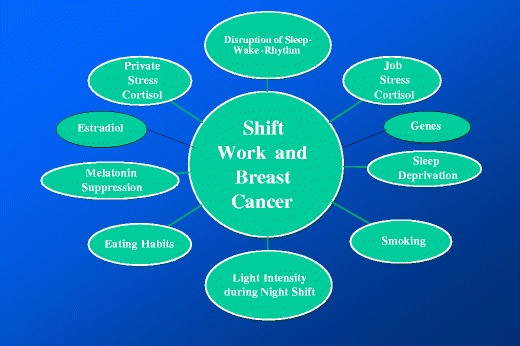
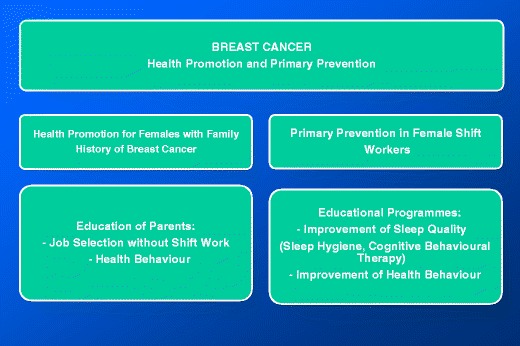
The functioning of the human body is regulated by the rhythmical change between rest and activity. The SCN (suprachiasmatic nucleus) is responsible for the central control of the biorhythm and the genetic prediction of the individual chronotype, whereas peripheral time cues such as light, social contacts and times of meals modulate the rhythmical activity of the body. Shift workers suffer from a disruption of the sleep-wake rhythm, insomnia and a lack of melatonin. These factors might trigger the development of breast cancer in female shift workers. The growing amount of data which indicate the high risk of breast cancer in female shift workers demonstrates the need for the implementation of prevention strategies against insomnia in shift workers. These strategies include regular sleep education courses on the prevention of sleep disorders in companies. The individual chronotype could be an important predictor for the adaptability to shift work.
Figures


References
-
- Erren TC, Morfeld P, Stork J, Knauth P, Mülmann MJ, Breitstadt R, et al. Shift work, chronodisruption and cancer?—The IARC 2007 challenge for research and prevention and 10 theses from the Cologne Colloquium 2008. Scand J Work Environ Health. 2009;35(1):74–79. doi: 10.5271/sjweh.1303. - DOI - PubMed
-
- Megdal SP, Kroenke CH, Laden F, Pukkala E, Schernhammer ES. Night work and breast cancer risk: a systematic review and meta-analysis. Eur J Cancer. 2005;41:2023–32. - PubMed
LinkOut - more resources
Full Text Sources
