


MicroRNAs in common human diseases
- PMID: 23200134
- PMCID: PMC3611977
- DOI: 10.1016/j.gpb.2012.07.005
MicroRNAs in common human diseases
Abstract
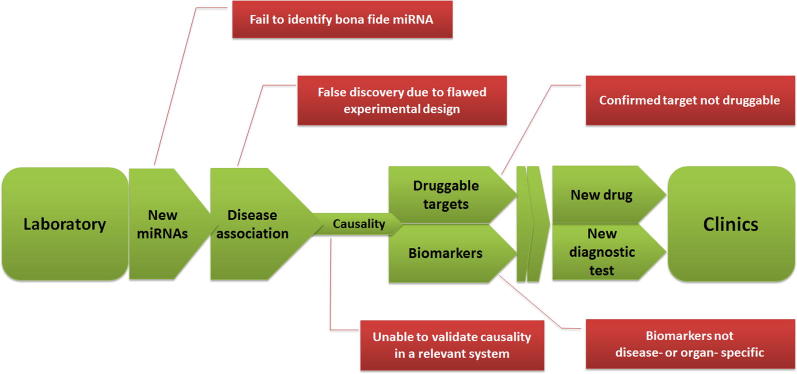
MicroRNAs (miRNAs) are a class of short non-coding RNA molecules that have attracted tremendous attention from the biological and biomedical research communities over the past decade. With over 1900 miRNAs discovered in humans to date, many of them have already been implicated in common human disorders. Facilitated by high-throughput genomics and bioinformatics in conjunction with traditional molecular biology techniques and animal models, miRNA research is now positioned to make the transition from laboratories to clinics to deliver profound benefits to public health. Herein, we overview the progress of miRNA research related to human diseases, as well as the potential for miRNA to becoming the next generation of diagnostics and therapeutics.
Copyright © 2012. Published by Elsevier Ltd.
Figures
References
-
- Bartel D.P. MicroRNAs: genomics, biogenesis, mechanism, and Function. Cell. 2004;116:281–297. - PubMed
-
- Lee R.C., Feinbaum R.L., Ambros V. The C. elegans heterochronic gene lin-4 encodes small RNAs with antisense complementarity to lin-14. Cell. 1993;75:843–854. - PubMed
-
- Reinhart B.J., Slack F.J., Basson M., Pasquinelli A.E., Bettinger J.C., Rougvie A.E. The 21-nucleotide let-7 RNA regulates developmental timing in Caenorhabditis elegans. Nature. 2000;403:901–906. - PubMed
-
- Pasquinelli A.E., Reinhart B.J., Slack F., Martindale M.Q., Kuroda M.I., Maller B. Conservation of the sequence and temporal expression of let-7 heterochronic regulatory RNA. Nature. 2000;408:86–89. - PubMed
Publication types
MeSH terms
Substances
Grants and funding
LinkOut - more resources
Full Text Sources
Other Literature Sources
Medical
Miscellaneous
