


Respiratory sinus arrhythmia and auditory processing in autism: modifiable deficits of an integrated social engagement system?
- PMID: 23201146
- PMCID: PMC3610863
- DOI: 10.1016/j.ijpsycho.2012.11.009
Respiratory sinus arrhythmia and auditory processing in autism: modifiable deficits of an integrated social engagement system?
Abstract
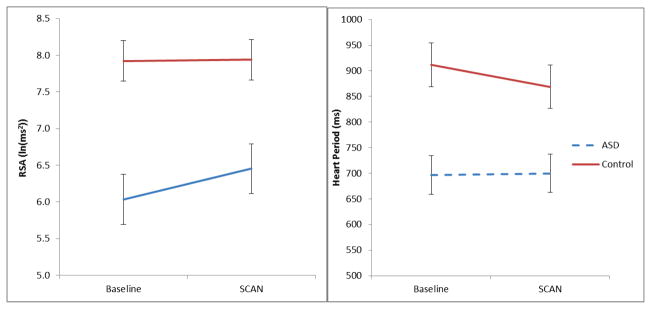
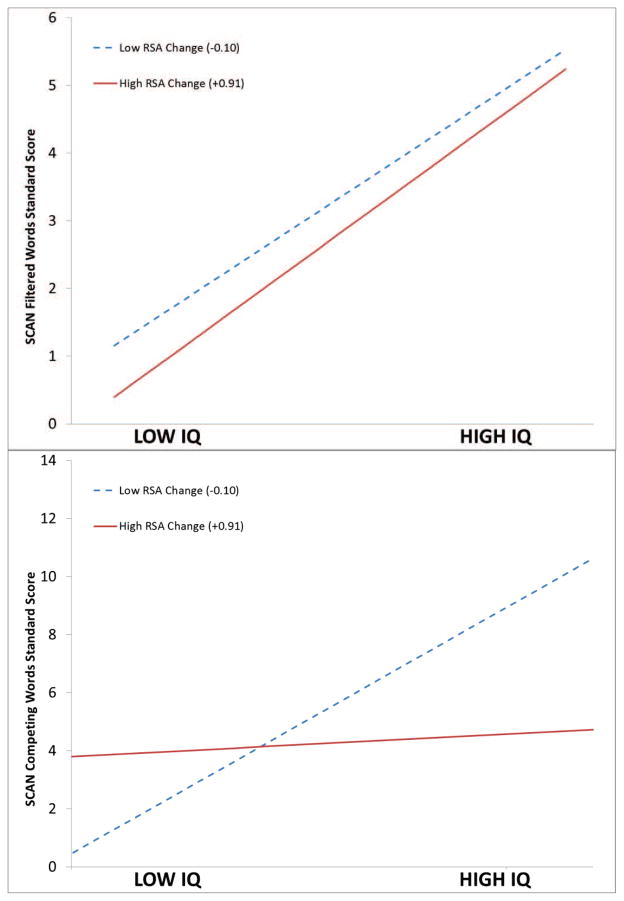
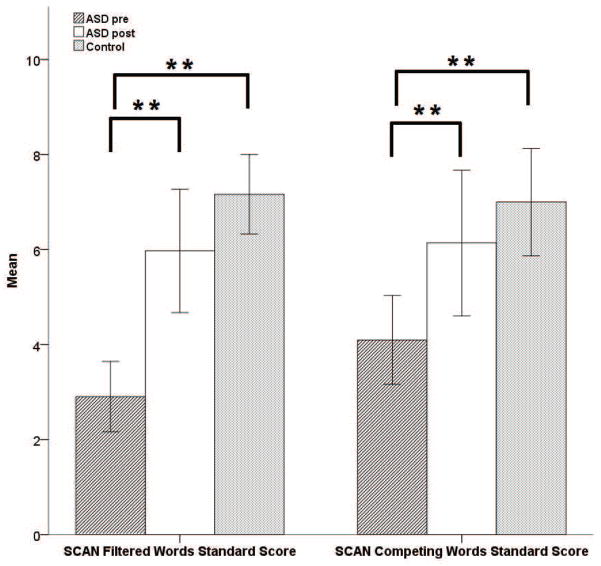
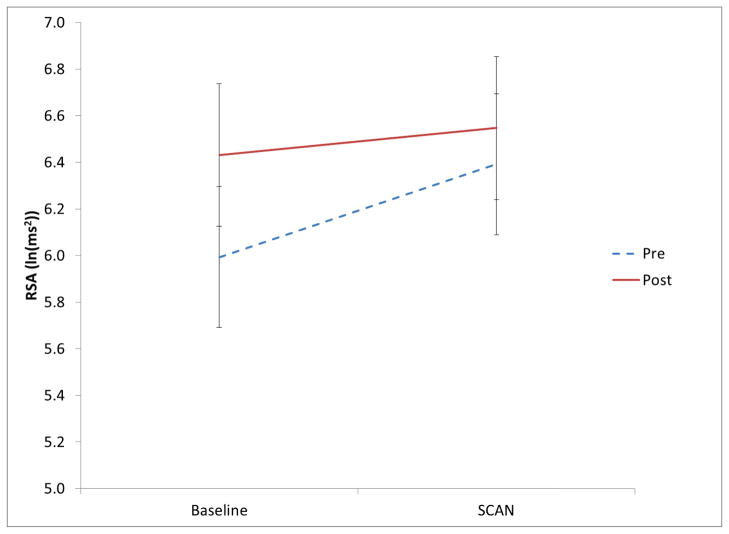
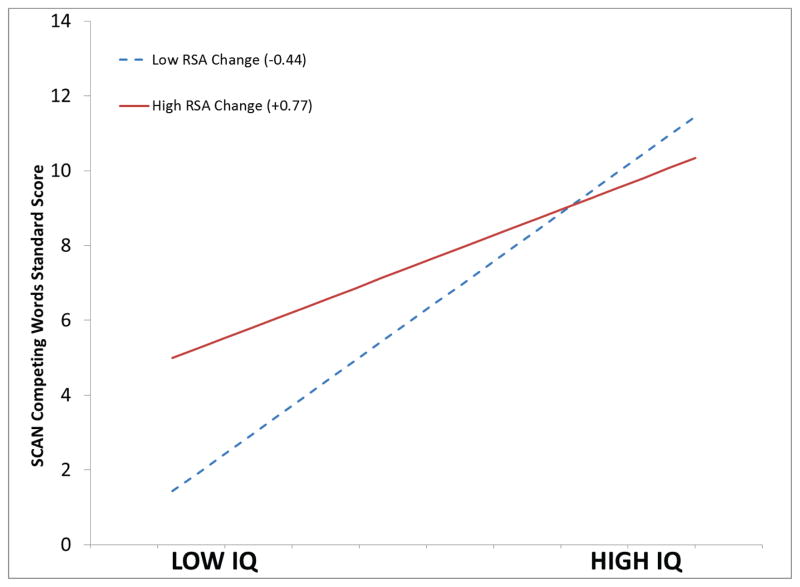
The current study evaluated processes underlying two common symptoms (i.e., state regulation problems and deficits in auditory processing) associated with a diagnosis of autism spectrum disorders. Although these symptoms have been treated in the literature as unrelated, when informed by the Polyvagal Theory, these symptoms may be viewed as the predictable consequences of depressed neural regulation of an integrated social engagement system, in which there is down regulation of neural influences to the heart (i.e., via the vagus) and to the middle ear muscles (i.e., via the facial and trigeminal cranial nerves). Respiratory sinus arrhythmia (RSA) and heart period were monitored to evaluate state regulation during a baseline and two auditory processing tasks (i.e., the SCAN tests for Filtered Words and Competing Words), which were used to evaluate auditory processing performance. Children with a diagnosis of autism spectrum disorders (ASD) were contrasted with aged matched typically developing children. The current study identified three features that distinguished the ASD group from a group of typically developing children: 1) baseline RSA, 2) direction of RSA reactivity, and 3) auditory processing performance. In the ASD group, the pattern of change in RSA during the attention demanding SCAN tests moderated the relation between performance on the Competing Words test and IQ. In addition, in a subset of ASD participants, auditory processing performance improved and RSA increased following an intervention designed to improve auditory processing.
Copyright © 2012 Elsevier B.V. All rights reserved.
Figures
References
-
- Bachevalier J, Loveland K. The orbitofrontal-amygdala circuit and self-regulation of social-emotional behavior in autism. Neuroscience and Biobehavioral Reviews. 2006;30:97–117. - PubMed
-
- Bal E, Harden E, Lamb D, Vaughan-Van Hecke A, Denver JW, Porges SW. Emotion recognition in children with autism spectrum disorders: Relations to eye gaze and autonomic state. Journal of Autism and Developmental Disabilities. 2010;40:358–370. - PubMed
-
- Borg E, Counter SA. The middle-ear muscles. Scientific American. 1989;26:74–80. - PubMed
-
- Dale LP, O’Hara EA, Schein R, Porges SW. Nine-month RSA regulation and regulatory disorders predict 54-month behavior problems. Infant Mental Health Journal. 2011;32:473–486. - PubMed
Publication types
MeSH terms
Grants and funding
LinkOut - more resources
Full Text Sources
Other Literature Sources
Medical
